Episode Transcript
[00:00:19] Speaker A: So before we get into our episode today that all three of us are really excited about, I mean, we're really excited about our guest on this episode. But before we get to that, I do want to have a little bit of add a bit of a coda, if not just an update on our last episode. Because our last episode was about the rise of Shinkai. In honor of, you know, the man behind you'd Name, Whether I'm with youh Suzume. This year is the 10th anniversary of youf Name. And when we were talking about that trilogy, we talked about the fact that in terms of time frames, especially post Suzume, it seemed like it should be around the time that Shinkai should have another film coming out.
And here's the thing. I don't believe in the idea that because we talk about these things, it just so happens to be true, as we discussed it. But it was kind of crazy about maybe a week after we recorded that episode. It has now been announced that Crunchyroll now has the exclusive distribution rights to Shinkai's next film.
[00:01:17] Speaker B: Oh, cool.
[00:01:18] Speaker A: So it's in development, it's now got a distributor, and for those out there who think, oh, that means Crunchyrolls is gonna do it just on streaming, Crunchyroll actually has been doing a lot of films in theaters for the last few years. Chainsaw Man, Reza Arc was Crunchyroll, I think. Are the jujutsu films Crunchyroll? I don't know if they were in the States, but yeah. So that was like a wild update to get right after we were just kind of like little to next to nothing hearing about what Shinkai was doing next. So. Yeah. But with that said, hello everyone. Welcome to Odd Trilogies with Logan and Andy. I'm Logan, so Wash. And I'm Andy Carr. And Odd, Odd Trilogies, we take a trio of films where they're tied by cast and crew thematic elements or just numerical order, and we discuss the good, the bad, and the weird surrounding them. And today we're doing a trilogy that is truly odd through and through. It's in a very odd series.
We had to do some fun odd homework as research to prep for this trilogy, as well as the fact that probably the oddest thing about this trilogy is that it's the only three films in this series filled with multiple television shows, shorts, OVAs.
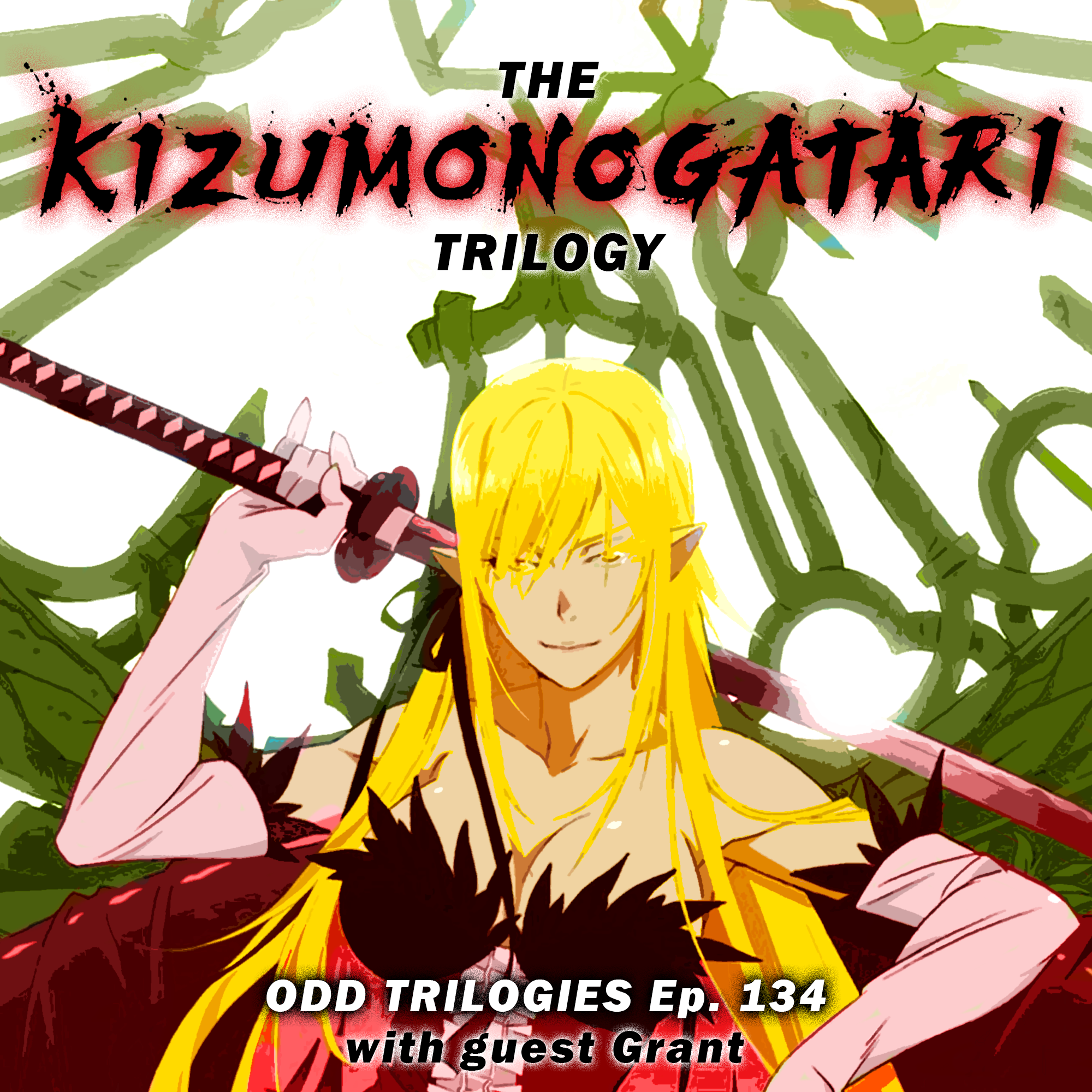
But today we are doing an Andy not really recommendation, but more of a curiosity that he brought to the table earlier this year that we thought would be fun to discuss today, which is the Kizu Monogatari Trilogy, which I need to pull down our little live stream so I can look at. The subtitles are again, which, in case you don't know, revolve around three films.
Part one is called Taketsu, Part two is called Nekketsu. And then part three is called Raiketsu, which means Iron Blooded, Hot Blooded, Cold Blooded, respectively in English. And we knew if we were going to have this conversation and talk about these three films, and honestly, Andy and I were going in practically blind when we first decided to choose this. We thought, you know, maybe it was best to have a friend with us as we go on this journey. Right, Andy?
[00:03:21] Speaker B: That's right.
This trilogy is taking us into some foreign territory for Logan and I. We're both, you know, pretty.
We consume anime and foreign media pretty far and wide, but I don't know that either of us has really dipped too big a toe into the world of horny anime, or ecchi, as it's known.
And so this. This one's a little bit of a foray for us.
And, you know, we wouldn't have felt safe taking this dive into this territory without a more learned and wise friend and guardian by our side. We are joined once again, returning you know him from the Sonic trilogy. We're joined by Grant. Grant, thanks for being here. Hello.
[00:04:14] Speaker C: I do like that you're like, oh, my cat is getting right in front of my.
I knew this would happen. Give me a second upstage. I like how you're like, oh, I immediately when I am about to talk.
I had all this time to get comfortable waiting for when it's time for me to talk. So it is funny that you mentioned, like, oh, you know, it was our first time into ecchi. I'm not a big ecchi guy.
[00:04:35] Speaker B: No, I did not want to insinuate just that you're more experienced than we are.
[00:04:42] Speaker C: But when. When it comes to, like, anime reviews, I've been. I have my. My much, much less professional podcast of familiar territory with my buddy Brantley, and we talk a lot about anime and occasionally, you know, it gets weird. But I was like, when you were like, you want to watch this? I was like, oh, this is an argument I've had with Brantley about this show for a decade at this point point. We've argued about this. This media franchise for. Since college. I'm like, yeah, let's get into it. Let's see what it's all about. And I'm glad that I. I'm glad that I joined.
[00:05:19] Speaker B: But have you talked about this series specifically? In depth on your podcast with Brantley.
[00:05:24] Speaker C: I, I. Okay, I haven't. So we actually argued about it in college because I was always like, I think it's really weird how overly, like, uncomfortably sexual this show can be.
And they're like, no, no, no. It has a lot of deep themes and the word plays really good. And I'm like, yeah, but like, is it worth it?
And so that's, that's what we're gonna find out. I did actually talk to them about this, these movies, because I told them that I was gonna watch it.
And he. They've only seen the first one.
Then I said, I have my opinions on it. And they watched all three. They're like, I actually.
So I had, I had a, I had a pretty good conversation with them about their thoughts, but this will be mostly the opposite of their.
[00:06:18] Speaker A: Honestly, now that we've seen all three of them together, I think it's true, true crazy behavior to only watch the first of these three for so long.
Unless it was all about availability. Yeah, it's about availability. I get that. To be honest. Not really. These three films are not like, I'm just gonna go to Amazon and buy all three of them. Like, these are, these are clearly very niche.
[00:06:41] Speaker C: But yeah, I think, I think they watched the first one when it came out and then they just never got around to watching.
[00:06:49] Speaker A: I mean, again, there. Cuz there was about. Yeah, I think in the span of this trilogy because again, we will talk ebbs and flows about the series that we're discussing today, but Motogatari started as light novel series that got an anime adaptation. Its first Anime adaptation is 2009, 2010.
And the initial idea was to have that be its first season and then these films are going to come a year or two after that. These films don't come out until 2016, 2017. There's a bit of a delay on when these are coming out. And so now if you go online, if for some reason you really want to get. If you listen to these episodes and you are very curious about Motogata, there are kind of like, you know, watch watch orders, kind of like, you know, kind of lists. And most people put Kizu as its second or maybe even first if you're feeling like you want to watch the prequel, I guess, to the Monogata to Baka.
[00:07:46] Speaker B: Yeah. Chronologically, this trilogy is essentially the first story of the kind of main story that the show tells. But it was the.
Well, not even, not even the second thing released. It was meant to be the second thing released. After the first season, but then production matters.
[00:08:06] Speaker A: Kind of delayed by that point.
[00:08:08] Speaker B: Yeah.
[00:08:11] Speaker A: Finally came out.
[00:08:11] Speaker B: Yeah. It was kind of intended to be the second season of the show, but it is a prequel to the first season, making it kind of where the story begins.
[00:08:20] Speaker C: Yeah.
[00:08:21] Speaker B: And before we dive too deep into this trilogy in particular, I want to talk a little bit about ecchi in general and also kind of how we ended up here.
[00:08:35] Speaker A: Oh, my God, this episode's already starting in a fun spot. This is so fun.
[00:08:40] Speaker B: And Grant, please do weigh in, because inevitably you've not accusing you of anything, but, you know, you know more than
[00:08:47] Speaker C: I do about this. I've seen a. Yeah, I've seen a ton of anime.
[00:08:51] Speaker A: Grant, you're not a pervert, but if something seems off, don't hesitate to interject.
[00:08:55] Speaker B: But you are knowledgeable on perversions, so.
But yeah, our viewers, I'm guessing many of them are probably not super familiar with the term ecchi. And it is. It's a slang. Slang Japanese word for like dirty kind of pervy.
But it's been sort of assigned to this sub genre or genre of anime, really, that's marked by excessive sexualization and just. Just lots of what we call fan service. Now, if you've heard people talk about fan service in, like, superhero movies or Star wars, they're just talking about, you know, the creators giving fans what they want or, you know, giving them kind of superficial joy. The term actually originates in anime culture with reference specifically to sexual content. In anime fan service being the. The creators are serving the fans their kind of base desires in the form of overt sexuality and, you know, kind of explicit things like that. And so then the term was kind of co opted especially particularly by Western nerds into just kind of more broadly meaning, you know, giving fans what they want and usually in a. In a pejorative sense, but it originated in anime as a reference to sexual content. And ecchi is kind of the blanket term for this type of anime that is rife with fan service and lots of often questionable sexual content, frequently pertaining to minors and characters below the appropriate age, but not always.
Um, and I also want to be clear that from my understanding, monogatari is not really considered like your typical ecchi. It's kind of more like.
I mean, it's popular, but it's more like fringe or like avant garde. Ecchi. In that is, yes, it's doing all this weird sexual stuff, but it is also, at least to some degree, exploring more existential themes rather than just being kind of a softcore Porn in its motives.
So.
[00:11:41] Speaker C: And like, if you go to like my anime list, which I know is not like the de facto, like it's not the, it's not the end all be all for like genre and stuff, but it does, it does have etchy as a genre that it will, you know, when you look at the. Whatever seasonal anime, it will tell you what it is. And on none of the.
Not even Bake, not Kizamanogatari, none of them have actually as their genre because as you said, while there is that level of it to the the show, that's sort of the.
It's not the primary reason that the story is being told.
[00:12:23] Speaker B: And that is. Yeah, that is a worthwhile distinction because a lot of ecchi out there really is like, that's kind of all it's trying to do is like that kind of base sexual content.
And to Monogatari's credit, it is interested in other things.
We will get to how well those other things balance out the sexual content on display. But yeah, so also worth noting, I did not Logan correctly identified this as a trilogy. That was kind of my pick, my submission.
And I knew that it was that like the way people talked about it online was like, okay, this is kind of a horny anime. It's got some weird sexual stuff in it. But I actually came across it because I was looking for. We were looking for ideas at the start of the year for our schedule and I was like, there's gotta be some like animated trilogy out there that I don't know about or that, you know, is really highly regarded, but, you know, not everybody has seen it or talked about it to high heaven. And I came across this and I saw. I was like, wow, this is like massively super, super high rated on letterboxd. And like people talk about it everywhere. And then I started seeing the kind of horny stuff. I was like, okay, well, you know, I can endure some of that.
And so I suggested it to Logan and then we brought it to Grant and he was like, Grant, you were basically like, do you guys know what that is? Right?
[00:14:00] Speaker C: Making sure you have an understanding.
[00:14:02] Speaker A: It was kind of that thing where I've heard of monogatari over the years in a very, very light sense in terms of some. You talk to somebody about the Lakes anime, they probably don't understand it. Or other people have like the Bob Parr from Incredibles meme where like their face goes gray and dark. When you bring up the series, it's like this kind of ebb and flow at the Time. Yeah. When Andy brought it up, it was kind of fascinating to be like, I can't believe this has never really came up when we would research for trilogies, especially animated trilogies, so it made sense to give it a shot. And honestly, when Grant was like, you know what this is, my morbid curiosity only just skyrocketed higher to being like, well, now we have to commit because I just want to know now. And then I found out when we did a research for this that I had actually seen a few episodes because in like late high school, early college, I had a good friend of mine who is way more into anime than I was doing the whole, like, now let it cook.
But it's not perfect. Just give it a shot. And I remember watching the first arc, as soon as I was re watching it, I went, I have seen some of this before.
[00:15:12] Speaker B: Yeah.
[00:15:12] Speaker A: And then we watched it all and then we were like, okay, now I'm gonna watch these movies. And my God, it is.
Do you like. Okay, because I honestly thank you for that description, Andy, about just like ecchi and then just kind of the sub genre and then what it's mostly known for and how like what we're about to talk about does have elements, but it's not consistent considered by the broader fans as like the sub genre is etchy. It's not.
[00:15:37] Speaker B: Yeah, it's.
[00:15:37] Speaker A: It's really much teetering on that. It's certain scenes, but not as like a kind of a hole. Because the thing about Monogata that's so weird is that baka Monogata to start with. In terms of our research for this, the first season of the light novels being turned into anime. It's 15 episodes. 2009 from 2010, I believe in Japanese is Ghost Story. Is that what Bakumara got to.
[00:16:02] Speaker B: Yes,
[00:16:06] Speaker C: because Kizu monster tail.
[00:16:08] Speaker A: Because Kizu, I believe, is wound tail or something like that. Like.
[00:16:11] Speaker C: Yeah, yeah.
[00:16:13] Speaker A: Basically the whole premise of Bakumanogatari is there's a high schooler named Koyomi Araragi who basically falls for this one girl.
How he falls for her. I'll let you find out for yourself. You'll find out immediately in the first five minutes of the show.
But basically you find out throughout the show that he is a half vampire who went through some crazy kind of shenanigans a year, year and a half prior that led him to becoming half vampire and now being a, you know, connected to this world of yokai. You know, ghosts, demons, all these kind of local legends and kind of almost being kind of like A bonafide ghost hunter in a very unique sense.
And the show kind of becomes like. Mostly it's 5 arcs over 15 episodes and is about different urban legends or different beasts and how you really deal with them or curses and the show itself, I mean, love to hear you guys if you disagree with me on this, but it really is just kind of like there is a fascinating foundation and how it builds its world and how its characters, when given the time to marinate, genuinely have some really good characterization throughout.
[00:17:25] Speaker B: Yeah.
[00:17:25] Speaker A: That is also intermingled with truly some out of nowhere uncomfortable horniness that never really goes away fully in the show.
[00:17:37] Speaker B: Yeah. And it is kind of.
I don't want to. I guess in a sense it is. It's kind of justified through the lens of.
The main character is this guy Koyomi, who is kind of.
I don't know, his whole thing is like he has this savior complex. But he's also like pretty stunted in his sexual experiences and dating experiences and emotionally kind of stunted too, in a lot of ways. And so many of the more perverted moments in the show are kind of framed around like, oh, he had. It's kind of almost his POV of like, oh, he sees something and then, you know, he kind of leers at it and he might get called out for it or he might sort of turn away and chastise himself or whatever.
And there's. There is. There is almost an interesting dynamic to be had there with that character growing. But it does end up being kind of a. Just a repetitive thing that doesn't go anywhere and just serves to make you uncomfortable.
[00:18:53] Speaker A: Yeah.
There's an episode towards the end of the first season that is genuinely wholesome, heartfelt, in my opinion. Best episode of the show of that season. And literally the next episode starts with fan service bullshit as Araragi at the front and center. He is truly an absolute moron with the savior.
[00:19:14] Speaker B: Yeah.
[00:19:15] Speaker A: Which I think is how the show feels like it can get away with shit like that because there's no malicious intent. I guess with all these horny moments with him.
And I mean, when Baka comes out, does I think fairly enough? Well, for the studio. The studio we haven't said yet is Shaft, which Grant you, when we were watching the films together, you brought up Madoka Magica.
What other shows has Shaft done off the top of your head?
[00:19:39] Speaker C: They. They did Hitamari sketch. They are doing the current or not current, I guess the. The recent.
The 2D animated version of the Texas anime.
They did the Monogahry series. They did one of the holic, which is a clamp thing.
They did the. There was another one they. The Nisekoi was another big one which is a. Like a horror. Oh yeah, Bad, bad romance that was really popular in the like 2015s.
They did March Comes in Like a Lion, which is a very interesting show.
Much more down to earth. They did Pretty Boy Detective, which is actually another one of Nisio Isens who did the Manogathuri series. They did. They adapted his manga.
They did.
And then they. They do. Mostly they do film. They did Kino's Journey, the Kineo Journey film, which is really good.
But yeah, that's b. Most of their stuff are either going to be Madoka related or monogatari related. If you look at like their works, it's like they're just trying to get into their. Their.
Their weird.
Their weird anime that they want to put giant A million stop signs in one.
[00:21:21] Speaker A: Yeah, really.
Because Shaft's been around for. I think if Wikipedia is correct, it's been around for half a century as a studio.
[00:21:29] Speaker C: And yeah, I think they also did.
Sorry, there's one more that they did that was.
Or maybe. No, no, it was the. The director did another one that I'll get to.
[00:21:40] Speaker A: No, but I mean the Shaft has been pretty consistent I think since I think 2004, at least. It says in the early 2000s is when it starts to become more like what we see in Motogatari in terms of its avant garde kind of look. It's just designs kind of what it's going what it chooses as it. For its projects and ultimately leads for the late 2000s to start on the Monogatari series, which is now, I think the last monogatari series they finished as of right now is 2425 or like 20. 24, 20.
[00:22:12] Speaker B: Oh, yeah, yeah.
[00:22:13] Speaker A: But like they have 10 plus I think at this point.
And it really. It all follows Kiyomi Araragi to an extent. I know there's a side series that they think they're also animating right now, which is like Monster Season or something like that, where it's still technically monogatari, but it's other characters, more world building kind of stuff. I don't know how horny they are, but if it's anything like the other ones, probably very.
But it is, yeah, very.
Shaft again is. Is been around for half a century, but it is one of those anime studios that I feel like people know Mappa, people know Science Saru people know production. IG yeah. But when you say Shaft, the response you might get might, may or may not kind of determine what kind of person you're talking to in terms of, like, what they're aware of from them. Because a lot of people might just know it just by the notorious nature. Because I didn't know this until after we all were kind of talking, I think, after watching the show, going into the movies. But Monogatari is also known for a very extremely notorious scene in its later series. Yeah, actually the. Literally the series right after the first season, which is I. Most of our fans or people that listen are not going to know what this is. But if you have been in the anime space long enough, if I say toothbrush scene, you know exactly what that means. And so it's one of those crazy things about the fact that it's like, I have honestly never seen that scene in full. I think I've only seen, like, people use the clips for, like, a Frank Castle. Wait, wait, wait.
[00:23:50] Speaker B: Yeah, yeah, something like that.
[00:23:52] Speaker A: But the fact that some people might just, like, stop and just, like, freeze.
It was funny because, like, when we. After we watched the films, when I was still trying to process just how to feel about all three of these, I talked to one of my co workers where it's like, now I want. I'm gonna bring this up. Don't judge me when I bring this up. But I just want to know if, you know, because he. He watches anime pretty consistently, but it could be ebbs and flows sometime, depending on the seasons. But I said, how. What do you know about Monogatari? And then immediately he starts laughing.
So that's kind of like you. It is something where it is very fascinating that when Andy told me that these three films were so highly revealed.
[00:24:34] Speaker B: Yeah.
[00:24:34] Speaker A: Regarded. Because, like, when we went into this, I mean, at least for me, I was very curious to see, you know, the whole thing of Bakumanogatari is talking about this one crazy summer that our main character has had where he was a full vampire and things were bad and things were going crazy, but, you know, everything got fixed, everything's fine now. We took care of it. And you go through a whole season of an anime with that and you go, fuck. I kind of want to know what that looks like.
[00:24:59] Speaker B: Right.
[00:24:59] Speaker A: And then 2016, in the span of a year, you get three films that talk about that one. So summer first two films are just over 60 minutes, which I think was another reason why Andy and I were like, similar to the Broly trilogy. We were kind of like, we could Slide that in. Be easy peasy for us. And the last film is like just over 80 and it feels it.
But going into it, I think we were just hoping that we were gonna
[00:25:27] Speaker B: get, you know, some crazy cool animation.
[00:25:30] Speaker C: Yeah.
[00:25:31] Speaker A: Because honestly, there are moments in Bakumonogatari where it's like. It's not an action show. There is action in there every once in a while. Yeah. But it's crazy every time it's animated because it actually is really fluid, very well animated.
Cinematography wise, blocking, it makes a lot of sense. It works really well. But that is not what the show is. The show actually pooh poohs that pretty consistently in terms of what the show is trying to say.
[00:25:56] Speaker B: Yeah.
[00:25:57] Speaker A: Of the importance of being honest with yourself and like, you know, trying to confront your own demons and, you know, kind of more unorthodox. This is not jujutsu Kaizen. You don't just punch the thing until it dies.
[00:26:10] Speaker B: Yeah. It's a lot. It airs a lot more toward like, kind of slice of lifey type vibes. There's just characters standing around talking about shit.
[00:26:19] Speaker A: So we were wondering if it was gonna be. These films are gonna be more on the action oriented side because it has a feature film budget. There are three films.
[00:26:27] Speaker B: Yeah.
[00:26:28] Speaker A: And pretty much everything we read, description wise was that the animation was crazy. The animation was crazy. And that the films are basically about Koyomi becoming a full vampire and being tasked with taking on vampire hunters.
[00:26:43] Speaker B: Yeah.
[00:26:44] Speaker A: Lords, whatever you want to call it. Just three. Three dudes that are bad news.
[00:26:49] Speaker B: Yeah.
[00:26:50] Speaker A: That he take him out. And then if he takes him out, he might be able to become human again. That's practically the premise for all three of these films.
The first film, trilogy out the Gate just is a walking sim.
[00:27:07] Speaker B: Yeah.
[00:27:08] Speaker A: 60 minute. It isn't. It is like the. An episode of the show, but just stretched. It's like two episodes. Three episodes of the show strung together.
[00:27:17] Speaker C: Yeah, it's.
[00:27:17] Speaker A: Yeah, it's just because a lot of baka is a lot of build up. It's a lot of talking.
[00:27:21] Speaker B: Yeah.
[00:27:22] Speaker A: And again, I know how that sounds. You're gonna be like, oh, you can't handle a little bit of talking in your life, in your. In your shows, in your. It's like. No, that's not the point. The thing is, is that we're watching three films and we're. You know, when you go into a trilogy, I think with. Especially with both of us, and I think anybody who goes into something knowing it's going to become a trio of films Is that.
Does this find a way to have an excuse to be three films? And the answer to this trilogy is no. I know. Not at all. I mean, there's a reason why, if we're done with this episode and you are not even put off at all by giving these a shot, I would recommend, if anything, you watch the compilation film, which apparently in 2024, there was a compilation film, I think, called Kaomi Vamp, which I think is currently on Crunchyroll. Because of course, Crunchyroll has all the monocontry stuff.
But genuinely, that I think takes all three of these films and puts it in like a two hour, two and
[00:28:22] Speaker B: a half hour comp. That's gotta be a better experience. Cause that's. It's less than two and a half hours, which. The version. The trilogy we watched was about three and a half hours. Three and a half.
[00:28:32] Speaker A: Yeah.
[00:28:32] Speaker B: And probably two hours and 50 minutes of that was walking around or standing around.
[00:28:39] Speaker A: It was actually closer.
[00:28:40] Speaker C: Walking around very slowly, too. Never. Never at an appropriate.
[00:28:45] Speaker A: Grant really liked the pool push out. It happens in the show. But I agree with Grant, never at the same volume as in the movies of helicopter POVs.
[00:28:55] Speaker C: Oh, they have the helicopter being. It. Has it?
[00:28:58] Speaker A: Yeah.
[00:28:58] Speaker B: They do the aerial POV and add in helicopter sound effects. And there's no. There's not really any explanation as to
[00:29:05] Speaker A: why it very much feels like they're trying to almost do the, like, the fully cooly thing of being like, oh, it's almost doing a. We're doing a film within a film. Like someone's actually watched. This is what it would look like if someone. Someone was actually filming what was going on. As if that's what this.
[00:29:19] Speaker B: But that's like not an element of the movies at all, otherwise.
[00:29:23] Speaker A: No, it's.
Honestly, our viewing experience was closer to four hours.
[00:29:27] Speaker B: True. Because of technical difficulties.
[00:29:30] Speaker A: Yeah. So when we watched the first film.
This is entirely true. This is so funny. We watched this together towards the end. Literally. We have 15 minutes left in the film. And I. I think it was. My roommate Ray was leaving the room for a second and then all three of us. There's a scene that is batshit because there's no reason for it to be animated the way that it is, but it is where someone flicks a cigarette from across the room and it slow motions into a trash can.
[00:29:59] Speaker B: Well, it's a very simple close up on this guy's face, Oshino, who kind of serves the purpose as this kind of wise, almost mentorish figure, for he's ancient, 32 yes.
[00:30:16] Speaker A: If you're into anime, think of like the blonde from Bleach early on, the one that wears all green. Kind of the vibe this guy is.
[00:30:23] Speaker B: Yeah. And he's kind of like monologuing. And he's always in the show and in the movies, he's always smoking. And so he takes a cigarette out of his mouth. It's a tight close up on his face. He flicks it. And the following shot is a wide, still shot of the cigarette arcing across the screen into a trash can. Silent shot, totally silent for like three seconds.
[00:30:45] Speaker C: No, it's like a little too.
[00:30:47] Speaker A: No, I want to clarify. It's a funny scene and I would love. It was when Grant goes. Ray, we have to go back so Ray can watch that scene. What happened after? No, it's not. What happened after. That was 20 minutes of streaming issues to the point where we couldn't figure out what the fuck happened. And it was so bad that I think all of us were, like, crossing our fingers and our toes. When we finally got.
[00:31:12] Speaker B: We tried everything. We tried rebooting the tv, we tried clearing the app cache.
[00:31:18] Speaker A: The crazy thing is, in the app, all other films that we tried worked perfectly fine. Ran at 4k. This movie ran at most 1080. Not even crazy 1080. But for some reason, all of a sudden, all the Kizumana Gantari films would not work.
[00:31:34] Speaker B: Yeah. After we rewound for that scene, we could not get them to play for. Yeah, well, it was 20 minutes.
[00:31:39] Speaker C: Yeah.
[00:31:40] Speaker B: Yeah.
[00:31:40] Speaker A: I felt like an hour. But it wasn't. In fact, just 20 minutes. It was. I had to turn off my television, turn it back on. Nothing happened. And then I got on my PlayStation.
[00:31:50] Speaker B: Oh, yeah.
[00:31:51] Speaker A: And when it actually worked on my PlayStation, we all screamed.
And then my other roommate.
[00:31:58] Speaker C: Your other.
[00:31:59] Speaker A: Yeah, my other roommate, Sierra, came down and was like, I was wondering why you guys were yelling.
And we watched the rest of the film and nothing happens with the rest of the film.
15 minutes of walking upstairs, downstairs, going into classrooms, going out of classrooms.
[00:32:17] Speaker C: I. I do want to clarify one thing. The cigarette.
Oshino never. Oshino never.
[00:32:23] Speaker B: He just always has his cigarette. Yeah,
[00:32:28] Speaker C: he read the. The one John Green book. And he was just like, I want to be that guy.
[00:32:32] Speaker A: Oh, Ansel Elgort. I know that's not his name. I don't know. That's not the character's name.
But yeah, I mean, the first film.
Best way to describe it is Araragi gets a little. Gets a little horny, goes and buys a porno magazine. Very embarrassed by it. And then gets this weird supernatural vibe coming from a subway. Takes him 10 minutes to go down to the lowest part of the subway.
[00:33:00] Speaker B: It's as though he walks from the roof to like 20 floors below the ground. It's insane. I mean it's got to be like a 10 or 15 minute sequence of him just walking down this building.
[00:33:16] Speaker A: Yeah.
[00:33:17] Speaker C: And he says. And the thing is that the dialogue in the Manogathur films and can be good. Like there are definite moments where it's like, oh, that was very intriguing. But during this like 15 minute walk sequence, he's just repeating the same thing. He's just like, I shouldn't be doing this. This is weird.
And it. And it's like.
It's so unnecessary. And. And they do this like twice in this film where he walks upstairs talking about himself, then walks down the set. Like he goes. He goes up to go down like three times.
[00:33:53] Speaker A: The first. The first shot of the whole film is basically him going to a rooftop and then exploding into flames. Oh yeah, they cut the cut to like a day or two prior.
[00:34:02] Speaker B: Yeah.
[00:34:03] Speaker A: And it shows how he becomes a vampire, which is basically.
He runs into a classman of his who's like a top honor student who is a prominent part in the series. Tsubasa Hanakawa, who also gets introduced the same way Haragi's love interest gets introduced in Bakamotogatari, which is an upskirt shot which is, you know, always a great way to start whatever you're doing. I guess.
[00:34:28] Speaker B: Yeah. Well. And when she walks, her massive boobs bounce independently in alternation. So, you know, you can't look away.
[00:34:38] Speaker A: I swear, either you. Andy, it was either you or Grant. That went well. That's where the budget went is when her boobs were moving in a way that was like, guys, why are we doing this? Why is this.
[00:34:51] Speaker C: The decision comes off like they. It's. It's one of those times where you're watching it and you're like, there's no way that anyone can find this sexy because it's just so bizarre.
[00:35:05] Speaker B: So.
[00:35:06] Speaker C: But like, but like this is like.
[00:35:09] Speaker A: This is like the dead though. I mean, we're kind of towards the end of.
[00:35:12] Speaker C: Right.
[00:35:13] Speaker A: Where the like jiggle physics and like going way too over the top.
[00:35:17] Speaker B: Yeah.
[00:35:17] Speaker A: Like the sexual life and my.
[00:35:21] Speaker C: I have some thoughts about it, but we can wait until we're done because if we. If not, we're going to talk longer
[00:35:28] Speaker B: than I do think the first one is kind of the easiest to gloss over in just the sense that like it really.
I would have a hard time hearing any argument to the contrary that it's just like a walking sim. Like there's so little that actually happens in this movie. And it teases you at the very end with an almost fight.
When we first meet the three villains of the trilogy and Oshino kind of steps in and gets rid of them for the time being and then goes on his little cigarette monologue.
[00:36:07] Speaker A: Yeah, let's.
[00:36:09] Speaker C: Without looking it up, do you remember the three?
[00:36:12] Speaker A: I found two of them right now.
[00:36:13] Speaker B: I remember Guillotine, Cutter and Dramaturgy.
[00:36:18] Speaker A: Yeah.
[00:36:19] Speaker B: I'm not sure Episode is that one. Okay. Episode.
[00:36:25] Speaker C: You got. You got a hell of a.
[00:36:27] Speaker B: Hell of a set of names there.
[00:36:29] Speaker A: Yeah. Because honestly, when I think about, how do you turn this into a compilation film? In my head, literally cut probably the first 40 minutes.
[00:36:39] Speaker B: Mm.
[00:36:39] Speaker A: And then you just take the beginning. I guess you can take the beginning where he burns up.
[00:36:44] Speaker B: Right.
[00:36:44] Speaker A: Have that be the start of the film. Do the Oshino stuff, and then you can use the Hanukawa, him becoming a vampire. Do flashbacks of that as you're going through the rest of the films. Because in all honesty, you. We. I think we all were watching it being like, all right, we're getting a lot of context for. For how we got to this point, and yet we are getting towards the end of this film. What exactly is going on? And then it's like, oh, sorry, this is the first film. So that means it's introductory. This is. Nothing happens in this movie. It's like, well, fuck me. Why? Why would you do that?
[00:37:14] Speaker C: I remember my favorite part about the end of that movie is there was this moment where Oshino is like running towards this fight that's about to happen.
And Logan is like, oh, yeah, here we go. Are we gonna get a fight scene? And then it immediately ends and he's like, I am.
[00:37:33] Speaker B: So what's the animation has like at that point? That is like far and away the highest energy the animation has had. He's running. He's like going off model. You're seeing all these details, like in his sprinting. Yeah. And then he just like slams down and it's like, yeah. Quote, unquote, fight is over.
[00:37:54] Speaker A: Oshuno is at least in Bakumanogatari, pushed a lot. As someone who doesn't use his full effort. Because he's lazy.
[00:38:02] Speaker B: Yeah.
[00:38:02] Speaker A: Not because he couldn't handle it.
[00:38:04] Speaker B: Yeah.
[00:38:04] Speaker A: And so when the movies were starting, we got to that scene. I was like, oh, fuck, are we finally going to see him at least let go a little bit. And technically you do in terms of him stopping all three of them, but that's it.
Once he stops them, he just goes into his usual shtick the rest of the films and. Which is not bad. Again, I think Oshino as a character is probably one of the most consistent, at least in that season of the show.
[00:38:29] Speaker B: Yeah.
[00:38:30] Speaker A: And has, you know, plenty to talk about and do in terms of conversation. But at the same time, it's like, oh, so we're just gonna. We're just gonna do the show. That's what we're doing right now. Like, the first film is basically it.
You know, we constantly. I think we've talked about in the past, or maybe, you know, maybe just off. Off mike or a little bit here and there is just like. At least when it comes to American animation being put into theatrical films, especially if it's an adaptation of a television series, it's the constant question of, how are you going to justify, like, making me pay for something on the big screen that I can technically.
[00:39:07] Speaker B: Right. Why the jump to. Why the jump in format? Yeah.
[00:39:11] Speaker A: And the thing with Motogachi and with Kizu is that the answer is we don't give a fuck. Like, we're just going to do the show. We're just going to do. It's going to. Like, the color palettes are different. It's much more darker gray.
[00:39:23] Speaker B: Yeah.
[00:39:24] Speaker A: Blood red, of course, is a vampire story.
[00:39:26] Speaker B: Yeah. The show is a lot of white with, like, accent color. Bright, like, reds and blues as accent colors. And the movie is like. Yeah, it's this very industrial gray with a lot of, like, sunset orange highlights.
[00:39:42] Speaker A: Yeah.
[00:39:42] Speaker B: But, yeah, I was kind of amazed. And, like, it does also, I'll say to the credit of the animators, it gets more impressive as the trilogy goes on.
But this first one, I was like, where. Where did all that budget and time go?
[00:39:57] Speaker A: Like, it's all in, like. Like, design. Definitely in that first film is very pretty, but it gets very old very, very fast.
[00:40:05] Speaker B: Right. Well, and also, like, you know, if you're gonna. If your movie is all walking and you have this high budget and all this extra time to animate the shit out of it, I would expect, like, some of the most insanely detailed walking scenes of all time, but instead, half of them are 3D models. Like, all the wide shots of the walking are. The characters are just little 3D models kind of awkwardly puppeted across the screen.
[00:40:33] Speaker A: I mean, again, the excuse could be. It's meant to be dreamlike. It's just add intensity and kind of like an unsettling nature to it because again, I will give it props when we finally get to the basement level of the fucking subway and there's just a bloodied.
[00:40:49] Speaker B: Yeah.
[00:40:49] Speaker A: Amputated vampire Lord mistress who is like writhing in her own blood and shit. That is. Yeah, that is freaky. And also very well done. But again, like Grant said, It's like a 15 minute scene. And literally when he goes all the way down those steps, he goes the back up some of the steps and then comes back down like it is.
[00:41:12] Speaker C: Well, you see, it represents his morality going up when he leaves because, you know, you shouldn't deal with vampires. And then he goes down.
[00:41:21] Speaker A: Because if you're going to visit a friend and that friend lives on like the 15th floor of an apartment complex and you have to walk all flights of the. Those stairs. When you talk about when you hung out with that friend to other friends, do you tell them about every single flight of stairs you went up?
[00:41:35] Speaker B: Yeah.
[00:41:36] Speaker A: Now you kind of cut around the fact that you had to go up all those. You could say you went upstairs, but it's like. It's crazy how it's like, all right, maybe we can cut down these up and down scenes by like 60%.
Let's be conservative on that. I guess it is. Because, like, it does. It is. If anything, sure, I can give the film props. The fact that it's like confidently just going, we are doing monogatari. As monogatari, we're not gonna pretend to be anything else. It's all walking and talking and it's mostly gonna be maybe philosophical debates or just conversations about how to handle a situation because they don't want to go in blind. Prep time, shit like that.
Still, though, for 60 minutes of nothing really happening, I mean, we were basically frothing at the mouth for Niketsu, the second film to do something, and thank God it does.
[00:42:28] Speaker B: Yeah, it's not quite as. Not quite as urgently as we hoped after the first film. It takes its time kind of getting
[00:42:37] Speaker A: into things, but it does the thing again where it starts with a little bit of action and then immediately cuts to them talking about how they're gonna handle it.
[00:42:49] Speaker C: It's weird to me too, because. Well, I guess it's not weird to me. Makes sense. But the first one, at least the dialogue felt okay. Like there were moments where I was like, all right, I can. I can dig some of these character interactions. I. I kind of like the. The dialogue between Hanakawa. I always forget her name. Yeah, Hanakawa and Aragi, like, not the first interaction they had, but like the
[00:43:14] Speaker B: second one, I think their relationship. And then when the second is actually kind of cute and sweet, when it's not gross. Yeah, but. But yeah, yeah.
[00:43:23] Speaker A: I literally say that about any of our.
[00:43:27] Speaker C: But. But I felt that as the. The. The trilogy went on, I started to care less and less about most of the dialogue because it felt worse as, like, as the. As the action started to come, like reach its higher peaks and its animation reached its higher peaks, the dialogue took a dip and how much I cared about the characters. Like, I didn't care at all about Araragi talking to Dramaturgy. And he talked to him for so long about so much. And I'm just like, this guy's not even like that important in the grand scheme of things.
[00:44:05] Speaker A: No, he's also. He's the only one to at least at the time survive. Right. By the time we get to the third because. Because he doesn't. He just gives up. He gives up Episode. Well, Episode does live. It's Guillotine Cutter is the only one that technically dies.
Because yes, he becomes Snack. He becomes a full course dinner in the third film for our. Which we haven't even said yet. I should probably say it now for our vampire lord named Kiss Shot Acerola Orion Heart Under Blade, also known as the King of Apparitions.
[00:44:40] Speaker B: She.
[00:44:41] Speaker A: She is the. The woman who gives Aragi his vampire powers. And he's the. She's the reason why he's doing all this to get her limbs back so she could become her full vampiress yet again. Yeah, but you know, I mean, Hanukawa again, it's one of those things where, like, their scenes can be very sweet. And I think the sweetest stuff is in the second film. But it's kind of wild because it just completely seems to contradict how they talk about each other in Bakemonogatari, which takes place a year after the events of this film, where, I mean, at least on Aragi's sense, he talks about her like a good friend. Like there is no sexual tension between them whatsoever.
Hell, there's even a part in that show where he's being accused of leading her on and he's like, I don't know what you're talking about. And then you watch these films and they're just dripping with like genuine chemistry in a way that is like, okay, settle down. This is not how you're supposed to be.
Like, they're both absolutely horny for one another and it's like, this is not at all the vibe I ever got from the TV show.
And then that. That whole kind of, you know, kind of chemistry, or just kind of like the. The lust between the two of them leads to, in my opinion, the worst scene in all three of these movies, which we'll get to when we get to the. That. Yeah, but, I mean. Yeah, at least, like, a lot of happens to her in these three films that hilariously don't ever talk about the.
The. The cat curse that ultimately will become a part of her character in the show.
[00:46:13] Speaker B: Right.
[00:46:13] Speaker A: Like, I think months. I think canonically months after this happens. It's funny to think that she's just here because she's like a beloved character. And, of course, I think she's also here because in Bakamonagatri, they constantly talk about the events from this.
These films. So she was there.
[00:46:29] Speaker B: Yeah.
[00:46:29] Speaker A: They were like, oh, we could probably just put her in there. And even though she gets absolutely, like, just completely annihilated so many times, it is kind of. I mean, it is nice to, I guess, have a.
At least in this kind of sense, normal person to talk to, at least for our main character, when things are getting weirder and weirder and things start to become more morally gray, I would imagine. I guess, I don't. I mean, I don't think these films have as much depth, I think, as many other people would say they do. I would like them to have. I mean, honestly, I think Bakemonogatari has way more depth.
[00:47:06] Speaker B: Yeah. I think Bake does a way better job of actually filling its time with, like, meaningful meditations on kind of existence and life and youth and love, and.
[00:47:20] Speaker A: Because a big part of Aragi's kind of development in Bake is basically realizing that his savior complex is practically null and void. Yeah, it's earnest, but, like, you can't save everyone. You shouldn't try to save everybody. And honestly, if you want to be the best version of yourself, you can't have everybody's best interests above your own at times.
[00:47:42] Speaker B: Yeah.
[00:47:43] Speaker A: To go from that development by the end of that series to regressing all the way back to what he was like a year prior does lead to a lot of, I think, retreading in kind of a worse way.
[00:47:55] Speaker B: Well, yeah, it's also the fact that, like, it kind of. I mean, Grant kind of hinted at this as well, but, like, so much of the dialogue in these three movies, and as we've said, they are very talky movies, so much of it is just exposition. It's just about vampire shit.
The enemies they're facing, how the logistics of how Araragi is gonna get turned back into a human, collecting the limbs and the body parts of Kiss shot and all that. And it's like.
Yeah, there's barely any room for, like, actual character development or emotional conversations. Because it's all just plot.
[00:48:36] Speaker A: Yeah. I mean, I think to have a bit of a relation or like, a comparison. If you are like a Jujutsu Kaisen fan out there and you're one of those people who like, constantly are like, jesus Christ, they're giving me exposition while everyone's flying through the fucking air. And I can't retain all this information. At the same time. I have to re watch this to understand what they're telling me. This is the complete coin flip opposite of that. It is literally stopping everything.
Both camera movement, both locations. Like, it's all just once, one space.
We're gonna lay it all out. Here's a chalkboard. Here's what we need to know. Yeah, it really does depend on which one do you prefer? Because if you want something in the middle, you do not get that
[00:49:22] Speaker B: it's also kind of the antithesis of jjk, and that jjk, I almost wish, would repeat some of its exposition more so that I could actually grasp it. And this is, like, so repetitive. It's saying the same thing over and over again.
[00:49:38] Speaker C: Yeah.
[00:49:38] Speaker A: Because it's pretty. It's pretty straightforward. It's like, in a goofy way where.
[00:49:42] Speaker B: Yeah. This isn't, like, a complex plot.
[00:49:44] Speaker A: Yeah. This vampire lady wants her limbs back because when she gets her limbs, she gets her power back. And if she gets her power back, she can turn Kiyomi or Rocky back into a human. Yeah, that's just the premise. And then, of course, you go, well, if that's the premise. Premise, there must be some kind of catch. Well, good listener. That's what the third film is. The third film is. Oh, there's the catch. And what should be the best of the three, in my opinion, might be the worst in a lot of places. Yeah, we will get to that.
[00:50:14] Speaker C: I.
I think we.
We kind of skipped over some of the things that are, like, moderately important in the second one, because, like you said, there's just a lot of, like. Like, filler dialogue that. Or at least it feels like filler dialogue. But the big thing is, is that, like, you get a little bit of information on who Oshino is, and he's like, I'm here to. He. He wants to keep balance. He wants to make sure that he kind of. You don't really get too much of him, but he's the best character in the entire show because of that. He's just like, I don't want the, the, the spirit, the. The paranormal world crossing over to the normal world too much. So if you pay me money, I will help you negotiate with these guys so that they all just don't beat you up at once. And you get a little bit of.
You get a little bit of personality from the villains.
[00:51:09] Speaker A: Yeah, yeah.
[00:51:10] Speaker C: But they're not. They're not really enough really like screen
[00:51:13] Speaker B: to become anything and you.
[00:51:17] Speaker C: And. And like, I don't know if they're important to the rest of the series, but I've never heard of them in any of the other series being talked about. So I guess this is where at least they end.
[00:51:27] Speaker A: But like, it's funny how in the first film they speak their own little thieves can't. Like vampire hunters.
[00:51:33] Speaker B: Yeah.
[00:51:33] Speaker A: Never addressed again after that first film.
[00:51:36] Speaker C: Never.
And like, so like you. And it's. It's. I do like that the progression goes from full vampires, your friends, first guy, and then the last guy is just a normal human. He's just like. He's just Catholic. And that gives him all the powers.
[00:51:49] Speaker B: He has the power of God. And on his side he's a.
[00:51:52] Speaker A: He's a vampire.
[00:51:53] Speaker C: Exactly.
[00:51:53] Speaker A: Cosplayer.
[00:51:54] Speaker B: Yeah,
[00:51:58] Speaker C: he.
I. I remember when he came on screen, Logan, you're like, oh, he looks like he's straight out of Guilty Gear. And I'm like, yeah, that's looks like Order Soul.
[00:52:06] Speaker A: He honestly, again, making it pretty clear that we are all not on the. We are probably gonna be in the minority and probably we are in the minority in terms of how people talk about these films. We will give it props in terms of its design when the action actually hits, which is very rarely, but when it does, it does.
And the fact that the movies do look good, like, there are. There is clearly money put into it now. Is it allocated properly amongst. I don't know. I would probably say it doesn't feel like it. But at the same time, yeah, there's. There is a. There's clearly effort put into these three films. But the question is, was it worth waiting seven years after, like, their announcement to really get to this prequel trilogy that at this point is like, well, we're like five series in, I think at this point for monogatari, including, like the second season of Baka. So Bakke. So it's like, is it worth it? And I guess for the fans. It was.
[00:53:01] Speaker B: Yeah. According to Monogatari fans, very much was. So I guess, what do we know?
[00:53:07] Speaker A: According to the box office at least, like it's limited release in the States mixed with its Japanese release.
Both the first two films made like, I think $9 million for the first film, maybe around four to five for the second.
And the third film is under a million.
[00:53:22] Speaker B: But it's so odd.
[00:53:24] Speaker A: It is odd, but also I will
[00:53:26] Speaker B: say especially because the third one seems to be the most highly regarded.
[00:53:30] Speaker A: It could be just something where like retroactively people are giving it more of a. Yeah, true.
Because again, for like, because think about that. An anime film getting a limited release in America in 2017, like, it's, it's amazing. It made $2. Like I am surprised. Especially with that being Ghibli.
[00:53:51] Speaker B: Yeah, true.
[00:53:53] Speaker C: And once again, going back to the the anime capital of the Internet list, Kize Monogatari 3 is the 42nd highest rated anime.
[00:54:07] Speaker B: Wow.
[00:54:08] Speaker C: On that website, it beats like mob psycho 100 season two.
It beat it. It is, it is seven places ahead of Cowboy Bebop. And I think that is an absolute
[00:54:21] Speaker A: failure of a real about my anime list right there.
[00:54:27] Speaker C: I will say that Cowboy Bebop has 2 million reviews and Kiz Managa 33 has 5.
[00:54:33] Speaker A: So abused.
[00:54:38] Speaker C: But, but there is, there is this level of like ins. I don't want to say insane fandom, but like, people love this and I, I, I, we talk. Well, I want to talk about that when we're done with it. But we, we mentioned some of the, the reasons why this gets so highly regarded by anime fans. And it does have some positive reviews outside of like the anime community too. I was reading what some like, random reviewers said about it, but I think that's a. After we talk about all three.
[00:55:12] Speaker A: I mean, yeah, we, yeah, we'll get to that. Because I, I do. Yeah, I don't want to get sidetracked again. The fact that like this, honestly, the experience of watching these three films are all three of us going, oh yes, 60 minutes, easy peasy. And then we get 30 minutes in and we go, okay, we're gonna get there. We're gonna get to the end of this movie and then we'll go to two, and then we'll go to three. And by the time we started three, we were like, okay, we did this.
Something has to happen. And then the worst thing in the whole show, the whole trilogy happens. And we went, ah, we have an hour.
And that's kind of, it is just, you know, the Second film, hilariously, you feel like, is gonna have a solid kind of pacing of maybe we'll get two of the fights with the vampire hunters and then maybe we get the third one in the final film when in reality we get all three of them in the second film. They, they don't, they don't go fast enough. Even with an hour film, it feels like we're still kind of dragging a little bit here and there, and every fight just kind of ends abruptly. Like there are some little good moments, moments throughout all three. And all three of them have different types of kind of like, like his dramaturgy is the first. Full brute, like brute strength, big guy, punch hard.
[00:56:32] Speaker C: And yeah, least I think it's, it's fun watching, it's fun watching him like, rip off. Like, Aragi gets absolutely mutilated in that fight. That's the one where he gets his little baby arm. He pulls it out and that, that part rips and he wins because he's just like, I'm gonna shot put, I'm gonna throw baseball.
[00:56:49] Speaker B: Throw shot puts baseball style.
[00:56:51] Speaker A: Yeah, yeah.
[00:56:52] Speaker C: And then, and, and that part's fun. I liked that part and I liked that once the vampire was like, oh, man, I don't know if I can actually kill this guy anymore. And he's just gonna throw shot, puts on my face all day. This sucks.
[00:57:06] Speaker A: I'm going home.
The sun comes up.
[00:57:11] Speaker C: I, I, I like, I liked the first fight, I think the most out of all of them because and, and when my buddy tried to sell me on the series back in the year of our Lord 2014, he did say that they, they were like, hey, the best part about this is that the main character kind of sucks. And you get to watch them get brutalized all the time. And it feels good. And they're right, it is. The gore in this film is really fun.
And I think that because they're the, the, the most gore that happens are to the, the folks that can regenerate. There is a little bit of fun to it because you know that at least they'll be all right. But then they get to play with it a lot more.
[00:57:56] Speaker A: Yeah, it's kind of, I mean, if anything, that actually I think does build well off of if you watch bake first is the fact that literally Aragi gets his rocked every single fight and then like, literally has his intestines pulled out or like lost an arm or loses a lot of blood. And then he says, like, don't worry, I should be okay. I'm a half vampire. So when you go into this trilogy and you're like, well, you're full blown. Like, what exactly does that lead to? And it leads to, yeah, the baby arm being pulled out into a full human like adult army constantly. Like, yeah. When he gets his. Loses both arms again, uses his legs to kind of kick him back.
And then it's so good about. And then he jumps off. And then the third film has like this bat.
Like it almost gets to a point where I think when people talk about like invincible fights, those fights are still arguably better in a lot of ways. Especially in the comics where it's like the brutal kind of like taking the idea of like what a shonen would kind of show you in terms of like, like what, what. What if we didn't have to hold back?
[00:58:54] Speaker B: Yeah.
[00:58:55] Speaker A: What would two vampires like fighting? And then it's like constantly just cutting limbs off, bashing each other in the head and then slowly regenerate as you take out other. It's like. It does get that, but unfortunately it's one of those things like what Grant said about the first film with me about Oshino's introduction. As soon as you're like I'm locked in, the fight's over. And you're just like, okay, yeah, well, I guess we go to Episode. Episode. And then Episode has like even.
[00:59:21] Speaker C: But he's got a big cross. He. He's like the guy from Trigun, except instead of a gun, giant metal cross.
[00:59:30] Speaker A: He spins it as if it's. It could be. He spins it perfectly as if it wouldn't just be wobbly as soon as you throw it off of him. It's so wild.
[00:59:39] Speaker B: It.
[00:59:40] Speaker C: It's not sharpened, which is fun. It's not like a cross angular.
[00:59:44] Speaker A: The most blunt objects.
[00:59:47] Speaker C: He. And once again that fight is really fun.
And then. And then he disembowels Tsubasa and then it's over. And then Aragi almost kills him.
[01:00:00] Speaker A: Scares the out of him.
[01:00:01] Speaker C: And she has like 30ft of intestine fall out of her, which is really good.
[01:00:07] Speaker A: Then he. Then he packs it back into her stomach and then cuts himself and then just. Just pools of vampire blood.
[01:00:13] Speaker C: No, he, you know, he does the little brain thing that Shinobu did earlier, which is also a fun part. I actually like that part, which like, I gotta remember. And she just punches herself in the head. And that part was fun.
And so we get the. The final part with Guillotine Cutter, which is honestly probably the worst fight and
[01:00:35] Speaker A: the second favorite design of the three, but is arguably the worst because it. Because it is kind of like a here pocket sand kind of move that Aragi kind of pulls out of nowhere where it's like, I didn't know you could turn yourself into a tree, dude. And then it's like not addressed ever again.
[01:00:52] Speaker C: Yeah.
[01:00:54] Speaker A: Cuz. Yeah. Big thing about Aragi, at least in the second film, is more of like, I think the classic vampire narrative, like a new vampire mar narrative about, like, not trying to hurt the people around you who aren't vampires and just like, trying to desperately not lose his humanity in the process of fighting all these guys. Because in the episode Fight, he becomes a lot more brutal once Hanakawa gets killed or, like, near death. And he, like, is bashing his head in at a fucking stadium, right? And then Kazi has to pull himself back. And then Oto's like, you had to settle down, my guy. Like, that's why I'm here. I'll talk to him for you. Even though you made him piss himself. And by the point, the end of Nekketsu happens, where it's like, okay, now we took out Guillotine Cutter. We have been successful now. You know, basically he tells Hanakawa, you know, let's just. Basically, let's pretend this didn't happen. And I can't wait to see you when I'm a human again next semester. And then she's supposed to leave.
And then, you know, she. I think that's. No, she gets. That happens. And then she gets kidnapped by Guillotine Cutter, right? And then he saves her. And then I think pretty much, yeah, Takes out Guillotine Cutter end of the second movie, right? And it's, you know, then we get into third one. We get to Raiketsu, which is, you know, trying to think. The best way to describe it overall is the reason why it exists is because he gives all the limbs back to his Vampire Lord, his vampiress. And she. She lied. She not gonna turn back into human. And also she got her shit smooth. Like, she got cleaned smooth, like, immediately because she didn't have full power because Oshino actually stole her heart.
And it's like, now if you give her this, she's gonna become unstoppable. And she's also probably just gonna kill fervorously because she's a monster. And you basically helped a monster become full power again, which I understand why you did it, but now it's left to you. And then Oshino leaves. Yeah, it leads to Araragi kind of base.
[01:02:59] Speaker C: I mean, he.
[01:03:00] Speaker A: It's the most development we've gotten from him and Kiss Shot because basically the whole second film is her being tiny. And then she gets a new body part. And now she's a young adult, a full adult.
She's like. She's supposed to be. I think when she's at full power, she's supposed to be like Grant said, ancient. Like, look like she's 35.
And she's.
So, like, throughout the second film, you see her at different.
Different ages per se.
And they don't really do a lot of development between the two of them because he's too busy trying to get the limbs. And then Raketsu just kind of has to force or really, like, speed up. Okay.
They have a good conversation. They find out that Kiss Shot has only. She kind of said in the first film, but she's only had two servants, two people. She's turned into a vampire. She talks about her first guy, her first samurai.
Yep. The samurai, her first subordinate, has a really cool animated kind of design for when they tell that story, but
[01:04:05] Speaker B: killed himself because she didn't turn him back into a human.
[01:04:09] Speaker A: Yes.
Yeah. Basically, it was just like, nope, I don't want to be a part of this. And then you find out that she's basically just absolutely miserable and she does all this shit because she's just sad as fuck. And she also wanted to die in the subway.
[01:04:26] Speaker C: Probably one of the best dialogue scenes in the entire movies when they're up on the roof.
I really like this characterization with Kishat and Araragi where it seems very platonic.
[01:04:48] Speaker A: Yeah.
[01:04:48] Speaker C: Like, there's never a time besides the one bad time where Araragi is ever like, I want to.
This woman is so hot. He never hits on her like he does with Hanakawa.
And I think that this scene when they're up on the roof, it's really good. And like, they're. It's. It's one of those times where you watch, you're like, okay, I see why people like this. I see where the good in it is.
And then they immediately just ruin it. We also forgot to mention the Coca Cola ad and episode in the second movie. In the second movie, I. I completely where he.
[01:05:33] Speaker A: Tell me about that again.
[01:05:36] Speaker C: They go and have a picnic, Hanikawa and Araragi. And they're like, I brought you a sandwich.
Some. Some chips and a Coca Cola. And it is just like an actual, like, picture of a Coke. Like a Coke. And they're, like, shaking it up. And they're like.
They're like spraying it on each other. And it's like they're in the middle of this wheat field and it's just like.
It's very funny.
And it's not as.
It's definitely not the most like charming interaction between those two. But it was. They did say Coca Cola like six times and. And that did really funny.
[01:06:16] Speaker A: Completely animated form. Have just a cutout.
Yeah. Just a cut out of a Coca Cola.
It is great.
Those are. I think those two scenes in particular. I can see people cherry picking it.
[01:06:28] Speaker C: So.
[01:06:28] Speaker A: See, that's why the trilogy exists. It's for scenes like this happens the entire film. And it's like, no, no, no, don't do that.
[01:06:37] Speaker C: And then.
And then after that, great. That great scene with the. The chemistry between those two. Kiss shot kills.
Yeah. Guillotine cutter. And he's like. And she's like, do you want to eat this guy?
And that's when they start their flavor final.
Their final.
[01:06:56] Speaker A: Isn't she his face?
[01:06:59] Speaker B: Yeah, she like sucks.
[01:07:00] Speaker C: Yeah, yeah.
[01:07:01] Speaker A: Just smooth off just like. Absolutely. Just like spaghetti. It's like. Oh, yeah. It's like, dude. Again, classic Aragi being too stupid to realize it. But just like, dude, I just. Again, you just gave a vampire lord power.
Yeah.
[01:07:19] Speaker C: And then it goes into the worst scene in the, the, the trilogy.
[01:07:23] Speaker A: Andy's. Everything good?
[01:07:25] Speaker B: Yeah, I'm just. I'm getting messages from my wife. Hold on a second
[01:07:31] Speaker A: while he does that. And now he's listening to this so he doesn't have to talk back. Yeah. It's time to just not beat around the bush. We should probably talk about the scene, the scene that literally. Again, we've talked about it a lot on the show. It takes a lot, I think, for both Andy and I in a lot of ways to be uncomfortable in some way, shape or form while watching something.
[01:07:53] Speaker B: To be really. Well, yeah. To be not just perturbed, but offended by something in a movie. Like we both have a pretty high tolerance for that.
[01:08:03] Speaker A: And again, there are certain. Like my secondhand embarrassment is horrible with certain things. And I think with anime, I've never had this issue before until we watch the scene together. Which is basically the whole thing of. It is now that Araragi is aware the kiss shot is at full power and it's gonna be a full megalomanical just fucking monster.
[01:08:23] Speaker B: Yeah.
[01:08:24] Speaker A: He's scared shitless to fight her and he thinks he's gonna actually full blown die. Even though by this point he has had everything happen to him. But he basically confides into Hanukawa his fears as well as what he knows he has to do. But in case he dies, he wonders if she can have ask ask her for a favor, which is can he fondle her?
[01:08:50] Speaker C: Yeah, well, and you also, you got to remember he's worried that he will be distracted by kiss shots.
[01:08:56] Speaker B: Correct. He wants to desensitize himself. Yeah. He's like, I've never really had breasts in the flesh so I don't want to be thrown off by hers again.
[01:09:08] Speaker A: The series by this point in the trilogy has plenty of horny shit.
Never to this fucking degree. It never felt like we were gonna get to this degree at this amount of time because holy fuck.
[01:09:20] Speaker B: Well. And frankly the premise of the scene is not really even the problem when we get down to it. It's really where the scene goes. Because rather than a simple consensual fondling, what we then get is, I guess, Araragi's imagination running wild of the interaction kind of going off the rails and him essentially forcing her into basically some kind of dry humping, some dry hump play and some a little activities beyond simple, simple fondling of the chest.
It is then kind of revealed that it's not actually what happened. But you do have to sit through the 10 minute sequence of him doing it before you realize that when.
[01:10:17] Speaker C: And I did look into it because I was like, is this what it's like in the light novel? And the light novel actually makes it clear that it did happen.
Which is. Which I'm kind of glad that the anime make or makes it look like it's mostly in his mind because that makes it makes it way less worse.
[01:10:37] Speaker B: But it's not great like sit and experience it to think that somebody sat and animated all of that.
[01:10:46] Speaker A: Yeah, I guess. I guess. Props to not making it what actually happened in real life.
That doesn't mean I will ever defend this film.
[01:10:56] Speaker B: Yeah.
[01:10:56] Speaker A: In that regard, it just is like a. Hey. I know.
[01:11:00] Speaker B: Because it also, it still forces us to sit with the fact that like that that's what Araragi was thinking about the whole time.
[01:11:10] Speaker A: Yeah.
[01:11:11] Speaker B: And forcing her to go further than she wanted. It's like great. Cool.
[01:11:15] Speaker A: The scene, the most awkward scene in all three films happens and then we have an hour left.
We have an hour left. And what happens in that hour? Yes. There is a fight between Kiss Shot and Araragi. That's very goofy and very fun at times.
[01:11:32] Speaker B: Yeah.
[01:11:33] Speaker A: But overall the emotions are not really there. The kind of like this big sweeping kind of feeling that like, you know, it should feel like a betrayal. I guess at some point on both sides. It should feel like a huge emotional kind of fight that has some goofy moments to kind of be scenes of levity in between this fight. But ultimately it just kind of. I think the emotions fall horribly flat when we get to the end of the fight. Even though the animation's at its best.
[01:12:03] Speaker B: Yeah, yeah. I mean, the Kiss Shot fight really was the first time in the whole trilogy that I was like, okay, this is why people talk about this trilogy for its animation. Unfortunately, it's one fight at the end of a three and a half hours experience. Yeah.
[01:12:22] Speaker A: And then even then, when it. When it finally ends, it's all slow talking in a process and a choice that is made that I feel like would hit a lot harder if I actually gave a fuck about what was going on. Which is ultimately Kiss Shot admitting to Aragi from the get go that she's wanted to die for a while. She was never going to turn him back, but at the same time she wanted him to find that out so she could just kill him. And hopefully killing him. Killing her would leave to give him the power to become human again.
But Araragi and his moral comp. His moral compass, you know, is. And you know his morality pertaining to not wanting everyone to die. Because the big thing too with Araragi is he wants everyone to be again that savior complex. Wants everyone to live or at least learn from something and try to find, you know, a second chance in some way, shape or form. He is given a choice, though we now found out is what his matron did not want in any way, shape or form.
Because, you know, a thing we haven't brought up yet is that technically Kiss Shot is in Bake Monogatari.
[01:13:39] Speaker B: Yeah.
[01:13:40] Speaker A: But as a different character named Shinobu. Because basically what happens is, is that instead of killing Kishot, giving her a merciful death, Araragi doesn't have the confidence or the strength or really the want to do that.
Because Araragi clearly wants Kishot to want to live.
So he makes the decision for her to basically bleed her out to the point where she is kind of a husk of what she used to be and ultimately leaves him to become half vampire and her to basically lose all of her memories and to become looking like she's like. She looks like she's like 12 or 13.
[01:14:20] Speaker B: Yeah.
[01:14:22] Speaker A: Thankfully no sexual relationship between the two of them or any kind of sexual vibes between the two. Literally. It's like, I think Grant said is the best part about the relationship is very platonic. And then this kind of sense, maybe more brother, sister. I guess it doesn't really matter, but it's kind of like he makes a decision for her that basically horrifies her. It's a wild scene to watch in full when he takes that kind of away from her. And ultimately, I mean, Oshino basically goes, it'll be. It's. It's. It's a bad. Because I think Grant, you brought it up. When we were watching the films to together was like the beginning of the first film. Is this is not a love story or like an uplifting story? This is like a sad. Yeah, this is a sad story about vampires. It doesn't have a happy ending. And ultimately Oshino at the very end of these films basically goes, yeah. So no one really gets a happy ending because Aragi commits to turning Kiss Shot into kind of a.
Of 13, a pseudo.
[01:15:23] Speaker C: A pseudo vampire creature is what.
[01:15:26] Speaker A: Yeah. She has to basically feed off of Araragi and nobody else.
[01:15:31] Speaker B: Yeah.
[01:15:31] Speaker A: Or she will die.
Which means Araragi is just half vampire for the rest of his life. And then it's a, you know, not a happy ending for humans because humans basically just have to hope that neither one of them become. Yeah. Evil.
And that's kind of. And that basically ends on that note. It ends on that note where. Basically it ends where you meet Oshino and Shinobu in the show where they're like, they still are at this dilapidated, abandoned prep school.
[01:16:01] Speaker B: Yeah.
[01:16:02] Speaker A: And you know, Araraki goes to school now wearing his outfit from Bake, and then seeing Hanakawa and then going to school and then basically just emitting like, he doesn't know if he made the right choice.
He very much feels like he'd rather her be alive than be dead. But also, it's something I think we just both have to live with for the rest of our lives. And it just kind of fucking ends. Yeah, it just ends.
[01:16:27] Speaker C: And I feel like that ending would be more impactful if there wasn't a whole entire series later.
That basically is like, Araragi did the right thing.
Like, because we know even within Bake, as far as I know, like, it's pretty accepted that, like, oh, that might have been the right decision because it never really comes up again.
[01:16:54] Speaker B: It's not really something he has to deal with, like, any repercussions for.
[01:16:59] Speaker A: Well, it also implies that they have to be together at the hip forever. And then in Bake, she's only around at the end.
Yeah. And Bake basically ends with Shinobu being like, she's doing her own thing. And if you need her, she'll probably pop up. But like she's going to find herself.
[01:17:15] Speaker B: Yeah.
[01:17:15] Speaker A: And also Shinobu, basically Kiss Shot's new Persona, basically. Without her, Hanukawa would have been saved because she gets like the cat curse in the show. Chinobu is the reason why she doesn't have to deal with that constantly.
And yeah, it's like all this hilariously. This kind of like, will they, won't they? With Hanakawa. And Aragi goes out the window because of Sekigohara who shows up as like the tsundere kind of, you know, intense girl that becomes the love interest, the
[01:17:46] Speaker B: best character in the show.
[01:17:48] Speaker A: Yeah, honestly, she's. She starts off as classic tsundere and honestly, every time she shows up, she's a lot of fun.
But it is kind of at the end with like Kizamonogatari. I think the biggest bummer about it
[01:18:00] Speaker B: is the fact that.
[01:18:00] Speaker A: Fact that like, when I finished Bake, I just. Honest to God, I felt like genuinely, I. I have no real interest right now, especially after Kizu watching any more of it. But if. If, you know, if Grant, you know, so happened to say, like, hey, we're gonna do the next series for like your pod. Like for. For his pod. And if he asked us to like guest star on it, I would not put Andy. I would not put Andy on that, but I will. I would give it a shot just to see. Even with the infamous shit on it, like, it is just kind of something where it's like. It's just a bummer that Kizu. I think a lot of that build up that Bake has in terms of really, you know, could fun world building or fun ideas with characters ultimately gets put to the wayside for a story that really doesn't need to exist in the form that it is. I think the compilation film makes the most sense. But I will don't really have any interest to watch the compilation at the moment.
[01:18:56] Speaker C: Yeah, I. I don't think you'd get anything out of it.
[01:18:58] Speaker A: Yeah, I think right now I'm at like the first two films are maybe a five out of ten. Maybe this third film's like a four.
[01:19:05] Speaker C: Yeah.
[01:19:06] Speaker A: Which sucks because the four. The third film has the best animation per se, but that scene in the middle, plus how the ending just doesn't hit like it's just kind of a. I think you've said it best, Grant, where I think we were finishing three when you went. It feels like the high ratings on these films are because no one else watches anything but monogatari. Like the people that are rating this.
[01:19:29] Speaker C: Yeah. And it's also one of those things where it's like, because it's kind of in the mainstream, people will watch it and it does weird stuff that is that if you're not used to that kind of medium, you might be like, oh, it's really interesting that they're putting nowhere and rouge and every other scene to, to show whatever. Or, oh, they're doing the helicopter shots. And like, I've seen plenty of like avant garde anime with, you know, I've seen weird art house shit.
I've seen dialogue heavy shows and it, it comes off to me as I have never seen anything take creative liberties outside of like a Dragon Ball Z fight. This is like Baby's first avant garde or like art house film. And like, I'm not going to say that there isn't any deeper meaning that you can read into it. You know, art subjective. If you think that this means this, then that means that and that's why you like it. That's. That's fine. But I've seen other shows that did the cool artsy stuff better and I didn't have to deal with an awkward 10 minute sex scene. Yeah, yeah.
And I remember you said this, Logan, when we were watching it. It's like, we don't need to put up with this. There are shows like this that. Yeah.
[01:20:50] Speaker B: Do the other stuff better.
[01:20:51] Speaker C: And.
[01:20:52] Speaker A: Yeah. I mean, honestly.
[01:20:53] Speaker C: Yeah. And.
And I was talking to my buddy about it, my friend Brantley, who I, you know, love them to death. I'll talk about anime with them forever.
And you know, I was, I asked them what their opinions were about. It's like, I'm not going to say anything. I'm not here to do, to, to debate. I just want your opinions so that I know going in what someone who enjoys these films is like looking into it. And you know, as they're a lot more into anime than I am, which is saying a lot. But they're, they're definitely the bigger anime fan. And because they have a lot of that like cultural understanding, they never see any of it as like, like real in the sense that like they don't. They're like, oh, the, the helicopter stuff is not supposed to be like. The helicopter shots is supposed to be like, hey, this is a movie. These are characters and that's why they're acting this way. And they're supposed to be over the top because this is supposed to be a deconstruction of like, what an otaku would look like would show a person who's a good person. And Araragi is that kind of person, that kind of guy. And he's also that kind of guy in the show. Like, when he sees Hanekawa and he, like, gives this, like, waxing poetic thing, and Hanakawa is like, are you stupid? And. And it's like, yeah, I get that. I see. I see that reading. The only problem I have with it is that at no point is Araragi, I guess, punished for acting like that. And I'm not saying that he needs to be, but he doesn't have this. This charm. And if the. If the writers, you know, this would not be how someone would react to this in a. In a. In a real scenario.
And, and it's not supposed to be, but you had these characters that will literally tell Araragi to his face. Everything about you is repulsive. You are weird, and I don't really like the vibe you're giving off.
Also, I'm gonna take my panties off and give them to you. And it.
[01:23:01] Speaker B: It's proceeds to be right or win the day or defeat the problem.
[01:23:06] Speaker C: Right, right. And so it's like. It's like you're doing this.
This deconstruction, but you're also portraying that it's the right thing to do.
And I, And I don't think that there's any, like, conspiracy or like, oh, we're trying to make it so that. That, like, being an otaku is cool, but it just feels very disjointed to me.
[01:23:28] Speaker B: Yeah, I think that, yeah, the. The kind of.
That kind of. Oh, it's a. It's a comment on this type of person or whatever only holds water if the.
The. The media is actually making a substantive comment on that type of person. Like, you know, if I, If I made an extremely racist movie that was deliberately racist, and then I said, well, actually it's a satire of racists, because this is the type of movie a racist person would make.
But the movie doesn't actually, you know, come down on that stuff at all. It just is racist, then. It's not. It's not satire. It's not a comment or anything. And that's kind of how I feel about this, where it's like, it has all this stuff in it.
And. And yeah, it doesn't. It doesn't make a comment about it. It just features it.
[01:24:23] Speaker C: Yes.
And I think that the fact that it. We, you know, he. He still gets the girl in the end, you Know, he, he still gets to be the, the, like his savior complex isn't like. Yeah, it's never, it's never put into question.
And you know, there, there are, you know, there's the welcome to the nhk, which is.
I don't know if you've heard of that, but it is a anime manga series that is a. That's kind of another. Like it is a critique of otaku culture, but it's a lot more depressing and it definitely paints it in a negative light while also having a character like that. And so it feels like it's saying more and like maybe, you know, it's like, oh, you should be able to. The fact that it's a movie, you shouldn't really take it ser. Seriously. It's like. Yeah, I, I know. I'm not, I'm not saying that it wants me to, but I just don't see how make. I don't see how it makes the show better by having it.
Especially because there are parts of it that do show that they, they know what they're doing.
But.
Ah, but that's, that's. That's my thoughts of the, the.
The analyzation that I'm working.
[01:25:43] Speaker A: Yeah. I mean honestly, it's like when it comes to genre or sub genre, I mean anime is, I think in terms of sub genre the easiest to slip into the horny, weird, uncomfortable shit immediately.
It's kind of. It can be in it like much faster because like again, most genres, I think it's like you get into the more standard stuff at the very beginning and then if you start to dabble, you can get into weirder stuff as you go. While as an anime, as a sub genre of just television and animation, it is something that just like it. I mean just Monogatari gives into those kind of cliches and stereotypes about anime that some people still believe all anime is.
[01:26:24] Speaker B: Yeah.
[01:26:25] Speaker A: So it is kind of that thing of just like as much as I was watching Bake and just being like, yeah, I get it. There is more here than just the panty shots or like the oh, sorry I walked in the room while you were changing type shit. There's definitely more of that. But the thing is, is that it just keeps happening. So clearly it's not really trying to do anything. But for some of those people that want that, yeah, they get it and everyone else be some comfortable with it and it is just like, you know, and I bet like the monogatari fandom love the, the wordplay. And of course the more More deeper tones and themes about that. But it's also not hard to probably see that there's a good.
Probably chance that a lot of fans saw the series, initially thought I had more to it, tried to show it to other people, they were judged because of that and so they kind of retracted, found other people with like minded, and then that's where the Phantom is, where so many people have talked in an echo chamber. And I'm not saying that as if anime only has that Star wars exists.
Pretty much any fandom, pretty much any fandom has that echo chamber in certain sections. And I. And it is kind of this thing where it's just like the thing that bums me out the most about Kizumanagatari is that for Bake, I was like, even with its worth moments, I kind of wish and I kind of want to know. I'm morbidly curious to see if there's anything more to this series. And I think Kizu kind of shows, like, not really.
I really think that what you see is what you get. And you know what, if that is what you want, great. But unfortunately, I don't know if you heard what I said, Andy, when I said earlier, but like this series is like a 4 out of 10 or a 5 out of 10. 5 out of 10. 4 out of 10.
[01:28:05] Speaker B: Yeah.
[01:28:05] Speaker A: It really is pretty animation.
Solid moments in all three of these films, but solid moments in the way where it's like, don't watch the whole film.
Either give the compilation film a try or look up Best of Compilation.
[01:28:19] Speaker B: Yeah.
[01:28:19] Speaker A: And if that Best of Compilation has the scene where he's trying to fondle Hanakaho's breasts, you now know what type of fan made that Best of Compilation.
[01:28:30] Speaker B: Yeah.
[01:28:30] Speaker A: And that's kind of where it's at. I mean, again, anime is such a phenomenal, you know, medium and has so many great shows that tackle practically everything that Monogata is tackling. Yeah, I think even better just out there. There's way too much out there to take in. And so if you try to watch any of these monogatari series and it just doesn't fit for you, it doesn't work. But yeah, that's the case of Monogata.
[01:28:54] Speaker B: Yeah. Maybe our issue, Logan, is that we, you know, kind of softballed it by going in the avant garde fringe etchy realm. Maybe we need to go full bore into hard etchy.
[01:29:07] Speaker C: You gotta go watch.
[01:29:09] Speaker A: Do you know what was when Grant was talking about how people say like, oh, it's, you know, it's actually you both were Saying it's like. It is like Araki is a character that like they are. They're commenting on a person like this hilariously. That's what people I hear talk about Domestic Girlfriend and it seems like that actually has more of merit in terms of like that actually does have more conversations about the sub genre and the characters that live in that genre. And how would that be if those characters grow grew up and it's like this. It's still obsessively horny and notorious in so many different ways. But it's just funny how it's like. Yeah, but if you're looking for like that where you want it to be excessively horny but actually comment on that while also just giving in to the worst tendencies. It's out there.
[01:29:59] Speaker C: It's.
[01:30:00] Speaker A: It doesn't have to be monocatari. And so it's kind of wild just to. Again the anime. The anime was well, is vast. You can. You can. You can drop a coin in there and not hear it. You will never hear that coin hit the ground. There's so much to really dabble into that it is just as.
[01:30:20] Speaker C: Yeah, I. I do have some. I even have some suggestions for people that are like I want so like, like one of the things. Of course if you're. If you really like like the. The framing and the cinematography of Monaco Gatori, you could always give Polar Badge Magica a try. That show is beautiful. The movie is fantastic. It's dark, it's grim, it's fun in that way.
And it still has the shaft weirdness. You got the.
The most batshit scenes.
The spin off series is pretty mediocre, but it's got a scene where there is like a. Like a 50 foot tall wall full of mugs that they're going shopping for. And that part's fun.
If you want like some paranormal like, like super long dialogue.
There's a anime based off a book called Inspector where you know, you have. And it has some. It has some similar themes. You have a. A girl and they're. Everyone's an adult in this which is fun.
[01:31:26] Speaker A: Unheard of.
[01:31:27] Speaker C: But you have a. A girl who's. Who's the goddess of wisdom who is trying to stop these spirits from entering the spiritual world of Japan. And her boyfriend is a immortal guy who when he dies he gets to see the future and then he comes back. So you get to see the. The absolute brutalization of a dude over and over again, which is real fun.
But there is an episode where she just talks to a giant snake for 30 minutes and it's great if you want to watch some weird other artsy stuff. Ray V. Starlight's really good.
It's a show about theater kids fighting to become the star of the show with a talking giraffe.
[01:32:09] Speaker A: You did tell me about that show.
[01:32:11] Speaker C: I remember you showing Revue. Starlight's really good.
If you want to watch something that's a little horny but has a little bit more substance, I will always say watch all of Symphogear. It's a nonsense. It's a 60 episode show about magical girls.
And they are. There's an alternate. It's an. It's in an alternate history where America invaded Iraq to get magical girls. That is a canon thing that happened in the series.
[01:32:37] Speaker A: One of the funniest nights of Grant coming over to hang out is showing Symphogears to us and Ray beat on board. I'm just baffled. And Adam is just completely straight faced the entire time.
It was batshit what you showed us.
[01:32:54] Speaker C: Oh, it's. It's nonsense. I love it.
And none. None of the seasons are better than a 7 out of 10. But you're gonna. You're gonna have a good 7 out of 10.
So if you're looking for a good anime, that's what I'd suggest.
I also have some fun facts about the voice actor of Araragi that I was. Fascinating to me. So he is very prolific. He's. He does like live action stuff.
He does dubs for. He's been doing anime voice acting for like 30 years.
He is the. Speaking of, I know you guys talked about the. The Manogatari trilogy that you were gonna do instead of Dragon Ball Z, bro.
[01:33:39] Speaker B: Oh, the Mononoke.
Yeah, yeah, yeah.
[01:33:42] Speaker C: Oh, Monon. Okay. Yeah, yeah. Oh, he's the. He's the main character in that.
He's the medicine seller.
He. He's been in a lot of Gundam. But the. The one thing I want, the thing I really want.
[01:33:55] Speaker A: You can't just. You can't just skip season Gundam. What Gundam was he in?
[01:34:00] Speaker C: He's in. Let's see. Because he's in a lot.
He's in Mobile Suit Gundam Double O.
He's in Gundam Evolve. He's in Superior Defender Gundam Force, which is I think a silly one.
He's in Gundam Age.
[01:34:14] Speaker A: Oh, okay.
[01:34:15] Speaker B: Yeah, yeah.
[01:34:17] Speaker C: So those are the. He's in.
He does a. He does a lot of the.
So he has a couple characters that he'll like reprise and like video games and stuff.
[01:34:28] Speaker A: I wonder if the listeners heard the Neuron Activate. In my brain. When you said he's in Gundam and I just wanted to. I was just. He's in a couple. I just wanted to know.
[01:34:35] Speaker B: Oh, he's like the kind of androgynous character in Gundam 00.
[01:34:42] Speaker A: Oh, nice. Hell yeah. I will say the voice actor for Araragi does a good job in all three films. Yeah, he's good. He's good.
[01:34:51] Speaker C: And he's also the Japanese dub of Ted.
And the T. Sh. Awesome
[01:34:59] Speaker A: voice bean for Ted is actually kind of hilarious. Now I want to see the Ted he was.
[01:35:08] Speaker C: I lost it because I looked up.
Dude, that's not. He. He's. He's PETA Malark in the Hunger Games movies.
[01:35:16] Speaker A: Yeah. Okay. So he's quite prolific. He's in anime. He's a live action dubs. He's okay.
[01:35:23] Speaker C: He was. He. He was Lex Luthor in the the Snyderverse DC films and he's Orko and the Masters of the universe, the 2020.
Okay, so. So he's. He's got. He's. He pops up every once in a while. But I think that. I think him being Ted, he's also currently Ted. He still does all the Japanese dubs for ted even now, which is just really funny.
[01:35:54] Speaker A: That's awesome.
Trying to think of if you. Did you have any recommendations, Andy, for anime, it doesn't have to be deep cuts. I was thinking about other things that we could give people because to me, the first thing that kind of came to mind was Mushishi, which wasn't the anime series. The. The horror anime series that I've heard really good things about.
[01:36:15] Speaker B: I don't know. Mushishi.
[01:36:17] Speaker C: It's really long.
[01:36:19] Speaker A: Oh, it's good, but it's really long. That's one. If you're looking for more of the yokai ghost kind of demon aspect of it, but taken really seriously.
[01:36:28] Speaker B: Yeah.
[01:36:29] Speaker A: If you're not looking for it to be taken seriously.
There's a recent show that's gotten a lot of buzz over the last few years. Andy and I actually saw the first film in theaters when it was coming. Coming out, but it's a television series. The third season I think will come out next year. But Don to Don is a fun goofy, beautifully animated. The fights rip, the characters are really fun and really well, you know, just defined. And honestly, it's like if you're looking for that goofy that you hear from anime, but actually the substance is a lot easier to grasp on. I would probably say Donadon, but yeah, there's again, it is a. It is A. It is a cavern of things. You can definitely just pick and choose what you want to try out. And, you know, despite the fact that, you know, this was. We weren't having the.
Andy apologized so many times when we finished this trilogy together, but honestly, Grant, thank you for joining us.
[01:37:20] Speaker B: Yeah.
[01:37:21] Speaker A: On this journey.
[01:37:22] Speaker B: Much more enjoyable with you here.
[01:37:24] Speaker A: And to be honest, looking at the schedule, we'll probably have you in the next.
In just over six months when Sonic 4 comes out, because we'll definitely have to do an episode and.
[01:37:34] Speaker C: And potentially Street Fighter if it doesn't.
[01:37:39] Speaker A: I don't think we do. I think this is officially.
[01:37:41] Speaker C: I got.
[01:37:41] Speaker A: Grant is signing a contract verbally that he will do the Street Fighter films.
[01:37:46] Speaker C: I think I might be the. The person, you know, that plays the most.
[01:37:50] Speaker A: Honestly, actually, speaking of. Very quick, are you playing Token right now?
Okay.
[01:37:55] Speaker C: I am not. I don't own it. I'm very poor.
[01:37:57] Speaker A: Well, I will say, apparently the PC.
The PC patch apparently fixed a lot of the issues. They found out what the huge issue was.
[01:38:03] Speaker C: Well, and it was that Captain America's.
[01:38:07] Speaker A: No, apparently the issue was is that for some reason the computer kept up audio inputs or like, it would find new audio devices up like the rollback net code. And so apparently that happened with Strive. It was like a ping issue.
[01:38:20] Speaker C: Yeah, that's the dark system right there.
[01:38:23] Speaker A: Apparently it should be better on PC, but yeah. Grant, thank you so much. We're excited to have you now. We're excited to have you on Street Fighter.
[01:38:30] Speaker B: Yeah.
[01:38:30] Speaker A: Because, boy, that's gonna be a treat. Because I.
I'm really hoping the new Street Fighter film's a lot of fun. It's looking like a lot of fun, but yeah, I'll be the.
[01:38:41] Speaker B: I'll be the. The Normie on that one.
[01:38:43] Speaker A: Oh, man. If anything, it might be difficult to find the time, but we should all at least watch the van Damme Raul Julia 90s.
[01:38:52] Speaker C: Oh, yeah.
[01:38:53] Speaker A: That film is, I think, iconic for all the wrong reasons. Except for Raoul Julia. He has a true plus monologue in that fucking film.
But, yeah, so this is just the start of September.
[01:39:10] Speaker B: Yeah.
[01:39:11] Speaker A: Having some Kizu Manogatari action. And we're going into, I guess you can call it an anime trilogy afterwards, more of I guess what Andy and I would call normie anime trilogy. But we had a friend of the podcast who actually just did an episode this year who decided they wanted to use their. Their advantage to basically be like, hey, you promised me something a while back.
[01:39:37] Speaker B: Yeah.
[01:39:38] Speaker A: And I know we said we'd do it next year. But you know what? Fuck it, I want to do it now.
And so we said, well, we can't say no to you because this is a. This is our gift.
[01:39:47] Speaker B: Yeah. This is the pods wedding gift.
[01:39:49] Speaker A: Yeah, Pods wedding gift to her. And so going from Kizu Monogata, we are going to. A trilogy based off of a Disney classic does exist and actually has in the past kind of had resurgence meme wise.
Also just discussion wise because of how baffling the second and third film are for this, but also how fact that they're not apparently considered horrible, horrible films. And that is the Cinderella trilogy. We are discussing 1950s Cinderella, the Disney classic, as well as 2002's Cinderella 2 Dreams Come True, as well as 2007's Cinderella 3, a twist in time with our very good friend, one of our best friends, who is. Will be their first.
I'm not gonna say real well, it'll
[01:40:40] Speaker B: be their first standard episode properly. Proper episode. Yeah.
[01:40:44] Speaker A: Their first guest starring.
[01:40:45] Speaker B: Yes.
[01:40:45] Speaker A: Because they were not guest starring.
[01:40:47] Speaker B: True. They took over the pod for Fairytopia.
[01:40:51] Speaker A: And that'll be Kelsey.
[01:40:53] Speaker B: Yeah.
[01:40:53] Speaker A: One of our best. One of our best friends in real life as well as now married to Jake Atwood. Now she's Kelsey Burke's Atwood.
[01:41:00] Speaker B: Officially she's Kelsey Atwood. Yeah.
[01:41:03] Speaker A: Kelsey Atwood.
[01:41:04] Speaker B: Yeah.
[01:41:04] Speaker A: So we're excited to have her on
[01:41:06] Speaker B: to talk about this and actually it's a great kind of back to back because the following episode Jake's going to be on.
[01:41:15] Speaker A: That's true, that's true. It'll be fun to have the newlyweds on.
[01:41:18] Speaker B: Yeah.
[01:41:18] Speaker A: For vastly different types.
But yeah. Tune in on the 26th when we discuss the Cinderella trilogy. And as always, I'm Logan. So.
[01:41:28] Speaker B: And I'm Andy Carr.
[01:41:29] Speaker A: Thank you so much for listening. Bye.