Episode Transcript
[00:00:19] Speaker A: I guess I have to say, it's insane that Channing Tatum is solely in a Dooms. Like, in an Avengers film just because he was funny in one Deadpool film.
Like, I get it. It's. I mean, of course people liked him in that, but it is kind of just.
[00:00:35] Speaker B: I mean, it's only the best Marvel film since Infinity War, so. I don't know why you're complaining.
[00:00:42] Speaker A: I just. Not. It's not even a complaint. It's just funny to think. I think every. I think we've all talked about the fact that the X Men lineup is wild. It's super clucky goofy.
[00:00:53] Speaker B: All these. All these characters we've said goodbye to, like, a dozen times at this point. And also Mystique and no other.
[00:01:02] Speaker A: Yeah, I did see. I did see a tweet today where somebody was responding to someone going, that doesn't look like Jennifer Lawrence. And their response was, I'm too old for this app.
Because they just didn't realize there was a mystique 26 years ago.
Brent, what are your takes on. Was it. Is it Doom's accent? Is it the fact that we don't know what the. This.
[00:01:28] Speaker B: I hope you've got a lot, because we're going for two hours on this brand.
[00:01:31] Speaker C: Yeah, we got to.
[00:01:32] Speaker A: We gotta.
[00:01:33] Speaker C: We gotta get along on Doomsday Trailer reaction. So, wait, so who is Mystique? Because I know it's not Jennifer Lawrence, but I don't know who it is either.
[00:01:40] Speaker B: I think it's the Rebecca Romaine. Yeah, the original actress from the trilogy.
[00:01:44] Speaker C: Oh, okay.
[00:01:45] Speaker A: Well, yeah, no, yeah, that's actually.
[00:01:47] Speaker C: But I guess she's technically Florence Pugh, kind of for half of the length or the. The amount of time she's in the trailer too, I guess because she turns into Yulena or whatever.
[00:01:56] Speaker A: But I assume they won't have it for too long just because if they do it for too long, people will remember what scrolls are and then think about secret invasion, and that's just a bad call. So they'll push that aside. Yeah, bad idea.
[00:02:08] Speaker C: And it's like Captain Marvel in this, too, in Doomsday
[00:02:15] Speaker B: List. That they've, like, had issues. No, no.
[00:02:19] Speaker A: I think that the rumor was that she was, I think, in Kang Dynasty, which was the first Avengers film back when they were gonna do King, and they even tried to have, like. Apparently they tried to write her into this. It just couldn't make any sense. So maybe we'll see her in Secret wars, because I assume what. We don't. Who we don't see, yes, we'll probably get.
[00:02:38] Speaker B: Everybody else will be in Secret wars,
[00:02:41] Speaker A: but, yeah, we're getting an Avengers film. We're doomed.
Except for Moon Knight. Well, apparently was supposed to be King Dynasty too.
Yeah, King Dynasty, I think had practically most of the people in the Disney plus shows in some way, shape or form just because they wanted to be like, I don't know, like, there's some reason to have people watch these shows, and now it's like we're not talking about any of them.
[00:03:05] Speaker C: Well, and Kang technically debuted at the end of Loki season one, right? Or at least his. Like, the statue was kind of introduced that way. So, yeah, it's like, it feels like those Disney plus shows, instead of, like, having the momentum going into, like, Kang Dynasty, they're all just a bunch of characters that are, like, in an, like, MCU D graveyard or something. Maybe not all of them, but anyway.
[00:03:29] Speaker A: Well, it's also the fact that, like, watching the trailer is when I realized I hadn't seen Loki Season 2 yet. Like, I just never really got around to it. So I was like, I guess I should watch that. But then I thought about, isn't Jonathan Majors in that, too? Did they, like, cut his role down?
[00:03:44] Speaker B: Well, he's still a major character in it.
[00:03:46] Speaker A: Oh, really?
[00:03:47] Speaker B: Like, yeah, Mr.
[00:03:48] Speaker A: Timely. Is it that version of King?
[00:03:50] Speaker B: Yeah, he's like. I don't know, maybe.
I mean, he's, like, in the main cluster of, like, heroes trying to get the job done. He's right up there, like, in almost every episode.
[00:04:03] Speaker A: I think it's crazy, though, how. Andy, how far are you in X Men? 97. They don't want to spoil this.
[00:04:08] Speaker B: I'm two episodes behind.
Gosh, I think the last thing. They're still in Egypt.
Okay, what's his face?
Apocalypse, like, decided he's not going to take the peaceful route, and he thinks the X Men are deceivers and all that.
[00:04:28] Speaker A: Well, yeah, there's apparently the character in that episode you haven't watched yet. In one of the episodes you haven't watched yet, who was going to be played by Majors of some kind for some reason. And that was, like, the original idea. And then he was cut out, like, all those years ago when they did the initial idea for season two.
[00:04:45] Speaker B: Were they gonna tie in 97 to the, like, the mainline MCU stuff?
[00:04:53] Speaker A: Well, you just. You just have to watch and find out.
[00:04:55] Speaker B: I guess I just have to watch King Dynasty.
[00:05:00] Speaker C: I'm just hoping that Oscar Isaac didn't have to put on all that makeup for Apocalypse. I know it's an animated thing.
[00:05:05] Speaker B: Yeah, yeah.
[00:05:06] Speaker C: I mean even in the. With him, it's like now, Oscar, listen, I. We know it's a. A voice thing, but you know, it's so funny.
[00:05:15] Speaker A: Too hard.
Well, with what they're doing now, I guess with like casting. What? The rumors of the casting for the next X Men film for the MCU and how hard they're going with Apocalypse in 97. I wouldn't be surprised if they're just gauging whether or not they want to have the X Men build into Apocalypse in their own right. Because yeah, it sounds like they're doing Magneto at the gate. Or at least the rumor is, I think it's Magneto and Mr. Sinister in the movie. So it's ah, maybe get into Apocalypse.
[00:05:45] Speaker C: Have we gotten a cinematic Mr. Sinister?
[00:05:48] Speaker A: No, no, I don't think so. There were rumors back when Fox was still making them that they're trying to ask John ham to be Mr. Sinister at one point.
I don't know if it ever went anywhere. I don't. I do think one point, New Mutants even probably thought about in a certain run of the script to use him. But no, this will be the first time, if anything.
But I just realized we're nearly 10 minutes in and this is not a doomsday conversation. This is actually.
[00:06:16] Speaker B: We're only 5% of the way there. No, sorry.
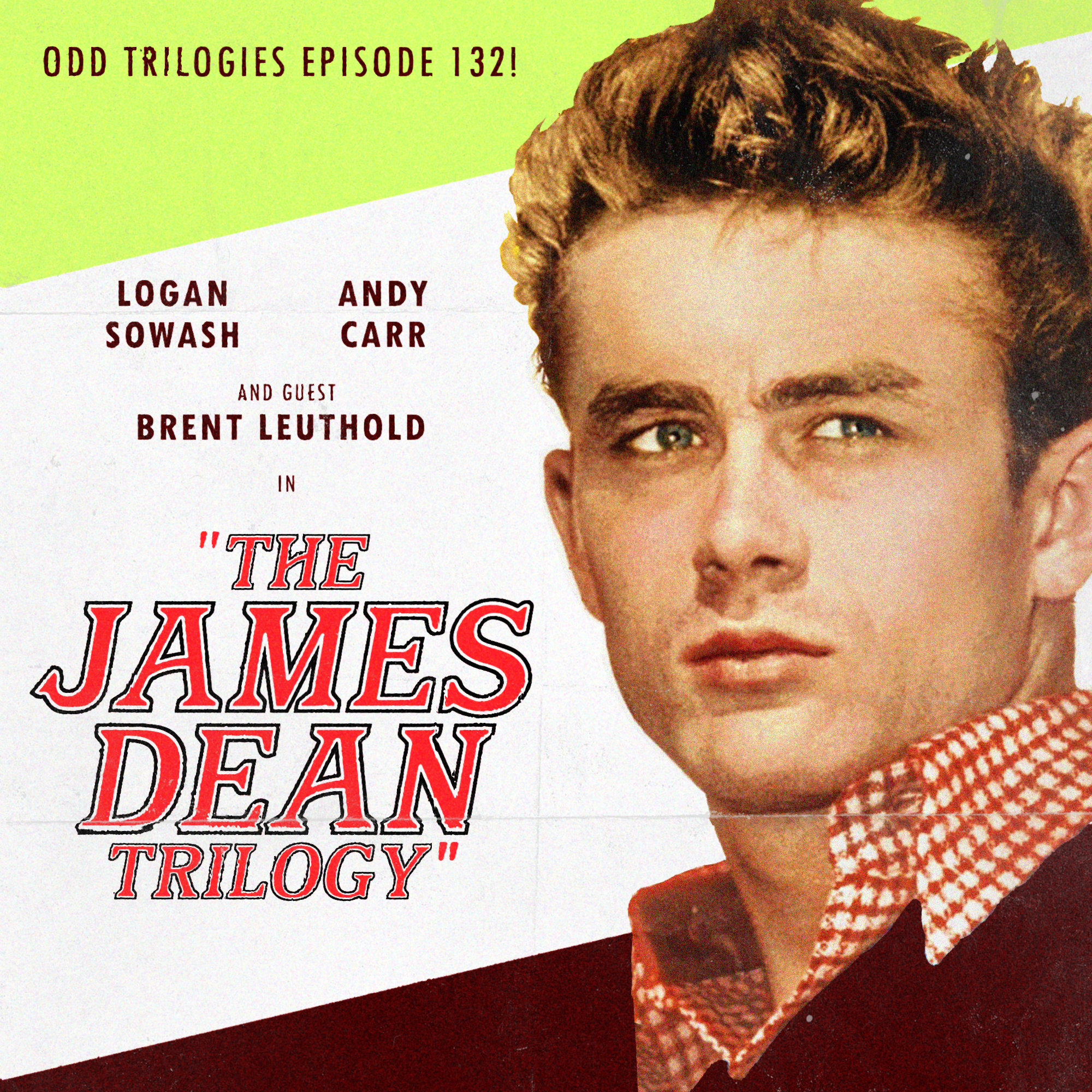
[00:06:20] Speaker A: This is an episode of our trilogies with Logan and Andy. Hi, I'm Logan.
[00:06:24] Speaker B: So, I'm Andy Carr.
[00:06:26] Speaker A: And on our trilogies we take a trio of films, whether tied by cast and crew, thematic elements are just numerical order and we discuss the good in the bed and the weird surrounding them. And today is, you know, an episode we've had in the works for a little while. We put it on our schedule probably what, a year or two ago.
[00:06:44] Speaker B: Yeah.
[00:06:44] Speaker A: And was something that we just initially didn't think about doing this episode in August because of any kind of historical significance. But it just so happens two out of three of these films turned 70 this year.
[00:06:56] Speaker B: Yeah.
[00:06:57] Speaker A: And so what better way to, I guess, honor a legacy of a gone but not forgotten icon in American cinema who only has really three leading roles to his name that discuss the James Dean trilogy, which, in case you don't know, is east of Eden in 1955, as well as Roman Without a Cause and Giant in 1956.
In case you don't know, James Dean is a prolific actor who was born in 1931 in, I believe Marion, Indiana. So he's a Hoosier and spent A lot of his career early on, especially in the late teens, early 20s, being like one off in television or make smaller roles in films. And then ultimately got his big break in east of Eden in 1955.
And east of Eden was such a big hit that it ultimately led him to get bigger roles. And then unfortunately, he passed away through a tragic car accident in September of 1956, which is actually before the last two films of this trilogy even came out. So it's kind of this unfortunate legacy, but also is one that is so fascinating because of just what could have been if he had lived. But regardless, we have three very interesting films to talk about today. But thankfully, we are not doing it by ourselves now, are we?
[00:08:17] Speaker B: No, we're not. We are moving right along through our journey of collecting IFJA members to line our cloaks as guests.
We're lucky to be joined finally. It's taken us forever to get him on. Not his fault, but ours.
He's a writer and podcaster for his own site, Awake in the Dark, where he writes reviews and commentary. He's also a frequent contributor over at Midwest Film Journal. We love plucking guys from over there.
And he is a film critic, the film critic for what's up, which is a Fort Wayne based, I think Fort Wayne based entertainment and culture magazine.
Happy to have Brent Leuthold joining us for the first time. Thanks for being here, Brent.
[00:09:19] Speaker A: Absolutely.
[00:09:20] Speaker C: Thank you so much for. For having me. Yeah, I've been.
Yeah.
[00:09:24] Speaker B: Long time.
[00:09:25] Speaker C: I don't know, a long time listener, first time caller podcasting, though. That's kind of weird.
[00:09:31] Speaker A: But.
[00:09:32] Speaker C: But yeah, thank you guys for having me. Excited to talk about this.
This idiosyncratic trilogy or trio.
[00:09:40] Speaker B: Yeah, absolutely.
[00:09:41] Speaker C: Or non trilogy, I guess you could say.
[00:09:43] Speaker B: Well, and I don't know, we'll get into here shortly why you chose this trilogy to join us on.
But I did want to note that you being in Fort Wayne, you have a little bit of proximity to James Dean's upbringing, being born in Marion and growing up in Fairmount, which I think is like, what, an hour or less from you, way up there in the northeastern sector of the state.
But yeah, I guess I do want to probe you a little bit. Do you have any history with Dean's movies or are these new to you?
[00:10:23] Speaker C: Yeah, I mean, I usually get approached on the street, I don't know, two to three times a day.
Two to three times a day, I'd guess, and say, like, you got that James Dean look about you. Like there's something about. I don't know what it is, I believe. And I'm like, it's the face and the hair and the clothes.
[00:10:40] Speaker A: I think you sent us a. I think he sent us a picture of you wearing the Rebel Without a Cosmic.
Yeah, so it's like that's the James team look, I guess.
[00:10:49] Speaker C: Yeah, kinda. Yeah.
[00:10:51] Speaker A: No, but.
[00:10:52] Speaker C: No, but honestly, no, I thought, I thought to kind of. I saw this as, as a proposed episode that you guys had and I, I thought it would be a good. I hadn't seen Rebel Without a Cause since probably I was his character's age. I was probably since high schools. I guess I'll stop doing. Try and do the security.
But.
But yeah, I hadn't seen that for a long time and then I had not seen east of Eden or Giant. Those are two that had just kind of never gotten around to. So I figured it'd be a good, a good way to kind of fill those blind spots. And when I kind of saw it listed there, I was like, oh yeah, he was only really in three movies aside from, you know, like background like non speaking roles and things like that. So I was like, well, this will kind of be in a way sort of like a fun way to kind of knock out his filmography.
So it's kind of there too.
[00:11:50] Speaker A: But yeah, it genuinely surprised me when Andy proposed this to me that there were only three starring roles for Dean. Like now going through them and we'll talk about it. It makes sense in a sense that Rebel, being so iconic in so many ways casts enough of a shadow to maybe not even realize how little, you know, starring roles he had before he passed away. But it was kind of fascinating to think about. You know, when I think of James Dean now, usually I just think about the, the fact that he is a. A portrait, kind of like a role model for Americana. Like, I just think of spray painted James Dean on like the side of the wall with like a mural with like Marilyn Monroe and other kind of like classic. Yeah, kind of actors and actresses, just like the, the Americana of all the good old days. Yeah, the James Dean era.
[00:12:42] Speaker B: I mean he was. Yeah, he was kind of a.
Not kind of. He very much was a symbol of this kind of new Hollywood, new counterculture, new sort of adolescence in media, you know, kind of. He was, I mean he, he died before like Elvis got super huge, but like he was kind of, you know, on the bleeding edge of that sort of rock and roll mentality of rebellion and youth and all of that.
And you know, for us, the three of us being hoosiers he's probably just that much more.
At least we're more aware of him because, you know, Indiana likes to tout its. Its heroes and icons, so. As most states do. But yeah, I think I'd only seen.
I know I'd seen East of Eden when I was young.
I don't know if I ever saw Rebel Without a Cause or Giant, but my parents owned a VHS set of the James Dean trilogy like his work. My mom was a fourth grade teacher, so she taught Indiana history, was a huge history buff. So I grew up knowing about James Dean and even having not seen the majority of his work, he was always kind of a.
I guess I knew about him more than I actually knew, like his work or anything.
[00:14:15] Speaker A: Yeah.
[00:14:16] Speaker B: So, you know, this is kind of a cool thing to actually deep dive into because I had always just thought like, oh, he was.
He was that hot guy who like created a new look and was cemented in history forever. Like kind of the male. The male companion to Marilyn Monroe, which he kind of was in a way, culturally.
[00:14:35] Speaker A: But yeah, for sure. I definitely had not seen any of these movies. Yeah, this has been on my list for a while, especially Rebel. Rebel's the one. Of course, I'd see the most clips of going into it.
Definitely had no idea what the Giant was until, yeah, we started repping for this. But yeah, going into the first film with east of Eden, kind of the most fascinating part about this is that one. It's a iconic John Steinbeck adaptation.
It's also not a full adaptation. It's more of an adaptation of the back half of the book, which arguably, from what I remember of the little I read of east of Eden in high school, because unfortunately I probably should have read it, but I was too lazy, so I didn't finish fully. Is the fact that, like they just go straight into the Cain and Abel.
[00:15:23] Speaker B: Yeah, the final section of the story.
[00:15:27] Speaker A: Yeah. And use a lot of the.
The time that they do in the book as well, a little bit of the describing what happened in that first act to the kids and use that without feeling like they have to make a three hour film.
[00:15:40] Speaker B: Yeah.
[00:15:41] Speaker A: And leads to our first James Dean performance being Cal Trask, being, you know, a kid in 1915 California. That is kind of like. Is it Monterey or is that where he goes to?
[00:15:57] Speaker B: Yeah, he goes between Monterey and.
What's the other one? Selena.
Yes. Yeah.
[00:16:02] Speaker A: Yeah.
And he's.
It is fascinating again to finally be able to watch these films and to see James Dean in action as an actor. It is very fascinating to see, just from the get go, what he brings to the table almost immediately with a. With a role like this and how it makes sense in terms of what we know about him, just in the cultural sense, the angst, the rebellion, the. The tortured soul of it all, because very much so. All three of these films show that if Dean progressed in his career, I think the tortured soul would be the very consistent thing. And what he does really well, because putting this man on the.
The cane of the Canaan Abel dynamic In, like, the 1910s California, it leads to genuinely some kind of fascinating angles here and there, especially with the other characters being not particularly boring. Everyone does a really good job in this movie. Actually was surprised at how much I liked this movie, despite how little I remembered from the book, like in high school, really just kind of locked in a little bit. Even remembered, you know, Kathy and then their father Adam, who's a big part of Act 1.
[00:17:21] Speaker B: Right.
[00:17:23] Speaker A: But it was. Yeah. What'd you guys think of east of Eating, especially Dean's performance.
[00:17:27] Speaker B: Well, Brent, have you. Did you read. Have you read the book?
[00:17:31] Speaker C: No, I read Grace of Wrath in high school, but I didn't read Saveden. So, yeah, I think I wasn't familiar with it.
I was starting to pick up on the Cain and Abel stuff. It just in the movie. And then sure enough, I. I looked at it. I was like, oh, yeah, okay. That's what they're doing. He literally. They say, brother. He says, I'm not my brother's keeper. At one point, I'm like, okay, if I didn't get already. But.
[00:17:53] Speaker A: But regardless.
[00:17:54] Speaker C: So, yeah, I wasn't. Wasn't familiar with the source material.
[00:17:59] Speaker A: Well.
[00:18:01] Speaker C: But, yeah, no, I mean, it was.
Yeah. I mean, I. I think that I was thinking of kind of the context of this trilogy. The first shot of him is like, I kind of kind of like slumped over on this, you know, on the curb. And it's. It's.
Yeah. I think one of the interesting things for me in this, In. In east of Eden, was it in terms of his performance. It starts off, I think, very sort of closed. His body posture is almost like. It's almost kind of like fetal position. I was thinking two of those shots of him, like, on the train.
[00:18:38] Speaker A: Yeah.
[00:18:39] Speaker C: And he's very sort of like, kind of broken and closed off.
And I think one of the things that I paid attention to a lot in this movie specifically was how much more kind of open he gets as, like, the story moves along. And especially, like, in the last act when he starts to kind of, you know, heal the wounds. Like, with his father, there's one, like, kind of embrace that comes really out of nowhere.
So I. That was one of the things I just like. That's like a very specific note, I suppose. But that was just kind of one thing that I was. That I was thinking about a lot. But, yeah, very vulnerable work from him right off the top. Feels very personal. I don't know a ton about his personal life, but I know that he, from what I understand, was. Was a lot closer with his mom than with his dad. And I think that maybe brings, like, kind of an interesting subtext to this movie, which is about at least that first.
Well, yeah, first. At least half of this movie is him trying to reconnect with this mom who's running a brothel, I think, or something along those lines. And he, who his dad, you know, told him had died years ago.
So that sort of brought like, sort of interesting sort of parental subtext to it too. But yeah, I mean, yeah, he. He's. He's really great right off. He's. He's really excellent in all three of these movies. And there is a through line absolutely of like, yeah, sort of troubled. So I think that's a really good way of. Of putting it.
But yeah. Enjoyed the movie. Yeah, I think the other.
The other performances were. Were good, but I didn't really. I wasn't really familiar with many of the other actors and I think I thought I read somewhere that they were thinking about casting.
I think it was Brando or somebody or. No, no, it was Paul Newman. They were thinking about casting as the older brother. And I just wonder, like, oh, man. Like.
And of course, like, it's still very well regarded movie by any. By, you know, any stretch. But, like, I feel like that would have. I was like, looking at, like.
Like really take it to that next level. Maybe that's a bad way of, like, thinking about it. But I was thinking, like, yeah, some of the. And like, the actress that plays like, Kathy, again, like, she was good. She didn't do anything. Like, it was good, but I just feel like if there was, like, I don't know, it could anyway, but very much, yeah.
[00:21:17] Speaker A: Oh, you go ahead.
[00:21:18] Speaker B: But just a quick thing about Newman, he was actually originally considered for the role of Cal.
He and Dean, like, they weren't like, personal friends, didn't know each other super well, but because they were coming up around the same time, they were actually up for a lot of the same roles and like, regularly competed for things which I didn't realize Until, Because I was watching east of Eden and was kind of struck by Dean's performance because, I mean, he really.
He really stands out in the movie. And he stands out in my understanding of what, like, movies in the 50s were like, in terms of, like, how people acted. Like, it's a very. You said it. It's a very vulnerable performance. A very, like, it's angsty in a way that, like, I'm not used to actors in the 50s being angsty. Really?
Yeah. Which was part of, you know, why he kind of exploded was his style of acting. But so I was thinking about that. I was like, how much of this is a put on? Like, how much of it is, like, his method or like who he is?
So after I watched east of Eden, I actually decided to read a biography on Dean was called Little Boy Lost by Joe Hyams, who was like a Hollywood news reporter, like a entertainment news reporter back in the.
In the 50s and 60s and actually knew Dean personally. So it has some pretty cool insights into, like, who he was as a person. And it's interesting, Brent, that you touched on his, like, mother and his.
His relationship with his parents, basically because his.
His mom actually died when he was really young and he was, like, super close with her, loved her so much. And according to, like, all of the people who were close to him, he really spent the rest of his life believing that he, like, that he was like a wicked person because his mom, like, was taken from him. That, like, he believed that was a reflection on who he is and what he deserved in the world was like, he basically just internalized that as like a slight again or a criticism of himself that he lost his mom at such. Such a young age. And he basically did not have a relationship with his father. I mean, they knew each other and, like, he knew who he was. He occasionally saw and talked to him. But, like, they.
His dad put him up for adoption after his mom died because he couldn't. He couldn't do it on his own. He was young. And so he sent him to another family who raised him. And then, you know, basically they didn't have much of a relationship after that. So he definitely, like, in Cal, you see, like, all of the reasons why James Dean was kind of perfect for the role. And in the book it talks about how Ilya Kazan, the director, like, literally, he turned down the idea of Paul Newman, which I think, like a producer suggested or something. And he was like, no. I've seen James Dean, like, act in this role. I've also seen how he is just as a person. He is literally Cal Trask. He is going to play Caltrask.
I know him well enough to know nobody else is going to be better for this role.
[00:24:51] Speaker A: And with that, with that contest, it makes sense because it is like a lot of that sounds like he had the fear that he had in real life personified in that narrative. Because it's just fascinating how the initial response, you know, when you introduce Cal to the narrative, he is basically stalking a woman who we find out is yeah's mother and is basically treated as like the. Who is this weird, like, evil kid or just like this unthreatening guy following her around. And then he basically is just like asking random questions and not really being. Being very childlike. It's kind of interesting about his performance in this too, because he's in his early 20s, but he sometimes reverts into like being like a 14, 15 year old or even younger in terms of just kind of like the almost a regression of his childhood.
[00:25:39] Speaker B: It's very, very juvenile. Like.
[00:25:42] Speaker A: Yes.
[00:25:43] Speaker B: His, his overall.
Yeah, I don't know. His, his like emotional capacity and social tact is very juvenile, especially early on. Yeah, yeah, yeah.
[00:25:56] Speaker C: It's funny, Logan, you mentioned, like, him following like this woman around. It's so funny with like. So that aspect and the fact that it was in like California and like in the 50s and just the way this was shot in CinemaScope along with Rebel, I was getting like Vertigo vibes.
The section like, where he's following her, like around the. Where he was asked to follow her around Jimmy Stewart. So, like, it's just sort of funny that I'm in that. That takes place in San Francisco. This is further south. But there was just like these weird parallels with like those few different things.
But yeah, there is a lot of like.
Yeah. And his, his, you know, dad being, you know, super religious and then the kind of Aaron, you know, son, you know, kind of.
Yeah, it's Kane and Abel, I think. Highlights magazine. What was the one. Is that Goofus and Gallant or Gallant or. Or whatever. Do you. That's probably a reference that doesn't.
[00:26:54] Speaker A: Okay, I think.
I know. I know Highlights magazine. I know.
[00:26:59] Speaker C: How.
[00:27:00] Speaker A: I don't remember.
[00:27:02] Speaker C: It was. So it was basically like an idea of like, like telling you like, here's how to do things and how like, like Goofus throws his clothes on the floor where Gallant, you know, puts his clothes in the laundry.
That sort of thing.
[00:27:19] Speaker B: Yeah, I can kind of picture that.
[00:27:20] Speaker C: So anyway, all that to say, you know, in that context, Aaron's I guess the. The gallant one. But anyway, so sign of scene to them and. Yeah. So you have Cal here and it's like kind of like. Like you said. And that's really interesting context too that he.
Yeah. Like he does. Like there's a missing link. Like he doesn't feel like he doesn't. Like there. There's something missing and he feels more of a connection with his mom. Yeah. So there's a lot of. Really.
You can definitely see what in his personal life would draw him to this. This character.
[00:27:50] Speaker A: It is definitely kind of fascinating how with Steinbeck in the novel itself is trying to really push the idea of how man has the choice to be who they want to be. You know, a big thing about Cal's whole journey is constantly thinking, you know, he. Everyone. He thinks. Everyone thinks he's evil because he is named after Kane. I think it's. He knows, I think pretty early on or at least when talking to his father. But the namesake is pretty obvious and based. I mean, it's hilarious how the film. The book. In the film has this energy of like you are not. Just because you're named after an evil person doesn't automatically make you evil. It's such a silly idea of that. But it is very much a fascinating when you have the right people kind of angle to go. Especially when Dean because, like, you have to pick somebody. I mean, Newman could have done this incredibly well at the time too. But it is. You want somebody to play California who the first time you see him, you might be off put by him, but you're also intrigued. And you're also not really like, scared of him, but you're also like, what is his deal?
[00:28:52] Speaker B: Yeah.
[00:28:53] Speaker A: And then you see. And then you see his dad and Aaron, who I think both suck. And it's like, oh, so the vibe just does. The vibe is. Is that he's the odd man out. And they're constantly saying that he's the odd man.
[00:29:06] Speaker B: Yeah.
[00:29:06] Speaker A: Like there's no expectations that he knows what he's doing or that he'll amount to anything.
Aaron is the golden boy. Being the oldest, being the sweetest, has the sweet, you know, sweet hometown girlfriend.
He's got plans for what he wants to do. And then Cal is just a rambunctious child who goes on to a different town and doesn't tell anybody about it because he's like. He just wants people to care. And his father doesn't care as much as he wants him to.
[00:29:34] Speaker B: Right.
[00:29:36] Speaker A: Which leads him to want.
I think he starts to Hyper fixate on the fact that he realizes, you know, this.
His father telling them that their mother died so young was a lie. And hyper fixating on, well, if I'm not like my father, am I like my mother? And the best part about that too is when they finally meet, he's not like her at all, really. I think he's. There is some angles to it, but like, he's most like her when the finale hits, when he does the thing to Aaron. That is very much like, this is the most Cathy move you can make.
And you can even see it in her face when that happens.
And it's, it's just, it's really fun to watch him really work in that space and really build out a character that is like, I am going to actively try to be better. And then just seeing how many different instances of people being like, that's not enough or it's not gonna work or you don't have enough money for this. Which leads into why it. His mother gets more involved with things because he has a plan to kind of help his father. And it leads to a whopping $5,000 in 1915, 1910 California. So it's a lot of money.
And it's early on established that she owns a bunch of, I think houses in Salinas or Monterey, whichever one. And so like she's, she's got a lot of money.
And it is, it is just astounding to finally watch him work and be like, I mean, no. And no disrespect whatsoever. He just has a really big forehead and a very small mouth that he's constantly squinting at all times.
But it's just, it's very engaging. That look is so iconic and he finds different ways to make that engaging to a point where it's like, I get it. Yeah, I get why he is the icon that he is.
[00:31:21] Speaker B: What? Yeah, it is such a, it's such a dis. He has such a distinct face. And I mean was like initially, I think, kind of like mocked for his look in, in Hollywood because it was, you know, so different from like the big, you know, broad jawed guys like, well, or super suave guys like Bogart and you know, people like that. People who were huge in like the 40s.
And he has such a distinct look and then on top of that, he's so animated and it's like every, every moment he's like making some odd gesture or expression that's kind of like, it's like he, the character is having their own little dialogue inside their heads. Alongside what they're saying to the other characters. It's an interesting.
I don't know, I wasn't expecting him to be so.
I don't know what the word is, like, like fluid in his performance. It's like he's constantly changing shape based on what's happening in the scene.
And it's.
It did kind of put me off at first because I was like, this is so.
This is such an extreme performance. Especially like amidst. Amongst the other cast, which is largely giving like, I don't know, good but fairly typical for the era, kinds of.
[00:32:47] Speaker C: Of line stage kind of performance.
[00:32:49] Speaker B: And he's over here like scrunching up his shoulders and like screaming to the sky and rolling around. And then he'll just like randomly smile to himself. In between two morose lines of dialogue, it's like, what are you doing?
But like the long.
Well, the longer the film goes on, like the. The more it kind of hit me that it was like, okay, yeah, this. I mean, in order for this character to work, he has to be a fucking weirdo. Like, he has to be like, you said Logan, kind of like, what is this guy's deal? I don't. He's not normal, you know, and like that's. His whole thing is like, he knows he's not normal. He curses himself for not being normal. But also he can't stand to conform to these lifestyles that are being pressed upon him. Like, it's not who he is. So it's this weird cycle of like, I must be evil, but also, you know, I can't bring myself to be this. This thing that everybody wants me to be.
It's a really interesting character.
[00:33:50] Speaker C: Yeah, it's a good voice is also.
[00:33:53] Speaker A: Oh yeah, no, I'm just gonna say also his voice is much higher than I would have expected. Like, it's not like a high pitched voice, but like there's enough of a. At times when he's screaming, he does get to a point where I feel like he could break a glass. Glass just with this.
In. With this pain. Squales. Especially in Rebel. You're tearing me apart.
It's so good.
Yeah. Br. Go ahead.
[00:34:18] Speaker C: Yeah, you. You bring a great point, Andy, with like kind of the kind of old Hollywood look you mentioned, like bogey. I was thinking of, you know, like people like Clark Gable or like Carrie Grant especially, who has very big like, you know, sort of almost like doe eyes by comparison.
Um, and then you're getting kind of more into this, of course, you know, speaking of, you know, kazam Doing his. His previous movies with Brando being, you know, Streetcar and On Waterfront, you know, very different. Kind of like a new, you know, getting into, like, a very different kind of style of acting.
[00:34:54] Speaker B: Yeah.
[00:34:54] Speaker C: I think Brando at this point was probably too old to play. That might have been part of the reason why he was. I say too old, but, I mean, you know, relatively. I mean, I think Brandon would have been 30 or something.
[00:35:07] Speaker B: But still, I mean, you're probably right because I know, like, in the Little Boy Lost, Hyams talks about how, like, when Paul Newman was passed over, it was because he didn't. He didn't look like a convincing teenager. Like, Dean had the boyish look while also having all of this bizarre gravitas to him.
[00:35:30] Speaker C: Yeah.
[00:35:31] Speaker B: Brando. Brando would have looked even more adult at that point.
[00:35:36] Speaker C: Yeah.
[00:35:37] Speaker A: Also, neither one of them. Neither Brando nor Newman look like a crazy man who would get out of a Ferris wheel and climb down it like Dean has. Dean has, like, monkey, like, active energy at times.
[00:35:48] Speaker B: Yeah.
[00:35:49] Speaker A: It feels like when that. When that moment happens in the film, my brain went. He. He literally.
He's gonna climb down that. There's no way. They don't let him do that.
And he just has that balled up.
Whether it's rage or just frustration energy, he always finds a way to kind of visualize it and kind of execute it in a way that is very either fun or definitely very interesting.
[00:36:13] Speaker B: Yeah.
[00:36:14] Speaker A: Regardless of what it is.
[00:36:15] Speaker B: Well. And seeing this movie, it would probably not be surprising to find out that Dean was, like, pretty hard to work with on this and general. Just generally very hard to work with because he was, like.
He was the kind of actor who, like, couldn't do something the same way twice. Or if a director told him to do it one way, he'd do it a different way. And he would do it like, you know, the director would make them. Him do it a dozen times until finally he, like, accidentally did it the way the director originally wanted him to. Like, he'd experiment his way toward doing the thing that the director wanted.
And, like, he just. Super. I don't know. Dean strikes me as just, like, a really moody guy. And, like, I know he was kind of.
I don't know if method is the right word. He had a method. I know method is kind of tossed around, but he was like. Yeah, he would. He would agonize to get into the state of his, like, for his performances. And so, like, the other actors would have to just, like, sit there and wait around for him to, like, Beat himself into the. The situation that was called for.
[00:37:26] Speaker C: So that's what, like, the Brando thing I was thinking about. Not just from the, like, the acting style, but also, like, that too. Like, I wonder if Billy Kazan, if that was part of, like, I know how to deal with a guy like this. I don't know.
[00:37:39] Speaker B: I mean, Dean. Dean, like, Brando was Dean's hero. I mean, I think he drew a lot of comparisons when he first came on the scene of, like, oh, he's a poor man's brand, or whatever. He hated that because he didn't. He didn't want to be Brando, but he idolized Brando. Like, he wanted to be better than Brando, I think, probably.
Or just be known as his own thing. But, like, he. Dean was from the actor's studio, as was Brando, really.
So guys like Brando, Montgomery Clift, Eli Wallach, those guys were all, like, the role models for Dean. And I think probably not just his acting, but, like, his behavior too.
I think, you know, he was a really extreme guy when it came to, like, how he got to where he needed to be for. For his role.
[00:38:33] Speaker A: It certainly makes him unforgettable.
[00:38:35] Speaker B: Yeah. I mean, and this movie is like, the. Well, and Rebel too, as we'll get into, are kind of like, these are the exact roles that this. That his particular breed of actor is, like, made for. Like, the hyper, angsty, not. Not contrarian, but, like, outsider, like, deeply different than the people around them.
[00:38:59] Speaker A: Kind of counterculture, kind of.
[00:39:01] Speaker B: Yeah. And like. Yeah, like you guys said, the tortured souls, like, it's all just like, that is his bag. And that is what he does, especially in these first two movies.
[00:39:11] Speaker A: I think Brent brought it up earlier, but it's. Honestly, if it's the same one we're talking about, it's probably my favorite scene in the movie. But his forced hug with his father at the. His birthday surprise is probably.
Is one, I think, is the moment in the film where I was like, I don't think anyone could commit to that scene and execute that flawlessly like Dean does, where there's just like, such a juvenile, forced desperation to just, you know, think that everything he put into the last few months of the nice surprise for his father was all for. Not because his father is so strictly, you know, religious and so strict in his values that, you know, any kind of, like, profit that could lead to being profit for the war means that they are profiting off of the deaths of kids in World War I when that's not what he's doing. He's making beans because they need food over there. And he's told, like, this is a good. Like, Cal was even told at one point, this is a good thing. Like, you will make money, you will send food over, and also you'll be able to give your dad what you need to do.
[00:40:18] Speaker C: Yeah.
[00:40:18] Speaker A: I mean, and to, like, be so confident in that and then to ultimately be rejected as well as his brother pulling a shitty.
[00:40:25] Speaker C: I would have it in my notes, too.
[00:40:28] Speaker A: His brother. Well, I will say, even though I think one of the weakest parts about the film as a whole is I think Aaron as a character is so light in comparison to how big Cal is, that moments like that. Towards the end of the film, Aaron has a mean streak that is genuinely, like, this guy is so good.
[00:40:47] Speaker B: Right.
[00:40:47] Speaker A: Like, genuinely when he's, like, pissed off and holds a grudge like nobody else. Like, there's just an energy to him where it's like, I wish he was involved more with the, like, last, like, the previous 90 minutes to really feel like I could be connected to him.
[00:41:01] Speaker B: Yeah.
[00:41:01] Speaker C: And as someone who hadn't read the book, I, I. The last, like, 15 minutes, I was like, it's insane how much stuff happens in the last, like, 15 minutes of this movie. Like, it just is paced, like, I would say, relatively normally for the first, literally, like, hour and a half, and then it's.
[00:41:17] Speaker A: Yeah.
[00:41:18] Speaker C: And then it's like, right after basically that, like, gift scene, you know, like, exchange. It, like, takes off, like the train that Aaron, you know, is on. Basically. It's just, like, kind of nuts how many plot elements happen there. But, you know, watching.
[00:41:34] Speaker B: Well, I was just. I was going to expand on your. Your point about, you know, how the other characters, particularly like, Eren, are kind of only at the very end, feel like they become like they take an actual arc or whatever.
[00:41:47] Speaker A: Yeah.
[00:41:48] Speaker B: I don't remember the book that well, but I feel like.
Because I read it in high school and I remember.
I remember feeling like each of the sections of the book, this being the final one, were very much more like ensemble stories where it was like, here is a collection of people and what they do to each other and how they treat each other and all of this. And like, yeah, Cal, I think from my memory was, you know, more at the forefront, but it felt like all of them were more their own kind of protagonist in their own little, you know, chapter in this bible of a book.
Whereas the movie is very much like, this is just like, Gal's story. And it's just all of these people who have this, you know, have some kind of authority over him, whether it's psychological or familial or whatever.
[00:42:41] Speaker A: Speaking of familial. Especially familiar with this film. What's kind of interesting, especially talking about Kazan's adaptation, is the fact that. Is it. Is it Elia Kazan? Is that what we've been saying?
[00:42:52] Speaker C: Yeah.
[00:42:53] Speaker B: Elliot.
[00:42:53] Speaker A: Elia.
[00:42:54] Speaker B: I think. Yeah.
[00:42:54] Speaker A: Ilia.
He is, I believe, either the great grandfather or the grandfather to Zoe Kazan, who's an actress.
[00:43:03] Speaker B: Oh, yeah.
[00:43:04] Speaker A: It's been around for a while.
[00:43:04] Speaker C: Yeah.
[00:43:05] Speaker A: She's. And what's funny about, you know, this being 71 years later, she is currently making a NETFLIX adaptation of east of E.
Oh, wow.
[00:43:15] Speaker C: Yeah.
[00:43:16] Speaker A: And she. And she's doing it. One that's mostly focused on the first part of this narrative.
[00:43:21] Speaker B: Oh, cool.
[00:43:21] Speaker A: With Florence. With Florence Pugh as Kathy, and I think Christopher Abbott as Adam, and then I think Mike Feist, who is the brother, because Adam's brother is a bigger part of the early part of the book. And then I don't think really shows up much afterwards. But it's just. It was interesting looking up, like, you know, Elliot and see the other stuff that he had done and then realized, holy. Not only is he related to Zoe Kazan, Zoe Kazan is literally, you know, following in her grandfather's footsteps and making her an east of Eden adaptation, which I'm excited for. It's actually going to be. I'm curious about her interpretation of it. And it's.
It's just. Yeah, I think with that kind of interpretation, too. It's a fascinating novel to really pick and choose, and I think it is, you know, it is kind of the downside of the adaptation like this is, you know, Adam's very truncated development comes so early on in the book that since we're cutting a lot of that book out, you know, a lot of it is just him telling Cal stories, his interpretation of the narrative.
And then, of course, Kathy tells her version. And, you know, the actor who plays Adam, I think is really, really good and incredibly subtle.
[00:44:30] Speaker B: But I like Raymond.
What's his name?
Raymond?
[00:44:35] Speaker A: Aaron. Yeah. But like Aaron, it's just like it feels like you don't get really into how good he can be until he's had a stroke and he's just next to. Next to dead at the end of the book.
Yeah, it's. It's very much a James Dean film in a way that is kind of interesting, especially where, going into, you know, the last film of this trilogy, how much it's kind of Flipped on its head when it comes to James Dean involvement. But it is really much just.
While my head always thought of Rebel as to be the James Dean film, it was fun to see what the film that made him popular. Because I didn't even realize when it came to Rebel, they were pushing hard on the east of Eden popularity on a lot of those posters.
[00:45:21] Speaker B: Yeah.
[00:45:22] Speaker A: Like, you loved him in east of Eden. Now go see Rebel Without a Cause. And watching needs to be this, like. Yeah, I can see why, like, he is very much.
Every single turn he makes is sometimes off putting, is very. Just kind of like, interesting in a way that is like. I don't think any of these other actors would have come to that approach with what the scene is going on.
[00:45:45] Speaker B: Yeah.
[00:45:46] Speaker A: But when it clicked, which I think the last. Even though I agree with Brian, I think the last 15 minutes are just. Just breaking neck. They just go straight through, like Aaron figuring out about the mom. Aaron going full batshit going into the war. The stroke, what happens with Adam, and then kind of reconciliation to the finale. Which I have to say, I mean, I've seen old films before, especially films in the 50s, but I. These three films in particular, I had to constantly remind myself how back in the day, literally all the credits were so, like, in the beginning, to the point where they were waiting until, like, there's no five minutes of credits at the end. It's all like, oh, yeah, so we're not gonna get to the end until 30 seconds.
It was like waiting to see where they were gonna, like, end it off. Like, east of Eden for sure is kind of like the. Where are we capping this? And I think where they do cap it is very, you know, very heartwarming, very well done kind of moment that shows just how much, you know, Dean's character has gone through it. And while he's made mistakes, the film's kind of interpretation of them, despite all our mistakes, we can always be better. I think it really works out well at the end.
[00:47:03] Speaker C: Yeah. And east of Eden has a. An overture at the beginning. Yeah, that's right into the credits, which. That's kind of. Of course, you know, kind of a. Yeah. An old school thing that they would.
[00:47:12] Speaker B: Right.
[00:47:12] Speaker C: They would do. But, yeah, speaking of, like, east of Eden, how popular it was, was. It's really interesting that Rebel again is. I mean, understandably so. Like, that's the one that people remember the most of his roles. That's the only one he actually wasn't. Of his three roles, he wasn't nominated for an Oscar for it was east of Eden and. And Giant. He was nominated for those two.
Of course, east of Eden came out the same year as Rebel. And I think it. Because of the rules of that time, which I actually don't even know if they're still in place. Place.
You can't.
At least at that point, you. He had to basically pick one. And I guess Warner's. If I had to guess, I can't. You know, I don't know for sure, but probably on the popularity of, you know, just how big east of Eden was, that's the one they submitted.
And, you know, he was nominated for. But I mean, both great performances and, you know, of course, it's the whole asterisk of, you know, Oscars don't even necessarily matter. But, you know, it's just, like, interesting in terms of, like, the context of, like, the three roles that we're talking about so well.
[00:48:16] Speaker B: And also, I mean, east of Eden, I imagine back then.
Well, I mean, adaptation, like, novel adaptations were really huge at that time. I mean, they haven't gone away by any means, but like, a lot of the 50s were adaptations of either like, classic.
Classic stories or biblical stories or fairly recent massive literary hits. And so I imagine, you know, east of Eden's kind of a safer bet to rally behind if you're a studio for awards attention. I mean, I think. I think Rebel Without a Cause is based on a book.
[00:48:55] Speaker A: Yeah, I think all three of these are.
[00:48:56] Speaker B: But it being more of a.
[00:48:58] Speaker C: It's like a really esoteric book, though.
[00:49:00] Speaker B: Yeah.
[00:49:00] Speaker C: It's about, like a psycho. It's like. It's like Guide to a Psychopath. And you're like, what in the world?
[00:49:04] Speaker B: Well, it's. I. I think it was also like a counterculture novel. Like, I don't think it was like a massive. You know.
[00:49:11] Speaker C: Exactly. Whereas east of Eden. Everyone is. John.
Everyone knows that. Yeah.
[00:49:17] Speaker B: Had just. Had. Yeah. They just adapted his other works recently, too. And so. Yeah.
But, yeah, it is interesting. I think he's. I think Dean is the only actor who's been nominated twice posthumously.
[00:49:33] Speaker C: Yeah. That makes.
[00:49:34] Speaker B: Yeah.
[00:49:35] Speaker A: Yeah.
Which, again, another thing I didn't realize until watching all these is the fact that the only film.
The only film released when he was still alive was this film, technically.
[00:49:47] Speaker B: Yeah.
[00:49:47] Speaker A: Rebel. Rebel and Giant come out like a month between each other, but it was also, like, a few months after he passed away in September of 56. So it's like.
[00:49:56] Speaker B: Which I think it's crazy added probably to. I mean, we're. We're about to get into it, but kind of added to the iconography of Rebel was like, okay, here's this guy who just appeared on the scene, is shattering norms by speaking to the youth in this very edgy, countercultural way. And also not gonna see him much more because he's already dead. Like, huge impact in that sense of just like, wow, who is this guy? Oh, wait, he's already gone. Fuck.
[00:50:28] Speaker A: And retroactively, two decades later, this film also becomes even more of a tragic narrative. The fact that the three leads are James Dean, Natalie Wood, and Salmoneo, who is.
Who's in both Rebel and Giant. But he's in Giant for, like, five seconds. So, yeah, it's great to see him, but it's also like, oh, he's there. That he's gone before you know it. But it's the fact that, like, all three of them were such incredible talents of their time that unfortunately, all of them have died in tragic ways over the course of, like, two to three decades after this film.
[00:51:06] Speaker B: Yeah.
[00:51:08] Speaker A: And it leads this film to have such an interesting history that, you know, doesn't take away from the fact that this movie is good. This, you know, Rebel is just. It very much is one of those films. It's one of the best parts, I think, when we do the pod is that when we watch a film like this where it's like, it has so much hype or so much just kind of reference behind it. And, you know, maybe you've seen multiple scenes from this film. I think I've seen the. You're tearing me apart the most out of anything from this movie, as well as the iconic red jacket look.
But it is kind of fast. It is very fascinating just to see immediately, again, just starting the film with this kind of like, this guy is weird.
[00:51:53] Speaker B: Yeah.
[00:51:53] Speaker A: Something odd about this guy. But he's also very kind and very protective of this little toy that you're like, oh, he's drunk. But there's still, like, very interesting kind of angles of that where it's like you're starting off with James Dean being like this just magnetic figure that you can't not watch but also be like, he's not just a pretty boy and he's anything but that. Yeah, there's a. There's. His mean streak is so much more interesting than, like, what people would say most people's mean streaks would be in, like, a traditional sense.
[00:52:28] Speaker B: Yeah, this. This movie opening with that. The shot on the street, like, the title card shot being him laying in the street, drunken, rolling around with his toy. It feels like this movie is really coming out swinging. Like, here's this new crazy guy. Like, you know, he's the new face on the scene. Like, this is. This is who you love now.
[00:52:50] Speaker A: It also just looks like Hill Valley from Back to the Future. I couldn't help but just feel like. It felt like the set of, like, a small town, like, center.
[00:52:58] Speaker B: Yeah.
[00:53:01] Speaker C: He's another guy who hates being called chicken.
[00:53:05] Speaker A: Yes, yes. Another guy, which I have to assume now that watch this movie is like, oh, so that's just something they took from Rebel Without a cause for Marty McFly.
[00:53:13] Speaker B: Oh, yeah.
[00:53:14] Speaker C: Probably a bunch of stuff from, you know, like, all sorts of little nuggets of like.
Yeah, just sort of. I think Rebel, too, especially, is a lot with just masculinity and honor and, you know, what it means to be a man. It feels like there's a lot of stuff, a lot of interest. Like, he almost kills his dad and I don't know. Do you guys do spoil. He. He doesn't kill, but I don't know. Are we doing. We're not doing spoilers for. Are we? It's okay if we do spoilers.
[00:53:45] Speaker B: Yeah.
Especially for these being 70 years old.
[00:53:50] Speaker A: 70 years old, yeah.
[00:53:51] Speaker C: It's your fault if you haven't seen him, people. No, but. No, but he doesn't. But I mean, my point is that, like, here he comes to blows with that. And the whole thing about, you know, like, after the car crash, him saying, you know, am I supposed to take responsibility for this or. Or not? And it's so funny coming back to, like, the kind of Brando ties. I was thinking of, like, the Godfather father and him, like, you know, slapping the guy and be a man, you know, like, that sort of thing. I was almost expecting his dad to do that in a weird way, but.
But yeah, so I. I think that's. That's. I think specifically within Rebel. I mean, it's really within all three of these movies, but with. With this movie and of course, him like, playing a teenager.
It's. Yeah, it's really interesting. Like, that sort of thing of, like, again, sort of like, you know, kind of trying to protect your honor and figure out who you are, which, again, is a through line with certainly with east of Eden. There's. There are parallels there, but I was thinking of that too, with the, like, the nobody calls me chicken sort of stuff, you know, and. And of course, you know, a lot of stuff. You know, them getting into, you know, switchblade fights and then him sort of taking a paternal role to.
To the you know, Plato character, who I assume is supposed to be. I know he's also in high school, but I assume he's like younger than him, right?
[00:55:09] Speaker B: Juniors. He's a freshman or something?
[00:55:11] Speaker C: Something like that. Yeah.
[00:55:13] Speaker B: Well, but he goes on the field trip with them and it's a junior seniors only field trip, so. Is he a junior?
[00:55:20] Speaker C: Yeah.
[00:55:21] Speaker A: Well, that actor.
[00:55:22] Speaker C: Whoever. I forget the actor's name, but he looks really young. Yeah, yeah, yeah, he does.
[00:55:26] Speaker A: He's.
[00:55:26] Speaker C: Yeah.
[00:55:27] Speaker A: I mean, it's kind of the craziest thing about Rebel 2 just as a film is it feels so counterculture in general. Like it's not just.
[00:55:34] Speaker B: It's a weird movie. It's weird unhinged.
Like everybody's so violent.
[00:55:41] Speaker A: Yeah. Like east of Eden, you can excuse. Excuse. But you can basically say that the weird aspect of east of Eaten a lot of the times is Dean.
[00:55:48] Speaker B: It's Dean.
[00:55:48] Speaker A: Yeah.
[00:55:48] Speaker B: It's like your standard, like historic, like period drama.
Plus this new weird face in acting. Yeah, yeah.
[00:55:58] Speaker A: And then with Rebel, it's like there's this interesting dynamic about like Brennan brought up the masculinity and it's like the whole thing about his father being so submissive to his mother, like to. In a way that is like the, the outfit, the maid outfit, like his like Buzz Lightyear looking doily made outfit that his dad is wearing when he comes home when he wants to talk to him about like, do I do this like chicken race?
It like leads to like, Dean looks like he wants to burn the house down every time he sees his father like looks at him in this outfit because his dad doesn't take it off. Even when his son shows up when he's done cleaning, he just keeps the main outfit on almost.
It's also like, it's very fascinating how in like initially in the film we're introduced to everybody in the police station because James Dean's character is being kind of brought to the station because of public drunkenness.
Natalie Wood's character, who I believe is Judy is.
She got, you know, was basically called a. By your father and hit by her dad.
[00:57:06] Speaker B: Yeah.
[00:57:07] Speaker A: And Salmoneo's character Plato was shooting puppies with puppies.
[00:57:13] Speaker C: They gloss over that way too quick, by the way.
[00:57:15] Speaker B: Yeah.
So much.
[00:57:19] Speaker A: And it's like. No, it's a pistol.
[00:57:24] Speaker B: Go ahead. Sorry.
[00:57:25] Speaker A: Oh. I mean, it's at the same time too, like when we find out Plato's situation, it feels very counterculture to have the. Of the three main characters, the one non white character is living like a higher class life. Like it very much is like he lives in a mansion.
[00:57:40] Speaker B: Yeah.
[00:57:41] Speaker A: His mom is like constantly going everywhere. He has a nanny played by like the only black woman in the film. And thankfully it's not a horrible stereotype. But it is kind of like fascinating just how like when we finally see each one of their kind of like living situations, Judy literally lives across the street from Dean and Plato is in this mansion that you find out that his dad just doesn't want him.
Like, his dad is just like he has given. Given him up and his mom is just constantly going everywhere and it's just.
Yeah. There's the knife fight, the switchblade fight behind the plated behind.
[00:58:20] Speaker B: Yeah, yeah.
[00:58:22] Speaker A: And the adults are watching the majority of the fight. They never stop the fight.
[00:58:28] Speaker B: It's so bizarre. Like all of these, this film in a lot of ways is like, you know, kind of an anthem for the times of like the, you know, counterculture youth. Like it. I mean, it's a huge hit with like teenagers and young adults in a way that like movies had not really been before.
But it's just so weird how the film almost seems to be. And this is where it feels like it kind of ties into the book that it's from, which is like the anatomy of a Teenage psychopath or something like that. It's like this movie feels like it's portraying all the youths as psychos. Like they're all these unhinged weirdos who will at a moment's notice dive into these life threatening challenges. Like, you know, driving their cars off of cliffs and, you know, and having all of these drawing knives.
[00:59:17] Speaker C: Like spotlight there. I have the headlights on.
[00:59:19] Speaker A: Yeah.
[00:59:20] Speaker C: They're all encouraged, enabling this behavior.
[00:59:22] Speaker A: Yeah. Fantastic shot. Fantastic.
[00:59:25] Speaker C: Oh yeah.
[00:59:25] Speaker A: When they do all the light, it's so well done. The film looks really good, but you
[00:59:29] Speaker B: continue well and it's just like. Yeah. Everybody's so extreme. It's like Jim Stark James character, like he shows up to school and like immediately this gang, it's like they want him dead. This gang of high schoolers, like these greasers are like.
It's like they're actual gang members. You know, like what is going on?
[00:59:54] Speaker A: Which we should also bring up too because we'll talk about him more in Giant. One of those gang members is a 18 year old Dennis Hopper.
[01:00:02] Speaker B: Yes.
[01:00:03] Speaker A: Playing a character named Goon.
[01:00:05] Speaker B: Goon.
[01:00:05] Speaker A: His character's name is Goo.
[01:00:07] Speaker B: Well, their names are what?
Their names are what?
Crunch, Buzz, Cookie, Moose, Goons. Like if they're all these very cartoon other automatopoeias. Yeah.
[01:00:21] Speaker A: It's literally. The film is like a kid's worst first day. It is like he's trying. He's trying to make sense of it all. He literally tries to make friends with him in the planetarium by being a rascal. And. And, like, when they do, like, the.
[01:00:35] Speaker B: Making animal noises, making, and they just go, this guy. Yeah, I'm gonna kill him.
[01:00:42] Speaker A: And then they do a switchblade fight. And Buzz is like, there's something to you, but we gotta really prove that you're something.
[01:00:48] Speaker B: We gotta drive our cars off a cliff.
[01:00:51] Speaker A: It's funny how before they get in the cars that ultimately leads to Buzz's death. There is this weird energy of, like, a. A teacher talking to students. Like, almost like Buzz, like, actually likes James.
[01:01:03] Speaker B: Yeah.
[01:01:04] Speaker A: Like Jim. Jim in a way that is just like, you know what? You. You are. You're all right. I think whatever happens here, we can make this. We'll see how this goes. And then he gets dead.
[01:01:15] Speaker C: Yeah. There is kind of like a. Like a West side Story sort of like, vibe to this, which, of course, Natalie would.
Would be in years later, but this sort of thing where it's like everyone is ready to throw down, like, at any moment because you step on a school insignia your first day and you even say, well, I didn't know.
[01:01:32] Speaker A: I couldn't do that one. Plato gets a chain at one point to try and help him during the switch place.
[01:01:43] Speaker C: Joe Biden had that speech when he was, like, at the pool when he was talking about how, like, you put your. You put your razor or your straight razors in water barrels so they get all. All rusty. And he's like, this guy wanted to wrap a chain around my head. This is a real story that he told, like, many years that number of years ago in. In Pennsylvania. And everyone's just trying to, like, be like, all right, wrap it up. And he doesn't.
But yeah, it's that, like, sort of thing where they're all like. Yeah, they're all really way too tough. But yeah, of the three movies too, it's kind of most interesting to me that this is the only one technically set in 1955. The other two are technically, you know, our period pieces.
[01:02:20] Speaker B: Yeah.
[01:02:20] Speaker C: Giant, we'll talk about obviously moves through on throughout the years. I actually don't know. Maybe if it ends in the 50s. But regardless, this is not only the. The only one, I think that takes place like, in 1955, but it feels very much like of the time as well. Everything you're talking about with. With counterculture and this idea that, like, you know, part of it is like, oh, the youth are out of control. But it's also this idea that, I mean, I think young people did see themselves in this, even though, like, parts of it are very exaggerated.
I think, again, it does come back to. To, you know, his performance. And it's, it's. It was very different to everything else that was coming out at that time. And you mentioned, like, the noises he was making the planetarium. He mimics the like, police siren when he's like, drunk in the, like in the police station or whatever. And hum's Flight of the Valkyrie. Valkyries, of course, which is famous in Apocalypse Now. Another weird, unintentional Brando connection.
But there's also like this, like, you know, repartee that they have too, that's very sardonic between James Dean and. And Natalie Wood in this, you know, where she's like, you know, I hate you. And he's like, I love you too. You know, that sort of.
[01:03:30] Speaker B: Yeah, it's just. It's weird, creepy, kind of toxic, sudden relationship they have. Or like, he's kind of hounding her the whole movie and she wants. Wants nothing to do with him because she's in with the gang and Buzz and all them. And then like, Buzz dies and a switch flips in her head where she's like, Stockholm syndrome. Like she's like suddenly hanging on him and stuff.
[01:03:54] Speaker A: Yeah, it's this fascinating thing where, like the three characters, it is this kind of.
This energy of trying to find a sense of center or home, per se, ultimately leading. Another weird aspect is like, one of the reasons why the three leads kind of gravitate to one another is because they see each other as almost like a family again. This movie takes place in a single day, maybe. Maybe 30 hours. Maybe 30 hours. Just like it is by the end of this film. You have Jim and Judy seeing themselves as the mother and father to Plato, who, again, they're all the same age.
[01:04:34] Speaker B: Right. I think it is teenagers.
[01:04:37] Speaker A: I think it does. That now feels more like a tragic kind of energy of the fact that, like, they don't have what they are, what they're seeing in each other unless they're together. Where it's like he doesn't feel as much of a man unless he's being there for Plato like he does in the finale where he, like, is the. Literally, a high school teenager is the best at de escalation than any of the cops in this small town, or at least in la. And, you know, Judy Yeah, yeah, I forgot about the planetarium of it all. In my head, it was like, oh, it's like East Bean, and it's small and it's like. No, they go to the planetarium.
[01:05:13] Speaker B: Like, they go, yeah, this is Los Angeles.
[01:05:15] Speaker A: Like, it is Los Angeles. It feels very small in terms of the way they do Los Angeles at times.
[01:05:21] Speaker C: But yeah, the Griffin Observatory thing too. Just, of course, course, you know, the La La land of all of it. You know, it's a big part of this movie. And also in La LA Land. I'm pretty sure I haven't seen it in a number in a few years, but.
All right, I saw it yesterday, but I'm just kidding. I. But I think that's the movie they go and see on their date because he, like, quotes that I got the bullets and she doesn't know what he's talking about.
Yeah. So anyway, but that's the thing is. Yeah, like, you know, know, of course, Ryan Gosling. I know that's his character in the movie or whatever, but, like, you know, it's just. I don't know, it just totally speaks to, like, James Dean. Like, and even specifically, like, even in Rebel, like, it is. It does carry through. It has to have such a lasting impact on all these actors, whether it's, you know, like, whatever, Ryan Gosling or like, Nicholas Cage, certainly, like, you can see a ton of, like, you know, what, what, like, he's like, what James Dean is bringing to the. To the screen. That Nicolas Cage is like, yeah, yeah, Honestly.
[01:06:25] Speaker B: I mean, maybe. Maybe Cage and Gosling are like the two pathways that come from, like, you've got the extreme, dynamic expressionism that Cage embodies, and you've got, like, the edgy, moody rebel guy that Gosling goes for.
[01:06:45] Speaker A: Because Dean as a whole is like this great symbol of you can be an American icon while also just flying your own freak flag. Dean is just such a freak in all three of these movies in a way that is, like, so unique. And it's very much of himself in a way that it feels, you know. Well, it needs to be tragic. It's tragic.
[01:07:07] Speaker B: Yeah. I mean, at least in. In Hollywood, in the industry. I don't know how much the public knew about this until much later, but, like, he was also kind of considered a freak in Hollywood. I mean, he was. He was.
He was effectively bisexual. He had a lot of gay relationships with men, but was also, like, very much kind of a womanizer. He got around a lot. He slept with producers and, like, just had no problem, you know.
He was somebody. I think that it. Yeah. Like you said, I had no problem, like, flying his flag and carving his own path. And, like, it was very alienating to a lot of people, but, like, clearly some part of it spoke to an entire generation.
Even though at the time, you know, American sociopolitics probably not super receptive to somebody of that, you know, that flagrantly atypical, but, like. Yeah, I don't know.
[01:08:08] Speaker C: Yeah. And Rock Hudson giant, which we'll get to after this.
[01:08:11] Speaker B: But, you know, also. Yeah.
[01:08:13] Speaker C: That. The one thing that struck me. Oh, I'm sorry. Go ahead. You.
[01:08:16] Speaker A: You. No, go ahead. No, but it is. It is kind of like, it's fascinating with how atypical he was and how unique he was, how the fact that, like, despite how counterculture the film is and how psychotic the movie can be at times, it is kind of fascinating how he literally has the decision that he wants to go to the cops. Like, he wants to be mature about it. Like, there's. There is. There's a. He doesn't want to try to hide it. He doesn't want to ignore it. It's like this kind of interesting thing where to him, being a man is just accepting the fact that he was involved. Now, is he kind of going a little overboard when he said he killed Buzz? Yes. He didn't do that.
If anything feels like he did. But it is. Yeah. And it's. And I think it's also when he does those moments, he's just like. He's saying it out loud because he wants someone to either just advocate for him or really just enthrall that kind of mindset of, like, yeah, this is a very mature thing to do. You're a. You're a good man, Jim. When in reality, his parents suck.
Like, again, for these first two films, it is kind of wild how it's like, man, as soon as you meet Jim's mom, dad, and grandma, it's like, I.
I would also be a rebel without a cause.
[01:09:34] Speaker B: Yeah. Dude's got some weird parents.
[01:09:38] Speaker C: Yeah.
One of the things revisiting this within the context of, like, this conversation and talking about, like, in the trilogies is that this movie came out less than a month after he died from a cross car crash and one of the main characters dies in a car crash. Like, I'm just thinking of, like, Warner's now. Like, there. There'd be.
[01:10:00] Speaker B: It's like, you would never see this reshoots.
[01:10:02] Speaker C: Never see. It would never happen. They'd be like, no, we have this really, like, Important critical plot thing doesn't matter. Reshoot it, redo the whole script, shut it down.
[01:10:11] Speaker B: Right.
[01:10:12] Speaker C: And so I don't know, quite frankly, I don't know the context behind like, was it too late at that point where they couldn't have even done. I, I don't know. But I mean, it's one of those things where you go back in the context. You're like, this guy died in a car crash and they released this like three weeks later. And like his character, doesn't it buzz? But like still. It's just crazy. But I just thought that was like. I thought that was like a, like an eerie, of course, like real life correlation.
[01:10:37] Speaker A: But.
[01:10:38] Speaker B: Well, I mean, as, as morbid as it sounds like Hollywood being kind of a wild west at that time, like I could see it being, being like, you know, they've, the studios, the producers have the pulse on audience reception. They're seeing how people responded to him in east of Eden and they're like, look, I mean, him dying, especially in such an extreme way, and also this movie being about that kind of extreme lifestyle, like, that's probably only going to help the film. Like the way people are responding to this guy, you know, is kind of macabre as that sounds like. I could see that being a, a motive to keep it.
[01:11:20] Speaker A: There's probably more modern day examples that I could think of. But I mean, at least in this century, I think the closest we could probably get to is the T fledger of it all with like Dark Knight where it's like this kind of energy of like. It is, it is. You could definitely see a bunch of people in the, in a boardroom being like, think we can release this? And there's one guy that has to be like, I'll be the right. He's really good. It doesn't matter if he's dead. I think people would like to see him.
[01:11:46] Speaker B: Yeah. Especially because Heath Ledger died trying to make a pencil disappear.
[01:11:52] Speaker A: Yes,
[01:11:55] Speaker C: Andy, I swear.
[01:11:59] Speaker A: But I mean, yeah, I could just. In the 50s, just seeing them be like, have you seen the rough cut of this film? He's so good. It is the perfect time to memorialize this man.
[01:12:09] Speaker B: Yeah.
[01:12:10] Speaker A: By releasing the one film that we have that's finished.
Because we'll, we'll talk about it later. With Giant, they couldn't even fully. Like they had to bring people in to basically finish his scenes.
[01:12:23] Speaker B: Yeah.
[01:12:24] Speaker A: Like, so it's like Rebel is the last time. From reshoots to like pre production all the way to the end. It is James Dean.
[01:12:32] Speaker B: Yeah.
[01:12:32] Speaker A: And so it's like, yeah, we just gotta. And I also probably one of the reasons why they. If, if he had died at the end, I think that would be the thing. That would be like, maybe.
[01:12:41] Speaker B: Yeah, we have to recut this or something.
[01:12:43] Speaker A: Yeah, yeah. But since he's like basically a hero and kind of gets a bit of a happy ending per se, at the end.
[01:12:50] Speaker B: Yes.
[01:12:51] Speaker C: As much as his character can, I think.
[01:12:53] Speaker B: Yeah, yeah, yeah, yeah.
[01:12:54] Speaker A: As much as the character can after watching his clothes. His best friend gets shot by Kyle. Cops.
[01:12:59] Speaker B: Yeah, it is.
[01:12:59] Speaker C: Hey, man, it's hard being 18.
[01:13:01] Speaker B: It is a pretty bleak ending though. Like especially you just add the, the. The teenage, you know, the, the kind of school story of it all. How bleak it gets at the end. Like getting shot by the cops and everything.
[01:13:16] Speaker A: It's very subversive to have. Of the three of them, the one kid you would least expect to be the most, I guess, dangerous.
[01:13:23] Speaker B: Yeah.
[01:13:24] Speaker A: Be the one with the gun. Be the one who, you know, shoots at cops because he just. He has nothing to live for.
[01:13:31] Speaker B: Yeah.
[01:13:31] Speaker A: And he actually shoots. He doesn't shoot. Dennis Hopper. He shoots. I think he shoots. Crunch, whatever, one of their dumbass names. He shoots one of them.
[01:13:39] Speaker C: He shoots actually.
[01:13:40] Speaker B: Yeah.
[01:13:42] Speaker C: One of the other words that pops up in the 19.
[01:13:44] Speaker B: He shot Lightning.
[01:13:45] Speaker C: Batman.
[01:13:47] Speaker A: Yeah.
Plato shoots. Booger in the head. No, like he basically just shoots one of them and they flip, fall and he just becomes like this full blown, like, nobody cares about me. Like, Salmoneo is great.
[01:13:58] Speaker B: Yeah.
[01:13:58] Speaker A: He's also absolutely, I think just as insane at times as James wanted to watch and be like, man, he's really holding his own amongst, you know, Natalie Wood and Dean and I mean, Natalie woods, you know, character and how like her whole thing is the fact that her kind of whole realization is that she just. She didn't want somebody to love her. She wanted someone that she could love. It's like an interesting. It's like when they come, like, because they both say I love you at one point and again met 18 hours ago, maybe 20.
They met like less than a day ago. And then, yeah, her boyfriend just died and he. She literally came back from the race that killed her boyfriend and then went outside and then went on another adventure in like the span of like two hours.
[01:14:49] Speaker B: Yeah.
[01:14:50] Speaker A: Like, it's so wild how much this happens in so little time. But there is kind of like. There is in the abandoned mansion, kind of a sweetness that shows. I mean, for a book that's like a teenage psychopath, it. It shows just how, How Much of it is kind of a nature versus nurture. Like it is very much with all three of these characters. Especially now, looking back, how it's like when you talk about this, you know, conversation about violent, violent kids or kids that could have violent tendencies, what could ultimately be. And it's like seeing all three of these kids in different households, but the common goal is bit of a neglect, misunderstanding.
[01:15:30] Speaker B: Yeah.
[01:15:32] Speaker A: Miscommunication.
Wearing. Wearing a maid outfit and in front of your son, like, all these different things that are just like, you should. Maybe this shouldn't be the way that it is. But I mean, yeah, he's. It's. It. It's an iconic performance for a reason. There's a reason why. Even when they make shittier DVD covers of this film nowadays, it's like, it is like the car and the red jacket and his, like. Like his hair kind of slick back a little bit. Not too much, just puffy enough. It's that James Dean look that is next to every single Marilyn Monroe portrait I've seen.
[01:16:09] Speaker B: Right. Even though there's no record that they ever met.
[01:16:15] Speaker A: Because it just feels like they're always right next to each other when they do, like, the compilations of, like, Old School.
[01:16:21] Speaker C: I. I have to say you guys are showing an admirable amount of restraint. I don't know how long we've been recording, but we have not really talked about that much of James Zine's, like, look. Somewhat. We have, I guess. But like, his fashion especially.
[01:16:36] Speaker B: Yeah.
[01:16:36] Speaker C: Like, I. What I'm trying to say is I'm. I didn't take a ton of notes, but like, 75 of these are tantamount to, like, thirst letterbox blurbs, basically, or just like, them overalls. He had that on that goes back to east of Eden, but he gets. Comes over to Abra's window, says, look terrible. And it cuts to him and he's like, the most handsome man of all times.
These are just things that I wrote down, apparently. I don't know why, but.
[01:17:01] Speaker B: So you. We're finding out what you were fixated on the entire. Yeah, yeah.
[01:17:05] Speaker C: Okay. Yeah. About 75, 80% to go back to
[01:17:08] Speaker A: east of Eden for five seconds. The craziest thing about talking about his charm and how he looks in east of Eden is that he is constantly being asked why he is a magnet for the Spanish women around him. Like, he's constantly like. He, like, literally, Aaron's girlfriend Abra basically goes, why do all these women flock to you? Specifically these Mexican.
Very wild.
[01:17:36] Speaker C: Yeah, I have another one for that.
[01:17:37] Speaker A: Here.
[01:17:37] Speaker C: Right. God forbid a farmer boy get a little bit emotion.
I have. I have a lot for basically all of these boys, unfortunately.
[01:17:44] Speaker A: So it is very. Yeah, he is exceptionally. He is exceptionally thirsty in this film, but it needs to be. And it is like that farm boy. Like, gosh, it's not even country hot. You're just a dude that's just wearing overalls and is, like, standing out amongst everybody else. And then in this again, like, it's so funny how he doesn't wear the iconic red jacket until about halfway.
[01:18:06] Speaker B: Yeah.
[01:18:06] Speaker A: When he does the. The race. But, like, when they do the shot of like 18 people, like, stacked in that one car when, like, all the greasers to get are together and then he just drives up right next to him.
[01:18:18] Speaker B: Yeah.
[01:18:19] Speaker A: And you can barely see him. And he still captivates you more than all 18 of the people in the
[01:18:25] Speaker B: foreground pops off the. Off the screen. He does in beautiful Warner color.
[01:18:31] Speaker A: He.
He screams perfect in Western. Like, genuinely has that kind of like, glare, like a look to him that chiseled just enough of a chisel in the face that, like, when he's, like, doing the stare down around his car when they, like, stab the tire. Yeah, he's just like that is he just. There's an energy.
[01:18:53] Speaker B: Yeah.
[01:18:53] Speaker A: To him.
[01:18:54] Speaker B: And it's like, imagine him.
Imagine him 13 years later in a spaghetti Western. Like that. That would have gone hard.
[01:19:05] Speaker A: He. Yeah, he just.
It's hilarious too, how the movie, like, with Natalie Wood's character, it's like. Yeah, they. They're very antagonistic, I think kind of original. Like initially when he tries to be her and then she's like, you're weird. I'm go hang out with Buzz. He's cool.
But this. It's. But she still has, like. She's still entranced by him a little bit to the point when she gives. When he gives her the mirror that he got at the police station, she's like. Immediately goes into I want to him, which is like, yeah, okay, fair.
[01:19:37] Speaker B: And then like, playdoh, I tell you.
[01:19:40] Speaker A: And Plato talks to him twice and then goes, he's my best friend.
[01:19:44] Speaker B: Yeah.
[01:19:45] Speaker C: Slash dad.
Yeah.
[01:19:48] Speaker A: Probably the best. The best stuff when it comes to the play DOH gym dynamic is when he tells Judy that his closest friends call him Jamie. And then later when Judy's trying to be close to him and goes like, oh, what? How you doing, Jamie? And he's like, jamie, yeah. And then she, like, pauses and goes, how long have you known Plato? And he goes, this morning.
He just. He Just is like he is a, a charisma vacuum in the best way. He's just pulling everybody towards him.
[01:20:20] Speaker B: Yeah, yeah, he's.
I, I don't know. There's just. There's something really charming about how kind of surreal this movie is in its depiction of like frantic, crazy youth. Like the only other movie I can think of just off the top of my head that kind of does a similar thing where it like totally breaks believable reality in order to sort of capture the energy of, of adolescence is Bottoms.
Like. Yeah, it's a movie where these characters kill each other. Like they're. Yeah, that's. It's insane. And like that's what this kind of reminded me of. It was like weird.
[01:21:03] Speaker C: Like, no teenager behaviors like ACL injuries from getting the bumper of their knee tap.
[01:21:09] Speaker B: Yeah. And the, the gang, the like the gang boys or whatever, the goons and crunches and cookies all kind of reminded me of like the football team in Bottoms where it's like, you guys are just. You guys are. It's a. This is a real put on.
[01:21:22] Speaker C: Yeah.
[01:21:22] Speaker A: I will say because I, I don't remember if Giant does this because that movie is 18 hours long. So if it does happen, let me know when we get to that point. But I do have to say both east of Eden and Rebel Without a Cause have I think phenomenal uses of a Dutch angle at least once.
Yeah. With east of Eden, it's when he becomes so distraught that he forces a hug with his father.
[01:21:46] Speaker B: Yeah.
[01:21:47] Speaker A: But in this film you. It goes from straight on to Dutch when his parents are coming, when he's coming down the stairs, when he's trying to like tell them he's going like. It's so that's phenomenal. How many Dutch angles does Bottoms have? I don't remember, but Bottoms rules.
[01:22:03] Speaker B: It's all Dutch angles. Actually.
[01:22:07] Speaker C: It's the third man of 2000s teen comedies for sure. Yeah. I mean, I think in terms of like this whole podcast in like a 20 second clip, I think that shot of him calling Judy over and saying, rub dirt on my hands too. And then he does that and then grips the steering wheel and you can hear the like the grit on his hands of the steering wheel while he has a cigarette in his mouth with the jacket on.
[01:22:33] Speaker B: Yeah, that's it.
[01:22:34] Speaker C: Like you can't be any cooler than that. That is maximum amount of cool. And they would have shot that, of course. I mean this is obvious, but like, funnily enough, I'm thinking of like the, the drive scene. Where he like, you know, where, where he. The slow motion shot. Speaking of, you know, referen.
You know, where he kisses her and then pushes her back and steps on the guy's face trillion times. Like that shot today with the, like the, the dirt thing that would be shot all in close up. Insert shot her. You know, it would be shot so differently.
[01:23:07] Speaker B: Right.
[01:23:08] Speaker C: But the, I mean let's. So that would be very different. But the thing that. It's the close up on his again. The, you know, it's. It's the coolest.
[01:23:16] Speaker B: It's.
[01:23:17] Speaker C: It's as cool as it gets.
[01:23:18] Speaker B: Yeah.
[01:23:18] Speaker A: It's a scene makes me somebody who has no interest in smoking. Never has smoked a cigarette.
Watch and go. I get it. Oh,
[01:23:28] Speaker B: gotta be like Mount Rushmore of making smoking look cool.
[01:23:33] Speaker A: Yeah.
[01:23:34] Speaker B: James. Rebel without a cause 100.
[01:23:37] Speaker A: God. Oh my gosh. I mean it's, it's, it's so good that it does make it a bit of a detriment that this is not the final film. But he does. Because to be honest, like, it is like he is such a huge part of both east of Eden and Rebel that it is kind of fascinating going into Giant how much less time he has on screen.
[01:24:01] Speaker B: Yeah.
[01:24:01] Speaker A: But yet they, they know how to use him in a way that is kind of like. I mean.
[01:24:07] Speaker B: Well, it's a very. Yeah, it's a very different type of role. They're very different performance.
[01:24:11] Speaker A: Yes.
It goes from Caltrass to Jim Starnes to Jet rink, Jet ring.
The, the rage hand.
[01:24:22] Speaker B: Yeah.
[01:24:23] Speaker A: Who apparently just would mumble all of his lines at the point where they were like. We. It's all inaudible. We can't, we can't do that.
Your. Your version of the character is. We can't hear him.
But going into our final film of the trilogy.
[01:24:44] Speaker C: Yeah.
[01:24:44] Speaker A: I was shocked considering how big the movie is with, you know, Rock Hudson, Elizabeth Taylor, James Dean, like that trifecta. Insane for the time.
[01:24:56] Speaker B: Salmoneo and Dennis Hopper back Salmoneo.
[01:25:00] Speaker A: Dennis Hopper back Salmoneo for five seconds.
[01:25:02] Speaker B: Dennis Hopper in an actual role.
[01:25:04] Speaker A: I think more. And an actual role. Yeah. Being like an 18 year old man looking exactly, exactly like he does in the 80s.
He's got one of those young. It's like Tommy Lee Jones. I can't see them young like.
[01:25:18] Speaker B: Yeah, yeah. You just see the wrinkles overlaid over their face. Yeah.
[01:25:24] Speaker A: Like pop quiz. Hot Shot is just in the back of my brain when I look at it.
[01:25:29] Speaker C: Now that would have made that scene at the hotel a lot more interesting if he hadn't just punched him if it was.
Or try. Well, anyway, yeah.
[01:25:37] Speaker B: So, yeah, Giant is a nearly three and a half hour kind of epic drama adaptation of a Edna Ferber novel.
It's a kind of a Western ish, but like, really more of kind of just like a family drama type thing.
[01:25:58] Speaker A: Dynasty family drama.
[01:26:01] Speaker B: Yeah. I mean, has. Has kind of. I mean, a lot tonally and subject matter wise in common with east of Eden. More so than Rebel, certainly.
[01:26:12] Speaker A: Yeah.
[01:26:13] Speaker B: But yeah, Dean in particular is doing something very different here because he's in a supporting role, which at first is like, he's very much a secondary character and then sort of becomes the antagonist in a way.
[01:26:27] Speaker A: Yeah.
For context, the first two films immediately open on Dean.
[01:26:31] Speaker B: Yeah.
[01:26:32] Speaker A: Well, as in this movie, I timed it because I was like, very surprised.
[01:26:36] Speaker B: He's deep in there.
[01:26:38] Speaker A: 20 to 25 minutes is when he finally shows up. And then by the 45 minute mark, I think he speaks three to four times.
[01:26:46] Speaker B: Yeah, yeah.
[01:26:47] Speaker A: He does not have a lot of lines. He is important to the narrative. But it's not. Not until later. It is not. It's one of those things where this was a very interesting watch for me because I was back home to see my parents for. For a day and they.
They were like, you know, put something on. We can like, kind of watch it, watch it with you if they. If we want to. And I put this movie on and their response to this movie was fascinating. They were just like. They were like, how many times have this family eaten in the span of 15 minutes? Nothing has happened.
Like, my dad was the sassiest I think I've ever seen him, like, watching a movie with me. Like, I. I told him, like, hey, I'm not watching all three hours. I'm gonna try and get maybe like half of the film. Because, like, basically the film is in two acts, per se. Won't tell you this, but, like, the first hundred minutes is act one, the latter, like 110 minutes. Or like, it is like act two and it's like a time jump and more in engage. In my opinion, way more engaging than anything in Act 1.
But my parents were just like, my dad would not stop being like, there's a reason why they don't make movies like this anymore. And like, like, yeah, it is.
[01:28:07] Speaker B: It is kind of like Gone with the Wind. If you take the one war out of it.
There's a lot less going on here.
[01:28:15] Speaker A: Very, very slow at the beginning. It's for being 3 hours and 21 minutes. Unsurprisingly, it does Take its sweet ass time to get to something.
[01:28:25] Speaker C: Yeah, it definitely feels like a stage play. And I'm not saying this part facetiously, but like, could have pro. Like Gone with the Wind could have had like an intermission, like legitimately could have.
[01:28:35] Speaker A: And it would surprise that it didn't.
[01:28:37] Speaker C: Yeah, yeah, yeah.
[01:28:39] Speaker B: Because I think there's actually.
Are there.
Are there three time jumps in this?
Yeah, because they, because they kind of jump through the kids at different ages.
[01:28:53] Speaker C: Yeah.
[01:28:54] Speaker B: So it's like sort of montage through it. Not. It's not montage, but yeah.
[01:28:57] Speaker A: No, I think it's like.
It's like 25 years around that. Because the beginning of the film is about Rock Hudson falling in love with Elizabeth Taylor. Elizabeth Taylor's like in her mid-20s. Rock Hudson, I believe is implied to be in his late 20s, early 30s.
They. He's going to buy a horse in D.C. i think he's on the east coast and it falls in love with Elizabeth Taylor. They get like married as he's there, like a real shotgun wedding, and then brings her back to his ranch where he is like the biggest branch in, I guess, in a modern sense.
He's. He's the Kevin Costner in Yellowstone.
[01:29:39] Speaker B: Yeah, it's. It's an heirloom ranch. He's. He belongs to a very long line wealthy family.
They've owned this land for generations.
[01:29:48] Speaker C: They say the word billions. They reference the. The word billions more than once. So I was like in 1950. Well, actually, yeah, 56 is when this came out, but it's actually earlier than that 20s, 30s that they're saying billions. It's like, okay, that's insane.
[01:30:04] Speaker A: He's Jordan, Jordan Benedict ii, also known as.
[01:30:11] Speaker C: And he acts like a Bic a lot in the first time especially.
[01:30:14] Speaker A: Yeah, it is, it is. So the, the film is based off of novel, apparently the, the art. The author has basically three novels that kind of pertain in, you know, the thematic relationship to racism. Racism is a part of the novel of this narrative. Bigger in the later half letter half because of its implications with the family tree of it all. Yeah, but it is because I think the woman who wrote this book wrote Blow Up. There's like two other books that I think were popular in like the early, like in the 30s or the 40s that got adaptations later on. I think actually one of the books got an adaptation the same. The same year this came out or a year prior.
But it's 25 years of seeing basically act one is like introducing the romance, the relationship. How does it Exist in this, you know, space, have it an east coaster, live in Texas. Where in Texas. Everyone treats Texas like it's its own. They call it a country constantly. Like it's like it's its own country in their head.
And how Bic is not the leader of the country, but is one of the biggest heads and one of the most rich people, one of the richest people in the area. And then discussing his relationship with his ranch hands, which is non existent. Because this is a film that goes. How do we show a man is racist without saying any slurs? And they find out the way they do that is to keep saying them or they.
[01:31:44] Speaker B: Yeah.
[01:31:45] Speaker A: With just huge disdain. Yeah, it is a lot of. A lot of Rock Hudson in the beginning of the film is just. You can't do anything with them.
[01:31:52] Speaker B: Yeah, well, we get.
We get to the. The slurs eventually.
[01:31:57] Speaker C: Yeah, we get there.
[01:32:00] Speaker A: Oh, yeah, yeah. Like really.
[01:32:02] Speaker C: I mean, the movie is warming up. Not the three of us.
[01:32:06] Speaker B: Give us 15 minutes, guys.
[01:32:10] Speaker A: We're gonna stop the episode for sec.
Yeah, it's. Yeah, go for it.
[01:32:16] Speaker C: Yeah. I was just gonna say, I mean, in terms of like, him like, opening up. You're right. Is like a while, but with the first kind of few shots of him. You're right, it's. It is him kind of from a distance, he's kind of like. Kind of like looking at, you know, Elizabeth Taylor's, you know, character from afar. Kind of the lack of a better. Again, I don't know how much chicken or the egg or tail wagging the dog this is, but like kind of Marlboro man sort of thing. You got the cigarette, the hat pulled down low, like, you know, all that sort of stuff. So in a sense it was kind of to me like, okay, this is sort of Jim Stark in like in Texas sort of thing. Like. Like. What I meant is. What I mean is, it's like. It's like kind of picking up where we left off. Like with like the. The James Dean, you know, his. His kind of Persona, if you will.
But what. Having not seen this movie before, like, the thing was really interesting to me is how.
How it's a total. Like. It's a totally different role, especially by the end. But I mean, it really. It starts at a place where it's like, oh, I know what this is. I know what he's about. And it really like takes a real.
It's a real sort of like narrative, but with even. Just with his character, even though he is support. Supporting character, it's a. It's A very different arc than what we, you know, even would get with, like, these two other movies that we're talking about.
[01:33:43] Speaker B: Yeah, I. I felt the same way, because in his first couple scenes, it is very much like he's the kind of aloof, sort of distant, you know, sort of rebel. And it's just, like, wrapped up in a cowboy coat of paint, or at least what it feels like at a first impression.
But then, Yeah, I mean, as we'll kind of get to he. It's a. This movie takes place over 25 years, and he's playing the character through all of those years, and the character goes through some, like, pretty significant changes in his life.
Yeah, but it's. It's interesting because Dean, after, like, east of Eden and Rebel Without a Cause, he was like. I mean, he, you know, viewed himself the next Brando or whatever. He did not want to be pigeonholed into the, like, rebellious youth type. He was like, yeah, I've exploded. This is great. Loving it. But, like, I got to do something that shows I can do other stuff.
And so, you know, after having seen the film, makes a lot of sense that he picked this right role because we see him play an old man. We see him play a rich billionaire and a real skeevy guy in the end, very different from the heartthrobby roles that he did in the first two. So that, I think, was probably the biggest surprise of this movie to me, was that he goes kind of full tilt into that.
I don't know. It feels like a performance.
It feels like the kind of stuff that LEO Start. Leonardo DiCaprio, started doing, like, after he got out of his, like, pretty boy phase, you know, he's like, oh, I gotta stretch. I gotta prove I can do it all. I'm gonna be, you know, I'm gonna do the Aviator, and then I'm gonna do Jordan Belfort in, you know, just really kind of bouncing Gangs of New York.
[01:35:39] Speaker C: And. Yeah, yeah, you.
[01:35:42] Speaker A: You genuinely have to commit to wanting to see his role flourish because he honestly doesn't do much in the first 90 minutes.
It's kind of like. It is kind of fascinating how much, because, again, it was, like, so funny. When my parents are watching with me. We watched, like, the first 45 minutes together, and literally, like, every one of his scenes, he just sounds like Boomhauer. It talks about how much he hates Jordan. It's like, Jordan hates Jet. Jet hates Jordan. But the reason why Jet still works on the Rialto Ranch is because Jordan's older sister, Ludz, I think clearly likes him and sees something in him. So he kept him on. And so like every time like James shows up, he's like, ah, one day I'll have my own ranch. Like, he just like, is that is what he's doing for a solid 100 minutes. Yeah. And then when act two hits, it is like when they first show Jet in a suit. It is like, now I see why he liked, like he's in this role. Like, I see the way he's acting, the way that they like they just knew a bushy mustache on that man's face just doesn't look right. But a pencil stash is perfect.
[01:36:56] Speaker B: Yeah.
[01:36:56] Speaker A: He's got a tiny mouth. Just a tiny enough mouth that a pencil stash would be perfect on his old looking face. Because they're doing the old age makeup.
[01:37:06] Speaker B: Yeah.
[01:37:06] Speaker A: And going from being just the, the ranch hand no one gives a about to being the new head honcho of Texas because of, you know, an oil, you know, dynasty that he's run again that he's run into.
[01:37:23] Speaker B: Yeah. The. The kind of end of the first act essentially is basically he. And what's Bic. Rock Hudson's character had this rivalry because Bic wants him off the ranch and. But he's basically a fixture. And then after Luz dies, he's kind of locked in because Luz bequeaths him a chunk of the Rialta property.
[01:37:47] Speaker A: Yeah.
[01:37:48] Speaker B: As his own.
[01:37:49] Speaker A: And he's little Rialta.
[01:37:52] Speaker B: And he's convinced that, you know, he'll find oil on his little patch of land. And he eventually does. And that's kind of like the culmination of the first act is like he strikes oil. You see him getting soaked in the black rain of it. And then he storms over to Bix house and basically laughs in his face.
[01:38:13] Speaker C: Calls him Sons of Benedict's, which is a nice play on words that I wouldn't necessarily expect from his character.
That first half it's so funny because I was, I was kind of like, okay, like James, a cool guy. And then like she comes over and like he wants to make the tea and he's like, oh, it's not very good, is it? And then like he has like the Renaissance man sort of like pamphlets like how to speak English good and stuff. And I'm like, I'm like, her husband is such a dick. He won't.
[01:38:40] Speaker B: Yeah.
[01:38:41] Speaker C: Like, he has to tell her like four or five times, like, step out of our big boy politics.
[01:38:46] Speaker B: Yeah. This is man honey.
[01:38:48] Speaker C: Yeah. All that he wanted a trophy wife. Didn't get one. And he's all, like, taking it out on her. And so the first act, I'm like, yeah, go with. Go live. Go live with him in little.
Yeah, yeah. So I was like, yeah, do that. But then that. There's that scene Andy they mentioned where he shows up in really tight T shirt and he's, like, covered in. Covered in oil. And then it kind of starts to turn, and I'm like, oh, God, I'm worried about what this is going to, like, do to him.
[01:39:19] Speaker B: Yeah.
[01:39:20] Speaker A: Yeah.
[01:39:20] Speaker C: And I was right.
[01:39:24] Speaker B: That is a cool. It is a cool turning point. Because, like, up to that point, I wasn't sure if I was just, like, reading the film incorrectly from, like, a very modern brain because I was like, this Rock Hudson guy. I keep calling Rock Hudson Bic. Bic sucks, like, bicycle is an asshole to his life. Like, basically, the. The. You're kind of following.
Once they get to Texas, you're kind of following Elizabeth Taylor's character's perspective as she's kind of realizing, like, oh, what have I sort of married into this very different culture where men are very dominant over women. And, you know, there's the whole racial angle of it, too. And you kind of see Bix. True colors come through, and it's like, this sucks. And like you said, Brent, I was kind of rooting for her to wind up, you know, seeking out Jet. And you don't really have any reason not to like Jet. I mean, you're kind of set up to trust him because Bic is being a piece of shit and he can't stand Jet. So you're like, well, maybe that's because Jet's a decent guy and he's like a fixture on the ranch. So it's like, okay, maybe the family loved him and trusted him. And so, you know, Bix just being an asshole.
And then that oil scene happens, and, yeah, he's, like, really mean about it. And it's like, oh, yeah, okay. So this is. He's gonna have basically the same thing happen to him as what has happened to the. The Benedict family, where they're just kind of like cold pieces of.
[01:41:01] Speaker A: Yeah. Becoming the thing that he. He hated.
[01:41:04] Speaker B: Yeah.
[01:41:06] Speaker A: I mean, it's. It's interesting, too, because it's hilariously, the first act of the film is the. Will Taylor and Hudson stay together through their tumultuous back and forth. And then every now and again, they go, oh, great, James Dean's in the scene. And it's like. Like, okay, but, like, it's kind of fun. To watch him for a little bit.
One of the best scenes, I think in Act 1 is when one of the only scenes Dean has, which is introducing him the plot of land that let's gave him and them trying to buy it off of him.
[01:41:35] Speaker B: Right.
[01:41:35] Speaker A: Because I think that's the big turning point to me in the film for him because it's like from that point forward, from the point before, he is kind of seen as dim witted, very charismatic, like seems very much opinionated, a rebellious, a rebel of sorts, and is very much so like seen as he's an easy buy. We give him twelve hundred dollars, which is like twice as much as that land is owned. And he'll just go away. And in that scene when you have all those old dudes just circling around him trying to get him to like sign it, you see in Dean's face, in like his performance, how he is silently showing that he realizes there's something here they're not telling him.
[01:42:18] Speaker B: Right.
[01:42:19] Speaker A: And that maybe, just maybe if he commits to not taking the easy money, there could be something more. And then leads to him being like, you know, I think he does take it, I think in a very earnest way because it's being given to him by the late Lutz. But also I think there is a part of him that's like, I wonder if they're trying to take this away from me because they don't want me to have any sliver of, I guess, power or land in the area.
[01:42:43] Speaker B: Yeah.
[01:42:44] Speaker A: And then the whole Act 1, also a big thing with him is the fact that it kind of does imply that he's an alcoholic early on. And I think there's even at Lutz's funeral where everyone's under the house at one point he takes, I think the water cup and dumps water out of it and then puts whiskey and just leaves the cup that's on a string right. With the whiskey. Because he was just looks like he's drinking water.
And then unsurprisingly, that does not change when he becomes rich. It only gets course, but it does lead.
Yeah, the oil scene where he's all covered and drunk is a big part too. Because when he's drunk is when I think it really shows his true colors, which is very vindictive, very much just power, power hungry in a way that I don't think he realized he was until the oil came up and leads to him hitting on Elizabeth Taylor's character Leslie, and also actually getting to hit, hilariously hit Bic like three or four times. And all of his friends, I think, hold him in that position on accident while he beats the. Out of Rock Hudson and then runs away. And then, I think, leads to, like, one of the funniest lines in Act 1 that ends Act 1, which is, well, Vic, you should have killed him before. Now he's too rich to kill. And then it just, like, fades.
[01:43:58] Speaker C: That's a great line.
[01:43:59] Speaker B: Yeah.
[01:44:00] Speaker C: Yeah.
[01:44:01] Speaker A: It's. Again, the movie is.
It's too long. It's too long. It's.
It's a good movie. I just. I think very much so. The first act is very. I was bored in a way where it's like. It's not that I don't know where it's going. I think I just, like. I'm sick of how long it's taking to get there.
And in a lot of the way, like, there's. There's a. There's a specific scene in Act 1 where they're at their lowest. Rock Hudson and Elizabeth Taylor. And it's literally just all the kids crying in unison at the highest pitch possible by, like, Thanksgiving. And Elizabeth Taylor starts crying. And at that point, I'm just like, if they're getting together, just tell. Like, tell. Just get to it now. Just tell me they're fine. Tell them they just. We need to get through this. Because clearly there's something more to this. Because once Act 2 hits, in my opinion, my. My neurons activated. I was like, this is so much more interesting. The kids are adults now.
[01:45:00] Speaker B: Yeah.
[01:45:00] Speaker A: They're their own people. The dynamics are so much more interesting because you find out that the one son of the family played by Dennis Hopper, he's Jordan Benedict iii.
He does not want to own the ranch. He wants to be a doctor, which, of course, Rock Hudson takes incredibly well. You know, doesn't. Doesn't, you know, take that out on his kids at all.
But the most fascinating kind of aspect, what involves the kids is the fact that there is a weird. A very creepy but not surprising fascination that Jet Rank has for Lutz, second, the youngest, played by Carol Baker.
And how, like, again, by this point at the beginning of Act 2, Dean is still very sparse in terms of scenes with the other cast. He's mainly just by himself or his kind of, like, constituents, as they're just trying to figure out. You know, they're building an airport where, like, the finale kind of takes place. And, like, you know, the land, because the whole thing with Act 2 as well is, like, they're trying to buy the Benedict lot so they get more oil from it.
[01:46:04] Speaker B: Yeah.
[01:46:05] Speaker A: And leads to, like, this whole thing where, like, Christmas is a sham.
Like, all the family is just kind of like, you know, doing its own thing. Jordan is losing any kind of control with his family. And then in comes Jet Rink with a slimy little suit, his slimy little pencil mustache, and is immediately eye. Let's the second. And it's like, dude, he was already
[01:46:29] Speaker C: hitting on her over the phone, I think, too, because.
Yeah, because he. Because Bick, like, picks up the phone, he's like, who is this? What's the meaning of this? You know? And he's like, already you trying to do. It's like. It's like, no, I'm gonna show up at Christmas, hit on your daughter face to face.
[01:46:43] Speaker A: I'm gonna hit on your daughter and then tell you to give me your land.
Yeah, he gets the land. He gets the land.
He was rolling straight nat 20s at that moment.
[01:46:54] Speaker C: He was like, I have one little thing with this scene. I. I may have just missed this in summer, in the 3 hours, 20 minutes.
What is that little slot machine thing that he has after they, like, signed. They, like, signed the deal. And he's like, well, I guess we're in business or something like that.
[01:47:09] Speaker B: It almost seems like a fidget toy.
[01:47:12] Speaker C: Like, is that a thing that people had?
[01:47:14] Speaker A: No, it's a part of the stocking stuffers they were giving to all the guests. Because what happens is, it's like they have like. Because they're rich. There's just a table of stockings.
[01:47:23] Speaker C: Okay.
[01:47:24] Speaker A: And Lutz gives him, like, here. Every guest gets one, and he gets it. And then that's when he pulls that thing out. And then, of course, that leads to. To him. You know, they have the insert of him pushing the toy and then it comes up as jackpot. Which of course, leads to him being.
[01:47:38] Speaker B: You know, he's kind of using it as his lucky charm.
[01:47:41] Speaker C: I figured there was probably some. And thank you for the context, because I knew. I was like, there is no way that just out of no context, he just made this billion dollar. Multi. Billion dollar deal and was like, all right, I gotta play this little jackpot, this little slot machine thing. But I was like, again, that makes more sense that it was there.
[01:47:59] Speaker B: I had missed that too.
[01:48:01] Speaker C: Yeah.
[01:48:01] Speaker A: Yeah. I mean, again, I think it threw me off just because I was like, why is that in a stocking stuffer for like a. A holiday party with adults? Like, why is that the thing? Because there's, like, little to no kids at that holiday party.
Like, that's a kids toy. Why The. Is that in there?
It's like they're all bunch of rich people too. Why would they want little toy slot machines?
[01:48:23] Speaker B: Right?
[01:48:23] Speaker C: They could. For the.
[01:48:24] Speaker A: For the.
[01:48:25] Speaker C: For the men that have everything. For the three stocking stuffers, I guess.
[01:48:30] Speaker A: I mean. But it is funny, though, how it goes from him. I think when he walks into the. The Benedict estate and he's, you know, hitting on Lutz, it's slowly coming in. I think he's very much being someone who has to have something in his hands because clearly he always has a drink in his hands if he's not with other people.
[01:48:47] Speaker C: Right.
[01:48:47] Speaker A: He's clearly fidgeting with, like, a cigarette. And then when he gets the stocking stuffers, I think of that whole scene, he's just playing with the bag as he's talking to Jordan about, like, okay, let's give me your land. And then it leads to him playing with the toy.
[01:49:00] Speaker C: Oh, man.
[01:49:01] Speaker A: He just has to do something with his hands at all times.
[01:49:04] Speaker C: That's a good pickup, though, because you're right, because obviously his alcoholism, they. They do. It's. It's there a little bit in the act, in act one, but it goes, of course, like, very aggressive, of course, leading up to the final sequence in the hotel, which we'll talk about.
[01:49:18] Speaker A: Yeah. It's interesting how. It's like the.
How he drinks doesn't change whether he's poor or rich. It's just how people perceive or, like, how people put up with it, where it's like in the. When he's. When he's poor, it's basically a secret thing. But clearly they're like, he's got to have a flask on him or like a bottle. As long as he gets the job done, it is what it is. And then as a rich man, it's just like. Well, he owns. He owns the company.
If he wants to have a drink here and there while we're talking about this. And he can do whatever you want.
And he. I mean, again, Dean does a phenomenal job, I think, playing rink in Act 2 onwards. As someone who is consistently drunk is in a consistent state of drunkenness to a degree where we get to the finale where it gets to a very detrimental degree. It's detrimental throughout, but it's. I think the most destructive is at the very end.
[01:50:10] Speaker B: Right.
[01:50:10] Speaker A: Which leads to a little bit of a. A monologue. Kind of like him talking to a room of nobody. That unfortunately, is not Dean speaking for that. Apparently. That whole, like, finale scene with him at the end is one of his friends re dubbing the scene because, like, when he was playing his Jet, he just was like, again, even as an old. Even as a rich man, he would mumble a lot because, again, it goes from like, being like, almost a, you know, uneducated, you know, branch hand who's just, like, got opinions to himself and doesn't want to get in trouble, to just a man who is constantly in a state of being sloshed. Well, slurring his words at every given moment.
[01:50:56] Speaker B: Yeah, well, and Dean being Dean and being kind of method for that big drunken speech. He got hammered drunk for the scene. His dialogue was unintelligible. And I think by the time they, like, realized, from my understanding, by the time they, like, realized that they couldn't use his audio, he was dead. So that's why they dubbed it with somebody completely different.
[01:51:21] Speaker A: I will say, though, he. The. The very physical act of falling over the table and the table falling over.
[01:51:30] Speaker B: Great touch.
[01:51:30] Speaker C: That's like an amazing way to go out. Literally. His last scene, of course, you know, it's like, pretty amazing. And. Yeah, I mean, that's what I was gonna say is like, even though. Yeah, it's so. I knew that going into the scene that they had to, like, redub it and it was somebody else, I think one of his friends or someone that. That would come in and do that in voiceover. But, like, it's a. It's a very.
It's hard not to watch the movie and think of it in the context of. This is his final scene in terms of, like, what was. What was put out.
But, yeah, it's, of course, like, it's a. It's a tragic end for the.
I mean, it's kind of. It's. It's like. It's. It's pathetic. I mean, you know, he's like, waking up in the super and he's just. And I'm not speaking of James Dean, I'm speaking like, of. Of the character of Jet. But it's like, yeah, but it's.
But it's. But it's like. So it's pathetic for the character, but it's also like, standalone scene. It's. It's really pretty great, like, physical comedy, too.
[01:52:31] Speaker B: Yeah.
[01:52:31] Speaker C: So it's kind of both. And it's kind of like it has the tragic, like. Like the irony of, like, oh, well, it's the last scene. But like, it's also like, to me, honestly, it actually made me think, like, again, the classic thing of like.
And you mentioned you alluded to this too, Andy and Of course, this is the. Kind of the classic question, like, what else would he have gone on to do? And it's so interesting that there is almost no. Certainly no overt comedy in any of these. In any of these three performances that he's really doing. Yeah, that's really, like, the closest thing. And it just is really interesting. Like, yeah, just, like, what else he could have.
What else he could have done?
Not just in terms of kind of like the. The tortured soul and the things that we kind of saw him do, but especially in Giant, like we said, like, it's. It's a real full arc and a totally different character. And I think that last scene, to me, really drove home that it's like, yeah, it's just like, this is all we can get is what we have. And, you know, seeing that, it's like, yeah, man, there could have been.
It could have been a lot. A lot more, you know, in his career, but. But as is, you know, definitely three very interesting performances films. And, yeah, it's a. It's a. It's a cool trail trio. Yeah.
[01:53:48] Speaker A: To have him have, like, his 2. Because he basically only has, like, two real emotional moments in the film.
Having his two emotional moments be kind of like him just accepting that he can't get what he wants and just admitting to himself, you know, the first scene of being, of course, being, you know, trying to finally instigate with Lutz a relationship, and then ultimately she's not interested because I think she's very well aware that there's an ulterior motive to an extent.
[01:54:17] Speaker B: Yeah.
[01:54:18] Speaker A: And I think while in her head she might think it's because of being a Benedict, it's in this final scene that I think is, like, the most emotional because he's so plastered, he's saying just out loud how much? Despite all of his money, despite how much time, his past, he just can't get over the fact that he is just, like, so madly in love with Leslie in a way that he's so smitten by her that he just can't believe that even after all the money he has, she's still with Jordan Benedict.
And, like, honestly, one of the best shots in the whole movie, I think, is in that scene when it's like cutting back to Lutz and Uncle Golly or Bali who brings him. Which brings her to the conference hall to see that happen.
And it is one of those things where, yeah, there's a bit of a tragic irony of the fact. The last time we see. We see James Dean in A role is in a very tragic drunken super where he's not dead, of course, but he's just like on the ground of his own conference hall, just passed out by himself.
Like, this is what the money has gotten him.
And it is kind of, you know, I would, we could, we could also, we could honestly take another hour, just talk about what he could have done if he had actually stayed alive.
[01:55:34] Speaker B: Right.
[01:55:34] Speaker A: He hadn't tragically passed away, but it is kind of. Yeah. With this trilogy, there is such a fascination with how, you know, I think it again, upholds the reason why, even with only three starring roles under his belt, why he is still James Dean and why so many people talk about why he is replaced. Regarded as a unique, phenomenal actor who made a mark in such a short amount of time and how it would have, it could have, it could have been more. It could have not. He could have crashed and burned in terms of just like creatively or even just like career wise. But I think it's something that, like, you know, it's, it's, it's nice to finally watch at least rebel, finally see like the big hit and also just see kind of what he brings to the table, even in Giant in a case when it's like an 80 hour film, that he's a supporting role, but a phenomenal supporting role for him. Yeah, that's just different enough.
And yeah, that's the James Jean trilogy. It is. He is, very much so. I would, I personally would recommend east of Eden and Rebel Without a Cause.
And then if you really like those two films, give Giant a try. And I will tell you now, if you go, where's James Dean?
Just let.
Watch the movie in chunks. You don't have to watch. It's a big thing. And I understand it might sound silly to say because, you know, you have your own free will, but you can watch them. Just watch it like I watched it in like two chunks.
I gotta treat it like the one. Act one is its own thing. And then watch act two later.
Both of you did it in chunks too, right? Or did you watch it? Or were you sick bastards?
[01:57:18] Speaker B: I technically watched it all in one go, but it was late and I fell asleep for the last 30 minutes. So the next day I woke up and watched the rest.
[01:57:29] Speaker C: I actually watched all three of these today.
I'm not kidding.
[01:57:33] Speaker A: Oh, wow. Oh, my God.
[01:57:34] Speaker B: Ran the gauntlet.
[01:57:36] Speaker C: So we actually. And I wasn't planning on it necessarily, but I ended up going to bed earlier than I expected last night. But we had, we had Storms here around like 6am and so our dog started barking and then so I was like, all right, well, I'll watch East of Eden. And then so I was done with that by like eight. So I. And I like. So like work a little bit. But yeah, it was.
Yeah.
Jimmy Dean is on my mind today.
[01:58:06] Speaker A: Yeah, it's a day of James Dean for you. I mean, makes sense that you started Giant at noon and you just finished right before you recorded.
[01:58:15] Speaker C: Yeah, yeah, exactly. Yeah, I literally did finish Giant.
I mean, pretty, actually. Yeah, like, yeah, like a minute or two before we were. I timed it pretty well. I wanted to have a little more time to do a mic check and stuff. But. Yeah, but I sure wanted to. Wanted to get there to that final scene where Rock Hudson is saying it's not okay to be. To be racist.
[01:58:40] Speaker B: So, yeah, that was, that was the weirdest turn for Giant for me because I was actually. I quite enjoyed the film even though it was very long and definitely could have been cut down. I was pretty into it up through like the end of the kind of overarching conflict with Jet. But then like, yeah, the epilogue of the film is basically like Bick kind of sort of learning not to be racist, but also not really because he still uses the w slur to refer to his own child in the last scene of the movie.
[01:59:19] Speaker A: He does. Yes, he does.
[01:59:21] Speaker B: Or not his own child, but his grandchild, you know. Yeah, it's. It's so awkward how. I mean, it's, it's dated. Like, I'm sure it was kind of seen as more progressive at the time, but the kind of, the final stretch of the movie is, yeah, Bic kind of learning not to be racist or at least be nice to people, even if you're racist towards them.
[01:59:43] Speaker A: Yeah, the final, the final fight especially.
[01:59:46] Speaker B: Yeah, it's this goofy fight.
[01:59:47] Speaker A: Such a long movie. But to have it lead into, I think is the sweetest moment between Taylor and Hudson where it is just kind of like the reason why. Because, like, initially when that fight happened, I was like, why is this in here? Like, I'm. I get it. Like, it's nice for him to finally learn his lesson to not, you know, to stop when he says they and them. It's not with as much vitriol as he did in the early part of the film.
[02:00:11] Speaker C: Yeah.
[02:00:12] Speaker A: But I do love the fact that like, you know, that whole scene leads to just, you know, Elizabeth Taylor admitting that, like, that is the. That is genuinely the first time she has seen him as a full blown hero in A way that is like, he did something that was truly. There was no ulterior motive. He stood up for somebody and he didn't have any kind of monetary value to it. He was probably going to lose regardless, because even though he's 8ft tall, because it was Rock Hudson, the other guy was just as big as he was. Was. And younger. So he was going to, like. He literally did something very selfless, which is something that Bic doesn't do in the entire film. It's like the only selfless thing I think he really does, other than, like, going to D.C. at the end of Act 1 to kind of just admit that he misses her and wants her back.
But, yeah, I mean, Giant's good. Again, there's nothing.
[02:01:06] Speaker B: I'm not.
[02:01:06] Speaker A: I'm not saying Giants bad movie, but it is.
[02:01:08] Speaker B: I liked all three of these movies. Yeah.
[02:01:11] Speaker C: Yeah.
[02:01:12] Speaker A: I think. I think Rebel is probably my favorite. But also that's like saying water is wet.
But, Brent, what was your favorite of the three?
[02:01:20] Speaker C: I would say.
I would say Rebel. Although I.
In. For the context of this conversation, see, I had already seen Rebel, so that's, like, part of it. But then, like, I think Giant was the most interesting performance. Performance to me. Not that it's the best.
[02:01:36] Speaker B: Right.
[02:01:36] Speaker C: Per se.
Although all three performances were interesting in their own ways because we got into, like, some of the parental stuff and any of that. But regardless, like, Giant was the most kind of, like, biggest arc or whatever. And in sort of a way, it's. Yeah. Sort of this, like.
Yeah, you're right. Basically, kind of the antagonist for, like, a good part of Giant, which, again, I didn't expect. So that was like. That part of it was sort of interesting. But. But, yeah. I mean, Giant was. Yeah. Was probably too low. But, yeah, I definitely. I did, like, all three of them. And yeah, Rebel is the one I would say is, I think, the. The best of the three. But I was probably most drawn to.
Yeah. Dean's performance. What he's up to in Giant.
[02:02:18] Speaker B: Yeah, I.
Giant feels the most, like. I mean, we kind of touched on earlier. Like, it's. It's intriguing because.
Raises the question of, like, what else did he have in him?
[02:02:32] Speaker A: Yeah.
[02:02:32] Speaker B: Which is kind of funny thinking that, like, he chose to do Giant to, like, stretch himself or not be typecast or pigeonholed because the next movie he was set to be in, which Paul Newman ended up actually doing is called Somebody Up There Likes Me, which is like another boxing movie, right?
Well, there might be boxing in it, but it's like Basically just like another teen kind of drama about a guy who gets roped into a gang and it's all these this like violent teen stuff kind of coming of age shit, which is just like. It's interesting that that's what he had lined up next when Giant was like kind of this big stretch for him.
And I think, I think there were early talks that he producers wanted to get him and Marilyn Monroe in a movie together, but obviously that never came to be.
[02:03:31] Speaker A: Had to just settle on murals all over America.
[02:03:35] Speaker B: Just graffiti?
[02:03:37] Speaker A: Yeah, just graffiti. Brent, thank you so much for being a part of the episode. We're so happy to finally have you on the pod. Is there anything you'd like to plug that you want people to look out for in the next few weeks?
[02:03:51] Speaker C: Just kind of normal slate of reviews.
Yeah, Her Private Hell, Spider Man, God. Other stuff. I don't know. But yeah, I do weekly reviews for, for WhatsApp. And yeah, they're. They're all on awakeinthedark.com and yeah, probably do. I usually do like a podcast like once a month on average. Something about something like that. So I'll probably do something.
Something next month. But yeah, and then some Midwest film journal stuff I think later on maybe like two or three like to close out the. The year. But.
But yeah, thank you guys for, for having me. This is a lot of fun. And yeah, I didn't expect to like marathon on these all three in one day, but in a way I guess it's the freshest way to.
To do it. Oh, I had a really lame explosive diarrhea lettuce joke from. From east of Eden.
[02:04:51] Speaker B: You gotta keep it relevant.
[02:04:52] Speaker C: Yeah, yeah. So speaking of fresh, that's why I was in my head. But, but yeah, thank you for.
[02:04:58] Speaker A: Yeah, no, I'm hoping by the time the episode comes out. This episode comes out that hasn't gotten any worse.
[02:05:05] Speaker C: I was gonna say I hope it's not relevant by the time this episode comes out. I hope it's long in the past.
[02:05:10] Speaker A: Yeah, yeah, no, but we're, we're absolutely happy to finally have you on. We can't wait for the next episode, so. Of course, what. If you got anything in mind for the future, you better just pitch it to us as soon as possible because we're always down.
[02:05:23] Speaker C: Oh, I, I had one the.
Oh God. Well, no, I'll talk with you guys about it offline. The. John Travolta won the.
The cash out and then the poker one and then there's.
[02:05:34] Speaker A: Oh, that's right. Gentlemen thief.
[02:05:36] Speaker B: Yeah.
[02:05:37] Speaker C: That is technically, though, a trilogy. We'll talk about it like it is a trilogy.
[02:05:42] Speaker A: Yeah.
[02:05:42] Speaker C: But I don't know if it's too strict of a trilogy because it's technically the same character, but at the same time.
[02:05:47] Speaker B: Oh, we've definitely done official sanctions before. It doesn't have to be odd, like curated things like that.
[02:05:55] Speaker C: Yeah, that could be a really fun one if you guys are game. Because I have seen Cash out and I have seen seeing Ballers or whatever. Not that. Whatever the.
Oh, God, the casino heist one is. But they are both. They're both terrible. And I. I think. I think enjoyably bad.
And based on just the trailer for the Gentleman Thief, which I think is a diamond heist thing. Looks like it should be bad.
[02:06:18] Speaker A: Oh, yeah. Honestly, I'm down more intrigued now.
[02:06:21] Speaker B: Reminded me of that we'll record the episode all dressed as John Travel Travolta at Con this year.
[02:06:26] Speaker C: Oh, my God, I love that idea so much.
[02:06:29] Speaker A: Maybe we should pair that. We should do that in a month where we get someone to do the Bruce Willis red box trilogy. We talked about that because there's there. Because some of the few films Bruce L said before he retired, I think was an actual trilogy that he made like a span of a year.
[02:06:46] Speaker B: Yeah, the Detective Knight or whatever.
[02:06:49] Speaker A: Yeah, the Detective Trilogy. Those look rough, but that's not happening next thing.
[02:06:55] Speaker B: No.
[02:06:56] Speaker A: Andy, what is. What is. What is our final trilogy for August?
[02:06:59] Speaker B: Yeah, our final trilogy for August is another kind of just. Just doing it for us. Just doing it for our own intrigue and interest.
This was one that. I don't know if you came up with this trilogy or it was. It was at least inspired by you be Logan, because I remember when the film your name came out, it being a really big deal. Not, I mean, in general, in a lot of the discourse online, but I remember you really talking it up and talking about how it was like, at least at the time, kind of seemed like one of your new favorite movies.
And so it's been on my way watch list ever since talking to you about it, and I've just never dived in. But to mold that into a trilogy, we decided to do a Rise of Makoto Shinkai by talking about kind of the three major features that have marked his trajectory into a major name in the animated film world, in the Japanese film world, with those being your name weathering with you and Suzume.
[02:08:20] Speaker A: Yeah, Shinkai as a director who by the time your name had come out, I think had two or three other films under his belt. I think when we initially talked about Shinkai, there was a way we could do two different types of trilogies, which is like his first three films.
[02:08:35] Speaker B: Like, do we do the literal first three or the.
[02:08:38] Speaker A: Yeah, yeah.
[02:08:39] Speaker B: The power.
[02:08:41] Speaker A: And again, to hit the 10th anniversary of your name, what better way than to talk about the film that I think blew up Japanese box offices at the time, I think even. I think it beat because at the time it came out, Episode seven had just come out. Star wars episodes have just come out.
And your name, I think, beat Episode seven at the box office in Japan. Like, it was one of the biggest films to come out then. It was such a huge hit, I think internationally in a lot of ways. Even at one point, J.J. abrams was going to make an American version, which is horrible. We can talk about that when we get to it.
But yeah, though all three of those films, it's interesting not only just the. Your name out of it all, because I have seen it multiple times and I still love it as much as I did the first time I saw it. So I'm excited to hear and see how you feel about it.
[02:09:29] Speaker B: Yeah, I. I have not seen your name or weathering with you. I did see Susan May and really liked it, but I'm excited to wet my palette with more Shinkai.
[02:09:40] Speaker A: But yeah, all three of these films I'm excited to talk about.
So, yeah, tune in on August 29th when we talk about the rise of Shin Kai. And as always, I'm Logan, so.
[02:09:50] Speaker B: And I'm Andy Carr.
[02:09:52] Speaker A: Thank you so much for listening. Bye.