Episode Transcript
[00:00:19] Speaker A: Hello everyone, and welcome to Odd Trilogies with Logan and Andy. I'm Logan. So.
[00:00:23] Speaker B: And I'm Andy Carr.
[00:00:24] Speaker A: And Odd. Odd Trilogies. We take a trio of films where they're tied by cast and crew thematic elements or just numerical orders, and we discussed the good, the bad and the weird surrounding them. And today, in honor of this director's latest film, Disclosure Day, which at the time of this Release should be June 11th. Is that when that's supposed to come out?
[00:00:43] Speaker B: Yeah, I think so.
[00:00:44] Speaker A: I mean, by the time this episode is out, we're actually before our screening for the film. So hopefully by the time this comes out, we'll be.
[00:00:52] Speaker B: Yeah, June 12th.
[00:00:53] Speaker A: Yeah, we'll be excited to tell you more about it. But until then, we are here to discuss a director who is most known for, I don't know, 30 of his 40 films. He is, he is probably one of the most iconic American directors to ever live. He has done basically the type of career that so many would like to do where it's basically making banger after banger and then another decade happens and then he makes another banger and has continued to do that for, at this point, half a century.
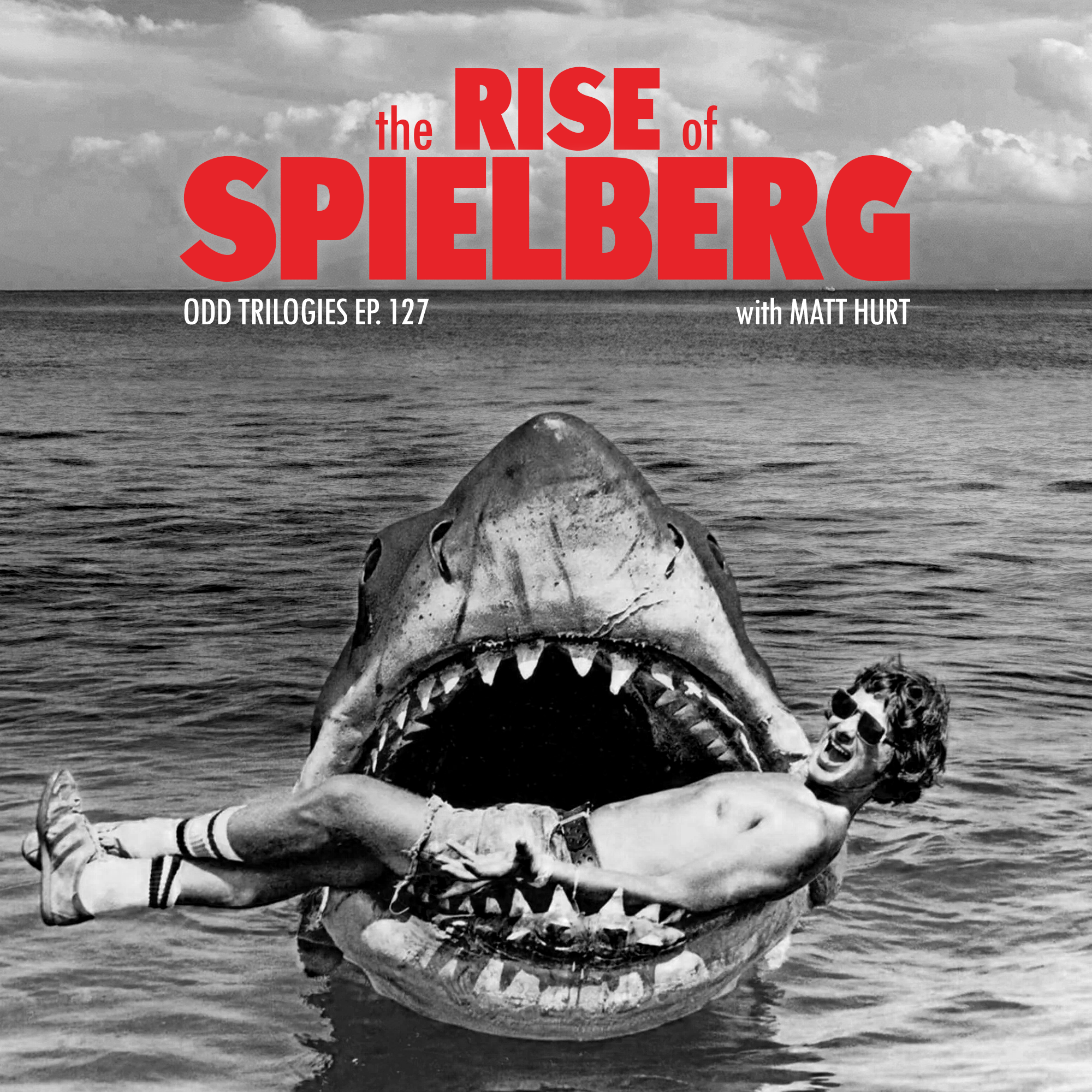
Yeah, but, but we're not gonna be talking about mostly his popular stuff. We're gonna be talking about the films that started him basically, and that is the rise of Spielberg. We are talking about three notable films in Spielberg's career. His first three big films, which are 1971's Duel, 1974's The Sugarland Express, and a little known film that I think some people might be aware of called 1975's jaws.
But we're not doing it alone, are we, Andy, who's with us today?
[00:01:56] Speaker B: No, we're certainly not. We are blessed and thankful to be joined by a veteran guest.
This man is a fellow IFJ member of ours and does reviews and all kinds of film related content at the obsessive viewer.
His name is Matt Hurt. Matt, thank you for being with us.
[00:02:21] Speaker C: Hi guys. Thank you so much for having me. It's a pleasure to be back and it's a pleasure to actually fill a couple of blind spots in my Spielberg viewing.
[00:02:31] Speaker B: Oh, yeah,
[00:02:33] Speaker C: no, I had.
[00:02:35] Speaker B: It was the only one.
[00:02:37] Speaker C: Yeah, I hadn't even heard about it. I thought it was a TV movie like Duel.
[00:02:43] Speaker B: Now Matt has joined us in the past for some Kurosawa adventures and a little John Frankenheimer paranoia action.
His last episode with us was last fall with the Twilight of Kurosawa where he looked at the final three films of that Legendary director.
But now Matt's joining us for kind of a different flavor of things. Matt, could you tell us a little bit about what stood out to you about this option? What made you want to sign up for it?
[00:03:21] Speaker C: Yeah, so like I said, I did have a couple of blind spots. I had never seen Duel or the Sugar Land Express.
Jaws, of course, is iconic. I've seen it several times and seen it in the theater several times too. It's, it's such a great experience.
But those gaps are like always, you know, always at the forefront of my mind. So like, like I, and I want to make a concentrated effort to watch more, watch more of those blind spots. So that's what stood out to me with this, with this, with this episode. And yeah, it was, it was a blast.
Yeah, I was, I was very thankful that the spot opened up for me to, for me to be on your guys's show.
[00:04:10] Speaker A: Yeah. Unfortunately, we can't call this the American Kurosawa trilogy, but I'm excited to really talk about these three because I'm the same as you. Blind spots for me, Spielberg wise are definitely Duel and Sugarland.
[00:04:24] Speaker B: Yeah.
[00:04:25] Speaker A: And I also didn't even know Sugar Land was here his until about, I think it's, I think it's almost been a decade now. But HBO did a three hour documentary about Spielberg's life.
[00:04:35] Speaker C: Yeah.
[00:04:36] Speaker A: Which I highly recommend. So if you, if you've, you know, been a fan of Spielberg for a while, but you want to know his roots and like what happened in his early years, highly recommend that documentary. It's fantastic. But I remember that documentary talking very quickly about Duel and Sugarland and I think a lot of the responses to Sugar Land, which we'll get to later. But yeah, his career, I mean, Spielberg has been around for so long, has made so many films in his career. He has made a film about himself practically and then had a few after. Like he is, he is quite a film. He's got quite a filmography. It is insane to think that at any point in his career he was not considered the best of the best. But you have to start somewhere. And I gotta say, for starting somewhere, it is, I don't know how you can start anywhere, more kind of unique than a television film that was just popular enough that Universal wanted to put it in theaters with 1971 Duel, because apparently, at least if IMDb is correct, you know, Duel was originally a television film that was, I think just over 70 minutes when it first aired on television. But it was such a hit and Universal had such strength in it or had such faith in it that they decided beef it up to 90 minutes and we'll give it like a limited run and yeah. Leading to having like the film getting some. Very fascinating because I think in the added stuff, because the film is basically about a traveling salesman who pisses off the wrong trucker and is basically trying to stay alive on the road while this trucker is constantly harassing him.
And that's it.
[00:06:15] Speaker B: Yeah, it's, it's, it's basically unhinged, minus Southern Russell Crowe.
[00:06:21] Speaker A: I mean, that's what this movie was missing. So it's, I mean, now that you put it like that, yeah, I'm glad
[00:06:26] Speaker B: we finally got a superior remake.
[00:06:30] Speaker A: But yeah, I mean, Spielberg made his first technical feature film, I believe he made when he was in his late teens and he put in theaters, I think for a night called Firelight. It's lost to time. It's never been like he never. It was made when he was very young and he was, he's still not like he's not ashamed of the film. But again, he was very, very young when he made that film. And it wasn't until years into the industry, like Spielberg did something that now you hear about it and you're like, there's no way you could do that today in Hollywood. Which is he basically snuck on to studio sets and pretended like he had an office. And he had such moxie as like a 20 year old. They basically let him direct television, work on stuff. And he did episodes of Columbo, he did other like hour long, 90 minute episodes for other television shows, which leads to him in his mid-20s coming out with this.
And it's, it's just fascinating to see how much, because again, Duel does look like a television film. And that's not in a bad sense. Like it clearly is working with a small budget very, very efficiently, which I think, you know, is something universal, of course, is going to keep in mind for future reference. But it is fascinating how, you know, for most directors, I mean, you guys can say otherwise, but it seems like when we talk about, especially directors who have been around for so long, television movies they did early in their careers never really get a lot of limelight unless you're really diving deep. I think the only other time I've heard of like talking about directors and their television work versus their theatrical stuff is Michael Mann with like, you know, Miami Vice or even the film that basically was the progenitor of Heat, which was like a late like night 80s TV movie that's like 90 minutes. But it was like a proof of concept to what will ultimately become in the 90s.
But besides him, it's usually I. It's Spielberg and Duel because it's just a fascinating kind of story about like a little, little movie that could. That does exactly what it needs to do on TV and they go add like 20 more minutes. And honestly, the stuff that they added, I think is like. Because I think the opening was added, which was like the tracking stuff through the city, which I really, really liked. I think that's a great.
[00:08:46] Speaker C: Me too.
[00:08:47] Speaker A: Calling his wife, I think is also something that was not in the original film.
Right.
[00:08:52] Speaker C: And that blew my mind a little bit because, like all the stuff that's listed as stuff that was added, stuff that is integral to like the plot. Like, I feel like if you take everything, I assume like the 74 minute cut or whatever was just like.
Was just the truck and him.
[00:09:11] Speaker B: And just.
[00:09:16] Speaker A: One of the only things actually was an original cut that
[00:09:22] Speaker C: I think. I think the diner might have been included. I know the school bus was added, the phone call to his wife was added, and there were a couple other ones I can't remember.
Yes, that one.
[00:09:37] Speaker A: Basically, yeah, if it does. Because again, not say the movie's bad. I really like Duel. I had a really good time with the movie. I think we did.
Honestly, it's hard to have a bad time with this movie with Dennis Weaver as the lead because he.
[00:09:51] Speaker C: Oh, my God.
[00:09:52] Speaker A: Yes, fantastic. I will say, Matt, in terms of my experience with Dennis Weaver, I've only seen him in one other film and that is a. Basically a propaganda cocaine film with James Spader where it's like, wow, that's wild. Weaver plays a salesman who gets. Who gets like introduced to cocaine and starts to get like addicted to it. And he's absolutely insane.
[00:10:16] Speaker C: Wow.
[00:10:17] Speaker A: Wild.
[00:10:19] Speaker C: That's wild. Because I didn't know that Dennis Weaver was in this. And my kind of touch point with Dennis Weaver is he's in one of my all time favorite Twilight Zone episodes from season two, Shadowplay, where he plays.
Yeah, he plays a death row inmate who is in a time loop. So he's reliving the court date and he's trying to plead with everyone to realize that it's all a dream and that he can't.
Everyone's fictional or whatever. And the only way to break it is to him to get a stay of execution. But no one believes him because they think he's crazy. But his performance in that is incredible and it's really great. So it's like seeing him in this, I was like, oh, this is awesome. And then added bonus.
I know that I knew this, but I guess I forgot about it. But this was written by Richard Matheson, who also was adapting his own short story. Richard Matheson is, I believe he's second only to Rod Serling for the most Twilight Zone scripts. And like this, this movie feels like Steven Spielberg doing a Twilight Zone episode. And it's fantastic. It's like that was like, as soon as I kind of keyed into that, I was like, oh, Dennis Weaver, Richard Matheson, Steven Spielberg. Okay, this is my jam. Let's do this.
[00:11:41] Speaker A: Yeah. The best way to describe it, absolutely. That it's a Twilight Zone episode. It's like an extended.
[00:11:45] Speaker C: Oh, yeah.
[00:11:46] Speaker A: It just. Yeah, because like, you can definitely. Especially which now, I mean, I appreciate it when we ended the, when the film ended on my screening, but like, I really do appreciate the choice to never ever reveal who the trucker is.
Same there was internal, apparently. I think Spielberg talked to the actor in terms of like, what you can, what you can make of it if you want to is like, this is what, what you can like chew on with it as a character if you want. But like, we're not gonna really, really talk.
Honestly, the cheekiest thing he does at one point is just try to wave Dennis Weaver along just to try to with him.
[00:12:20] Speaker C: That was great. That was fantastic.
[00:12:22] Speaker A: Incredible moment. But like, yeah, I think it's so good. I think at one point there's like a say, like played as if like you're a trucker that does this all the time. Like you're a serial killer that pushes people off the road with the truck. Or just like you're one of the, like, play it as like one of the meanest son of a bitches you can think of.
And there's just, there's an animosity, like ambiguity that is just like very classic. Like, this would be where Rod Serling jumps in. This would be where this is where he starts.
[00:12:50] Speaker B: He's on the side of the road.
[00:12:52] Speaker C: Yep.
The truck itself, like just becomes this. This monster. Like it. Like even from every, like, detail of it, the dusty, rusty kind of just look of it. It's like this is an impos.
That's terrifying.
And I put this in my little letterboxed blurb. Jesus.
I did think it was kind of funny. And I understand the limitations and everything, but I thought it was funny in a non intentional way that the entire movie we see the tanker says, flammable, flammable, flammable. There's not a single explosion, anything like that.
I understand the limitations, but I was just like, that's kind of funny.
[00:13:35] Speaker A: The twist is. But, yeah, flammable tank that's never full. Like, that's just right.
It's another sick bastard move from him. This is the teeth.
[00:13:44] Speaker C: Yep.
[00:13:45] Speaker A: Yeah, it's. I. I knew going into it is going to be as straightforward as it is, but it still was astounding just how. And it could be considered a flaw, but just how every single kind of bit does kind of have the same, like, testing the waters. Maybe I can find out more about this guy, prove to people I'm not crazy. Something happens that shows I'm not crazy or I kind of went too far and now I look crazy and I'm going to drive away.
[00:14:13] Speaker C: Yeah.
[00:14:14] Speaker A: And that's the movie for like, 90 minutes. But it's.
[00:14:17] Speaker B: Yeah, yeah. And it does. I mean, you're right. Like, each kind of little episode or encounter within there does kind of follow the same arc. So it does. You know, it starts to feel a little bit repetitive, but it's also like, it works almost entirely on Spielberg's. Insane. Especially at this age, at this level of experience. Insane grasp of, like, cinematic momentum.
[00:14:41] Speaker A: Yeah.
[00:14:42] Speaker B: Just like the way the movie moves, it's so intense. It's so rapid fire. And I mean, he's on. He and his DP are on fire on the camera.
[00:14:53] Speaker A: It's.
[00:14:53] Speaker B: Which is just. It was baffling to what. I mean, obviously it's Spielberg. And, you know, it's easy to say now, like, oh, yeah, well, he always had it, I guess.
But, like, just to be that green and yet this movie is so kinetic.
[00:15:10] Speaker A: Yeah.
[00:15:11] Speaker B: It's just awesome.
[00:15:14] Speaker C: Yeah. I didn't know that it was. I didn't know that it was a TV movie until I looked it up later and, like, see. Yeah. And seeing that, I was like, oh. Because throughout the whole movie, I'm thinking, like, man, I can't imagine, like, being like, in the audience of the theater.
I was like, this is a very theatrical movie, for sure.
[00:15:31] Speaker B: Yeah. The other thing is, like, what's another TV movie that has this kind of energy? Like.
[00:15:37] Speaker C: Right.
[00:15:37] Speaker B: And to get it so much, there's probably movement going on. Yeah.
[00:15:41] Speaker A: I mean. Yeah, I agree with both of you to the point where I think the only thing that I think that really shows it being a TV film is the internal monologue. Because I feel like all the shots of Dennis Weaver losing his mind internally, like in the diner or just like in his car anytime that Right before the monologue came in, I couldn't help but think about, like, the shots, which we'll talk about later, of just Brody and Quint and Hooper there were. It's just holding on their faces because you don't need to spell it out to the audience unless it's a television film. And studios are worried that people aren't going to catch on to the psychological kind of downfall that this man is having in this process.
[00:16:26] Speaker C: Yeah.
[00:16:26] Speaker A: So you'll have Dennis Weaver come in and just be like, hey, just say what you're thinking. Just like, where were you at this point? And again, Weaver does a great job. I think the way.
[00:16:35] Speaker C: Oh, yeah.
[00:16:35] Speaker A: Exasperated.
Like, he even. I think it's a great choice that it. Like when they're doing the internal monologue, he's not speaking at full volume. He's like whispering entire time. Like he's afraid that people are going to hear his thoughts.
And it's like great voices there. But, like, that was every time it happened. I was like, man, I kind of wish we just sit on him silently
[00:16:56] Speaker C: and see with me like that. I loved those inner monologue things specifically because again, like, it harkens back to just my love of the Twilight Zone. Because it feels like the Twilight Zone. Like the season one episode, the hitchhiker with.
I can't remember the actress's name, but anyway, that episode is very similar to this and that she's, you know, she's traveling and there's just this hitchhiker that's trying to get her attention. That's supernatural and stuff. Like, there are moments, at least one or two where she, like, has this moment where she has, like, this inner monologue. And like, it just reminded me of that. And I don't know if that's what they were going for or what have you, but I just. It felt very comforting to me as a fan of the Twilight Zone, for that.
[00:17:39] Speaker A: Mean, with you bringing up that Weaver was on Twilight Zone and reminding me at least about Matheson's involvement, I think that was definitely intentional. Like.
[00:17:47] Speaker C: Yeah.
[00:17:48] Speaker A: I mean, again, there's. You can just look at any picture of Spielberg at any generation. I think you can go, you have to love the Twilight Zone, even if you don't know the fact that he, of course, directed the Kick the Can segment in the film, which is what is considered the worst segment of that film, which is not his fault, I think.
[00:18:07] Speaker C: So.
His fault.
[00:18:09] Speaker A: That movie had to.
A few problems, to say the least. In production.
[00:18:14] Speaker B: Sure, A little bit.
[00:18:16] Speaker A: Yeah. But I mean, it is. It Is it is kind of fascinating. Just at least in my personally, just going years and years about hearing Duel and being like, you know, there's so many car movies you hear about, whether it's, like, actual racing films or just kind of like French Connection or Bullet, where it's like, you hear about all these, like, fascinating, like, this is a cool car movie. And it necessarily wasn't trying to be that, but it just knew how to write cars and shoot the action and watching this to be like, yeah, this is insane that this, like, movie was for television and, like, they got the shots they do in the car. Especially considering what he, like, upgrades to in Sugarland Express camera wise for having to, like, shoot the interiors of cars and actually shoot. Having more of a budget than Duel.
[00:19:06] Speaker C: Yeah.
[00:19:07] Speaker A: I will say, though, my favorite shot, and you could have done it, my favorite shot in the whole movie is the, like, the zoom in on Dennis Weaver's face when he's, like, trying to duel the truck. At the very end, he's got the glasses on, almost like it's going up his nostrils.
I think he even goes.
[00:19:22] Speaker C: It's so good.
[00:19:24] Speaker A: It, like, jolted me back up. I was like, what? Why do we have a shot? I love it.
[00:19:31] Speaker C: Oh, yeah.
The whole thing with. To go back to adding scenes to it and everything, like that scene with him talking to his wife on the phone.
The reason that that kind of blew my mind that that was added in later is, like, that feels so integral to the overall plot. Like, it feels like. It feels like. It's, like, setting up, like, okay, this guy is insecure, or he is. He's someone who doesn't. He avoids confrontation because the whole phone call is about how he didn't confront some guy in their neighborhood at a party that was doing something to his wife. And, like, I thought, like, oh, okay. Well, this is the whole arc of the movie is him, like, him, like, taking control or, like, standing up for himself or whatever and fighting back. But, like, to know that that's added later, I'm like, okay, wow. All right, cool.
Yeah.
[00:20:28] Speaker A: I imagine in the original cut, it was just about the Forbes meeting. And because he caught. He talks about it way more than he talks about his wife.
So I imagine, yeah, it was that. And then they're probably like, when they're adding the, you know, the shots of him leaving the house, they're like, maybe we should see the family. If we're seeing the house, why is he doing this? And it's for a wife that does not care what he's doing. As long as he's home to be with his mom.
[00:20:55] Speaker C: Right.
[00:20:56] Speaker A: He doesn't want to be alone with his mom.
Because after that call, I think the only other time he references, at least what they were talking about in that call is like, when he's hiding at the railroad area. He's like, well, I guess I'm not going to make the Forbes meeting.
[00:21:12] Speaker C: Oh, yeah.
[00:21:14] Speaker A: So, yeah, I mean, yeah, it was. It is. I mean, the buzz scene does feel added, not in a bad way, but it does feel like, again, a little bit of that, like Andy said earlier, kind of a bit of a repetitive. Could feel repetitive kind of motion and just. I mean, it is funny to watch Dennis Weaver just hop up and down on a car just to get. Stop being attached to a bus.
[00:21:35] Speaker B: Right.
[00:21:35] Speaker A: And the kids try not to get in the road and then the truck just shows up randomly.
[00:21:42] Speaker B: Yeah, that truck is just like, always right around the corner.
[00:21:44] Speaker A: Yeah.
Crazy to think, though, like. Because I think at the time, like, watching it, I was like. Because if you look at the poster, like, for the film when it had its theatrical release, it pushes hard about like it's a killer truck. It's coming at you basically making like a great white shark kind of vibe in terms of like, this thing is coming at you.
[00:22:06] Speaker C: Yeah.
[00:22:06] Speaker B: It's a monster movie. Yeah.
[00:22:07] Speaker A: And it's like, initially watching it, I was like, I mean, yeah, he's. He's an asshole. But like, there doesn't feel very malicious until you get to the moments, I think, like, at the bus where you just see him slowly creep up and it's just watching the whole time.
Yeah, yeah.
[00:22:24] Speaker B: He's this looming presence. And yeah. Movie goes, he gets more and more kind of surreal or monstrous. Like less of just a pissed off guy on the road and more just like this ancient eldritch spirit haunting the highway.
[00:22:42] Speaker A: Yeah. I mean, do you think. Do you think it is.
I actually don't know. Off the top of my head. Was the truck driver actor in the diner when they were having the whole scene of, like, which one of these cowboys is the trucker? Or do you think he was just in the truck the whole time and just giving like, I'm gonna wait 10 minutes.
I'm gonna wait 10 minutes. He'll probably lose his mind and then I'll leave?
[00:23:03] Speaker B: Yeah, I don't know.
[00:23:04] Speaker C: That's a good question.
[00:23:05] Speaker B: Matt, you got a theory?
[00:23:07] Speaker C: No, not really.
I feel like.
I feel like he maybe was in there, but I like the idea that he's just like, he's not in There. He's just fucking with him to increase the paranoia, so I'll go with that.
[00:23:21] Speaker B: Yeah. I mean, it is, it is almost creepier to imagine that he did somehow get in and out of there, you know, and within the room with him. But also, like, it does kind of feel like the movie all but, you know, crosses out any of the options that we see, at least.
Yeah. Maybe he just, like, reclined his seat, laid down in the cabin of the truck and then popped back up.
[00:23:50] Speaker C: Yeah. Or just hung out in the clearly empty tanker.
[00:23:57] Speaker A: I think he's probably worried to see if he was going to get a cheese sandwich on rye or sourdough.
[00:24:03] Speaker C: Like, oh, yeah.
[00:24:06] Speaker A: With a, with a glass of water that he's shaking in his hand because he's so stressed.
I will say those. All the townsfolk that we get through the gas station, both the gas stations diner, they are the chillest people out of.
[00:24:23] Speaker C: Oh, yeah.
[00:24:23] Speaker A: Like, they watch Dennis Weaver swerve so hard and actually cause property damage to them.
[00:24:31] Speaker C: Yes and no. And they're just like, okay, yeah.
[00:24:33] Speaker A: They just are like, yeah, like a weird day, huh?
[00:24:37] Speaker C: Like, I, I was sitting there thinking, like, okay, now he's gotta, like, contend with that. Like, I, I, I'm waiting for him to apologize for the fence and everything. And, like, the guys, they don't care. They're just like, all right.
Yeah. Oh, yeah.
[00:24:51] Speaker A: Because he thinks, thinks, oh, gosh, that's a great scene in that. That, that's also got things probably some of the most Spielberg ass camera movement, which is like a little dolly.
[00:25:03] Speaker C: Oh, yeah.
[00:25:05] Speaker A: Yep.
[00:25:07] Speaker C: The, to go, to go back to the bus scene, though.
And I think there's a, there's at least one or two other scenes where it involves another car or another, another group of people.
I was kind of on edge during it because I was thinking, like, I did have the thought, like, oh, my God, is it, Is it, is he gonna kill a bunch of kids? Or is it, like, what, where's the, like, is it, Is that the derangement? Because I'm, like, waiting for, like, throughout the run of the movie. It's like, okay, well, he's got this, like, personal vendetta or whatever. He's going after Dennis Weaver and it's this game of cat and mouse and everything. I was waiting for, like, a moment where someone else would be in the crosshairs or just kind of cross paths. And then I was thinking that that would be the moment where, like, the movie escalates and it's like, okay, he is actually gonna kill People. Because he killed this, like, random person with completely, just randomly.
I was waiting for that. And I do appreciate that they never really went there, but I did have that tension in each scene where there was another person. I'm like, oh, is he gonna kill these kids, or is he gonna kill this lady that's obsessed with her snakes?
[00:26:24] Speaker A: He does try to kill the snakes. He doesn't do it.
[00:26:27] Speaker C: Yeah, that's true.
[00:26:28] Speaker B: Yeah, he probably got some of them.
[00:26:31] Speaker C: The number of cages crashes into that phone booth scene. Oh, my God.
[00:26:35] Speaker B: Oh, yeah.
[00:26:36] Speaker A: Again, it's so good to show how good, you know, how much talent Spielberg had so early on in his career is that pretty much every scene goes how you expect it to go.
Like, oh, yeah, like, where the diner scene's gonna go, where the telephone, you know, the booth is gonna go. The bus, for the most part, you know, it's gonna. How it's gonna end. But the tension is still there at all times in the way that it's edited music and just the fact that, like, Dennis Weaver sells it every time. Dennis Weaver.
[00:27:06] Speaker C: Oh, yeah.
[00:27:07] Speaker A: That tanker, like, it is one of the four horsemen of the apocalypse. Like, he just. N. Yes. Like, death is on a horse coming after him at all times. He is horrified. It doesn't want anyone involved. And, yeah, it is definitely a choice to not have him just, you know, flippantly kill people that are just in his way. But honestly, I can see that, you know, scarier to them because it's like, no, I don't want to. I don't want to kill anyone who pisses me. Me off. I just want to kill you. It's like. It's kind of.
[00:27:37] Speaker C: It is like.
[00:27:37] Speaker A: That is horrifying on a different level.
[00:27:40] Speaker B: Right. To think, oh, I happened upon this road at exactly the wrong time to meet the one. The guy who only wants to kill me.
[00:27:46] Speaker C: He just wants to be a sick.
[00:27:48] Speaker A: To watch this man, because I. I can't imagine he was. I mean, he's got to have a fun time when Dennis Weaver's trying to, like, wave down the old. The old couple and they're just, like, freaked out.
[00:27:58] Speaker C: Yeah.
[00:27:59] Speaker B: And he's sitting there watching them.
[00:28:00] Speaker A: Yeah. That's what he tells them to him, go forward. Oh, man.
[00:28:04] Speaker C: Yeah.
[00:28:04] Speaker A: It's. It's just a good time. It's just really good. It is.
[00:28:07] Speaker C: Oh, yeah.
[00:28:07] Speaker A: It's surprising how much it's aged incredibly well. And, you know, even to its very last moments. This is, again, very 70s, all three of these movies.
[00:28:20] Speaker C: Oh, yeah.
[00:28:20] Speaker A: In terms of just going until the Very last minute. To get everything out of the way and then five seconds of cringes and then D.
Yeah.
And to have the finale just be Dennis Weaver being like, it. I.
What else am I supposed to do? Out of road and get him in the most, like, cartoonish way. Like, how does. How does. How does this killer truck not see the, like, the
[00:28:50] Speaker C: red cape as he's
[00:28:51] Speaker A: going to be pulled away as it gets.
[00:28:53] Speaker C: Oh, yeah.
[00:28:55] Speaker A: Oh, my gosh.
I mean, it's fascinating how the movie. Yeah. It just has that finale of them going against each other and of course, Weaver wins, but it just ends with him in the middle of the desert.
[00:29:07] Speaker C: Yeah.
[00:29:07] Speaker A: Sitting as the sun sets. And it's just. That's it. That he is one.
[00:29:15] Speaker C: Yep.
[00:29:15] Speaker B: Yeah.
[00:29:18] Speaker A: And it's. It's. I mean, it's just. Yeah. It's aged incredibly well. It's a fun cast. It's a fun premise.
Yes. Definitely see it be repetitive to some people, and it is repetitive, but I think it is in a way that is just engaging enough with Weaver and the truck and the cinematography that it's like, okay, this guy's got something. What does he do next?
I mean, what he does.
[00:29:43] Speaker B: It's also just fascinating to watch, knowing it as a predecessor to Jaws and to so many other things that Spielberg does, but, you know, kind of most obviously Jaws, because this is Jaws on the highway.
[00:29:57] Speaker C: Yep.
[00:29:57] Speaker A: Yeah.
[00:29:58] Speaker B: Just with, you know, Spielberg figuring out and almost mastering on the first try how to create that monster chase, that kind of kinetic terror of, oh, this thing is coming the entire time and you don't know when it's going to strike. And, you know, just his ability to use, you know, music and editing and camera moves and the intensity of his lead performance to, you know, really suck you in as a viewer, to, like, you know, feel like you're the one getting chased down, which, you know, ultimately we'll see again and even further refined two movies from now, four years from now.
[00:30:36] Speaker C: Right. And seeing. Seeing this and, like, thinking it's so evident, it's like, oh, yeah, yeah, this is the guy that in a few years is going to essentially invent the modern blockbuster.
[00:30:48] Speaker B: Yeah.
[00:30:49] Speaker C: Like, clearly that's the case. And he's doing like. Yeah, yeah, it's.
[00:30:55] Speaker A: It is. Yeah. And gosh, yeah, the. The rear view mirror shot in Duel is very much funny. Just like the fact that he knows how to use just mirrors as a way to intensify a scene and how hilariously, like, 20 plus years later, he will do that more in a comedic way with Jurassic Park. But like just. Yep, just the creative juices flowing. As a director, it is, you know, no surprise that as soon as he does Duel and it comes out, he has basically two other films that he does after it. They're TV movies that have been lost to time. But I believe there's something wicked and Savage. Savage is Martin Landau film. But so yeah, he.
[00:31:33] Speaker B: Savage was also like really made and intended to be a. Like a pilot. Like a double episode pilot for a TV show that never happens.
Kind of only a movie in retrospect.
[00:31:48] Speaker A: I mean, regardless, even with those two under his belt, we're going from his first ever, you know, studio film with Duel to now his first film built for theatrical release from the ground, which is 1974, is the sugar Land Express.
Probably the one I knew the least about going the two films that I hadn't seen and to get it out of the way because there's a lot of good things about this movie. This is my least favorite of the three.
[00:32:18] Speaker C: Mine too.
[00:32:19] Speaker A: It's a good movie and I think
[00:32:21] Speaker B: we all hate it. And actually now we don't like Spielberg.
[00:32:24] Speaker A: Here's the thing, it says a lot and I know that it's. It could be. It could be a hot take to some people. I do think it has one of the sexiest camera moves Spielberg has ever done.
[00:32:35] Speaker B: Crazy camera work in it. Like.
[00:32:37] Speaker C: Oh yeah.
[00:32:38] Speaker B: Maybe like. It struck me as almost. Maybe like his most clever camera work in his career. Like in a single movie, there's just so much good stuff to go from.
[00:32:48] Speaker C: Oh yeah.
[00:32:49] Speaker A: Go from a film that is mostly two cars on screen together. Sometimes three if you're nasty, if they had the budget to basically having a full police squad almost Blues Brothers style, even later. Just like pile ups that are crazy.
[00:33:08] Speaker B: It is.
[00:33:09] Speaker A: It is crazy to think of just in that three year span going from, you know, TV movie to a first theatrical release to have this, you know, this camera setup that was. It was, I believe as a Panavision camera design that was supposed to be used for another film that unfortunately was not ready for by the time.
[00:33:28] Speaker C: For Bullet.
[00:33:30] Speaker A: I think might have been for Bullet. Yeah, it was. I think they basically designed this for a specific film and they were like, oh, we're using for this film. Wasn't ready by the time they did that. So Spielberg was able to jump on it and use it for Sugar Land.
And the film it absolutely benefits.
[00:33:46] Speaker C: Oh, no, no, no. Sorry. It wasn't Bull. I'm so sorry. It was originally intended for Play Misty for me. Clint Eastwood's Directorial debut.
[00:33:55] Speaker A: Yeah. Yes, that sounds about right.
And it is. Again, the. The film's premise is very straightforward. It's Goldie Hawn. And is it Atherton or Arthurton?
I think it's Atherton and Will Atherton, who are a couple who.
Atherton breaks out of prison to help his. Help his wife go find their child who's currently in foster care at Sugar Land, and they steal a car. They get stuck in a hostage situation with a cop and then they become this local sensation overnight because of their, you know, dedication to wanting to get their child and do whatever it takes, including fight, like going against the law to do so. And basically, you know, going into this character study, character drama in a car, basically, that is fascinating in just so many different ways. And besides the cinematography, it is just kind of. The cast itself is pretty interesting, especially with the Atherton of it all, because, I mean, most people would know, especially a decade later, he was, I mean, I bet he. He absolutely hated this, but he was really good at it. In the 80s. He's mostly known as the douchebag in an 80s movie because he has. Oh yeah, four or five big films in the 80s. One of them being, of course, Ghostbusters.
He is the man that has no dick, according to Bill Murray.
And he was a. He was a classically trained actor who is. It's wild to see him this young. I've never seen him in this. I have not seen him working in the 70s. I think the 80s is the earliest same, but he like the cast of him and Goldie Hawn and then the actor who plays Slide, the, The deputy that take a hostage.
[00:35:46] Speaker B: Yeah.
[00:35:46] Speaker C: And then they.
[00:35:47] Speaker A: The. The sheriff himself who is like all, all four of them are such a fascinating mix.
And to watch their kind of watch the three. Watch Slide. And is it, It's. Is it Slovis? It's Clovis. It's Clovis.
[00:36:05] Speaker B: Clovis.
[00:36:07] Speaker C: Clovis.
[00:36:07] Speaker B: Lou Jean.
[00:36:09] Speaker A: Yeah.
Blue Jean. Oh my Lord, it is.
[00:36:14] Speaker B: What an awful name. Sorry to the real life woman, but terrible name.
[00:36:18] Speaker C: Yeah.
[00:36:18] Speaker A: Because the film, it's based off of a real life event that happened in the late 60s is what it says.
[00:36:24] Speaker B: Yeah. It's only like five years before the movie happened.
[00:36:28] Speaker A: And apparently while the movie says it took like two days to have apparently happened in like multiple hours, it wasn't like a full few days.
[00:36:36] Speaker B: Yeah, the movie kind of blows it way up
[00:36:41] Speaker C: and alters it a little. Like I think that the real people were going to see her.
Her mother who had custody or was like was taking care of her kid from another marriage and.
Yeah.
[00:36:56] Speaker B: Yeah. Well, it also wasn't a prison break. Like he was already out of.
[00:36:59] Speaker C: Oh yeah, that's true.
[00:37:00] Speaker B: Prison when they did this. Which very much changes the like, stakes of the story.
[00:37:06] Speaker C: Oh, yeah.
[00:37:06] Speaker B: But like, you know, it gives the film kind of like that kick in the pants you need.
[00:37:10] Speaker A: Yeah.
To get it out of the way. Because I will have to say I think this is the most 70s ass film out of the three of these. And I think a lot of that has to do with how crime is committed, how easy it is. Yeah. Because again, it's pre release. He's not in full prison, but the fact that he just basically changes his clothes and he's able to get out.
But the biggest thing is the fact that the big kind of, I guess intense kind of dramatic involvement in the film is that the cops find them pretty quickly with their hostage with Slide.
And they don't do anything. They just follow them because even though they're holding Slide hostage, they're clearly at least a slide. And tell them they're not violent, they have no intention of killing anyone. Because Clovis. Clovis is not in prison for murder. He is in there for petty theft and maybe grand theft. Not grand theft auto. Possibly.
[00:38:05] Speaker C: Right.
[00:38:07] Speaker A: But it's just like, it is fascinating to watch a film where it's just like an entire police force following two people.
Just stop for food, get gas.
[00:38:17] Speaker C: Yeah.
[00:38:18] Speaker A: And don't ever try.
[00:38:21] Speaker C: Exactly.
[00:38:22] Speaker A: If they do, they get reprimanded.
[00:38:25] Speaker C: Right. It's. That's where the movie kind of.
That's where I was a little like this disappointed with the movie is I feel like it didn't really do much to really make me believe those stakes. Like where you have dual. Where granted a lot of those interactions are kind of repeating each other and doing kind of following that same template. It still was enough variety and change.
It was still believable. It still held my attention.
And here I'm thinking, okay, well, how are they going to get gas? How are they going to do this? And I'm thinking of like movies like, I think it was maybe either Air Force One or Executive Decision where they had to. Had to like fuel the plane in midair and everything. And I'm thinking like, oh, they're gonna do some crazy shit like that.
But no, it's just like we're just gonna go the gas station and go. And then like, it felt like when we got to those little segments where they like, okay, she has to pee. So they're going to do this. Like, that's. That's thrilling. That's interesting. But also I'm like, why is. Why are they not going to take the shot? Like, why. Like, why?
It just didn't feel like as tense as it could have, as it could have or should have been.
[00:39:42] Speaker B: The movie coasts on a lot on, like, the cops just hesitance to do anything, which, you know, the movie makes some effort to justify. And, you know, you get it in certain instances. And there are moments where our central characters kind of just outplay them.
But, like, a lot of it feel a lot of the scenes, like you said, Matt, there's not that moment of like, oh, shit, how'd they pull that off? Or like, that was really clever. Most of the kind of encounters or, you know, kind of crossing paths moments, just kind of resolve. Because the cops are like, yeah, hold off, we'll get them later. Like, well, yeah, See where they go with this.
[00:40:23] Speaker A: Yeah. The biggest thing is the sheriff, apparently, which I think the sheriff does a great job in the movie.
[00:40:28] Speaker B: Yeah.
[00:40:28] Speaker A: I think he's a very fascinating character. And I feel like, unfortunate now watching this film in 2026 is he feels so uncharacteristically like cop or sheriff in terms of.
[00:40:40] Speaker C: Yeah.
[00:40:41] Speaker A: Handles things. But it is fascinating. Just like his whole conceit is just, I don't have a death on my record.
Like, it's like he doesn't have. He's never had to shoot anybody. He's never had to kill anybody on or had anyone have to be taken in through actual violence like that. And so it's like, very fascinating. Doesn't make. It doesn't really fully justify getting a porta Potty for Goldie, for Luji. Sure.
[00:41:07] Speaker B: Yeah.
[00:41:07] Speaker C: Right.
[00:41:08] Speaker A: It is. It's funny when they try to hide a cop in the porta Potty and they're like, damn it. Yeah, I should have known better.
[00:41:13] Speaker C: I thought that that was a good. Yeah, that was.
[00:41:15] Speaker A: That was.
[00:41:16] Speaker C: That was clever. I like that.
[00:41:17] Speaker B: Yeah. And I mean, there's a version of this story or movie where, you know, if you spend a little bit more time on the sheriff and treat him a little bit with a little more depth of character, you can almost have kind of like a.
Like a hell or high water thing where you've got kind of parallel arcs where the cop doesn't want to do this because of his legacy and the criminals are limited because they're not trying to be violent, but they're kind of trying to purport this or project this image of violence and volatility, but the movie's not that interested in doing that.
[00:41:56] Speaker A: I'm so glad you brought up Hell or High Water, because I wasn't thinking about it while watching the movie. But I think it's a great example of a better. Better in terms of execution in certain aspects of it. Because I think one thing that holds Sugar Land Express back, at least for me, is that as much as I like Han, despite the screaming, but that's just on Brand and Atherton and the actors who play Sly and the Sheriff.
The thing about it is, like, Hell or High Water is such a phenomenal film because I want both the law and I want the cops and the robbers to make it out clean. I don't want anything to happen to either because I like both of them, and I know if they do run into each other, it's not gonna go well.
I don't really care about Clovis and Lujean. I mean, it's like one of those things, I think. I think at a certain point, I start to care about them the same way that Slide does where it's this interesting.
They have a, you know. You know, a camaraderie that is mostly realizing that these are two people who have just never been given, like, anything in their lives. They've had to take it. And by taking it, it's literally just been stealing or just trying to fend for themselves and just see that these are just two people who have never really had a chance to just, like, have their own. And so, like, that's why they are who they are. Doesn't mean that they get away. Should be getting away scot free. But it is kind of a whole film where you're just like.
You're not like, gee, I hope they find a way to get out of this. It's like, they can't. There's no way that this is gonna go well in any way, shape or form.
Yeah, they have a hostage and they're like, right?
[00:43:32] Speaker C: Oh, yeah.
And like, I do. I do wish that the movie had developed that kind of bond, the kind of Stockholm syndrome aspect of it a little bit more.
Because there are for the first, like, two acts of the movie, it's like there's a lot of just, like, not. Not a lot of, like, interface between the cop and them.
It's just kind of like I feel like there should have been a little bit more development there, but.
But by the end of it, it did make me like, I. I did get what it was going for and everything, but I Wanted to ask this because I'm curious in the grand scheme of things. Like, I feel like this is not a.
It's not a pillar of Spielberg's filmography or anything, but I wonder.
I wonder if there was any effect on its kind of cultural, you know, placement or the way people look at it, because a year later, Dog Day Afternoon comes out and that movie does a lot of what this movie does, just a lot better.
And I wonder if that is if the success of Dog Day Afternoon kind of makes Sugarland Express be this kind of forgotten Spielberg thing. Not even forgotten, but you know what I mean?
[00:44:57] Speaker B: Like, lesser viewed, spiritually similar, but one is doing it a lot more effectively than the other. I do think you get a lot of those kinds of movies in the early to mid-70s. Like, a lot of that kind of, you know, the system is fucked, and this is what happens to people. And, you know, they live deprived of freedom and agency by this fucked system.
[00:45:23] Speaker C: And that's true.
[00:45:25] Speaker B: So this is kind of that era of filmmaking of rebelling against all of those things. So, yeah, I mean, they share a ton of DNA.
But, yeah, have to agree. Dog Day Afternoon has just a lot more character to it. And two performances are insane.
[00:45:44] Speaker C: Yeah.
[00:45:45] Speaker B: Not that they aren't good here, but.
[00:45:48] Speaker C: Right. And I've just got to say it's so nice that at least we can look it back at that and see, like, now, 50 years later, like, the system isn't screwing anyone anymore. Everything is fine.
[00:45:58] Speaker B: We live in a utopia.
[00:45:59] Speaker C: So. Yeah, exactly.
[00:46:01] Speaker B: God Emperor, Donald J. Trump.
[00:46:04] Speaker A: I mean, yeah, it really is. I think the unfortunate thing with Sugarland Express is that not only is Dog Afternoon a year later, but Spielberg changes as a director a year later with Jaws. So he's not the guy that makes TV movies and, like, independent crime character dramas anymore. He is now the man that makes Jaws. And so it's like, yeah, in that span, it's. It's crazy how in a year that
[00:46:31] Speaker C: happens, but, oh, insane. And it's really impressive to see.
To see the evolution of Spielberg. Like, yeah, he's completely changing things up for Jaws, but even from just Duel in Sugarland Express, it's like Duel.
It doesn't necessarily feel like a testing ground for Sugar Land, but it feels like, okay, he did, like, incredible work with Two Cars. And like you were saying before, now he's got like a.
He's. It's like he's not necessarily trying to prove something, but it's like he's. He's setting out to, like, push himself even Further.
And the escalation and scale from Duel to Sugar Land Express is very, very impressive.
Even if Sugar Land in general is a lesser movie for me or isn't a movie that I enjoyed nearly as much as like, Duel or obviously Jaws, it's still really, really commendable because it is just massive in scale when compared to Duel.
And what he's able to do with that is really impressive.
[00:47:37] Speaker A: Imagine if I swear at least in the Spielberg doc, when they talk about this movie very quickly, they don't.
I think Spielberg talks about how. I think a lot of people treated this movie as the, oh, this is his big boy film almost.
This is a television director who has had a TV career. And you know what? TV directors will never be able to get into films. You know, it's like they should stay in their lane. And here's this guy making cute character drama with like, criminals you're supposed to like and a cot and cops that are very empathetic and the conversate, the social commentary and oh, look, he's trying something like, I think, like in his head it was like the movie, I think did very well, I think, with its. With its budget. And it was. It was a success over overall and people liked it. But I think critically it was just like, oh, look what this kid's trying to do. And I think that's.
[00:48:26] Speaker C: Oh, yeah.
[00:48:27] Speaker A: Film has like kind of that while later Jaws will be one of the most traumatic experiences early in his career just trying to make that film happen.
Yeah, it feels like with like, especially with all of his car work and dual cinematography wise, there is a confidence in Sugarland that is just like, oh, yeah. Because again, I've yet to say it this sec. One of the sexiest things Spielberg has ever done is a oner of a cop car going from left to back to right of a car in just one fluid motion.
[00:48:57] Speaker C: And it's so good.
[00:48:58] Speaker A: Insane. I was losing. I was like, this is the movie where this is happening.
[00:49:06] Speaker B: Yeah, it's kind of emotionally kind of a sleepy movie, but it's just got all this insane spectacle to it.
[00:49:13] Speaker A: Yes.
[00:49:14] Speaker B: And, you know, to expand on what you were saying, Matt, about this kind of, you know, being a stair step and that sort of thing, like, what I kept thinking about while watching this movie was, you know, okay, Duel really proved kind of right out the gate, at least for this trilogy, that Spielberg understands the technical and visual aspects of like, storyboarding and kinetic momentum and keeping the pacing moving and things like that. And how do you do that with the camera and Take the audience on a ride. So it's that kineticism and then Sugarland Express.
Although, you know, it falters for us in a lot of ways. It's still.
It kind of introduces the Spielberg of scope. Like the Spielberg that understands how to move tons of meat.
Like moving pieces all at once.
[00:50:08] Speaker A: Oh, yeah.
[00:50:09] Speaker B: And keep them visually coherent and you know, keep. Keep the. The momentum of the chase alive, even if it feels like, you know, in the script it's a little bit weaker.
But just, you know, managing all of the scale like you said of this movie. And ultimately Jaws ends up kind of being the product of those two demonstrations of the kineticism.
[00:50:37] Speaker C: Yeah.
[00:50:38] Speaker B: And of the scope and kind of combining those two to create a really wonderful, fascinating, you know, energetic blockbuster movie.
[00:50:47] Speaker A: And also, again, Sugar Land is also on top of everything because I 100% agree with you, Andy. It's also the film that introduces something that I don't think he's had to do, like this, which is the balancing of different performers.
[00:51:01] Speaker B: Yeah.
[00:51:02] Speaker C: Yes.
[00:51:03] Speaker A: Because apparently, at least with IMDb talking about this, Atherton was the type of classically trained actor who didn't get his best takes until five or so more takes. Goldie Hawn apparently could hit it in two or three takes. Just a very passionate. And so Spielberg would have to find a way to get the best of both worlds. And apparently he said he would. They would do so many takes to almost tire her out. So she was entirely instinctive. And that would be perfect for both of them because they were like. He would always hit it, but Atherton would need a little bit more time. And they just weren't on the same. They worked well together. But it was like such different styles.
[00:51:40] Speaker B: Yeah.
[00:51:41] Speaker A: And it's like. Oh, that's right. Duel is just one man in a car. And then the. Yeah. Like side character talks to him a few times. So yeah. Sugar Land is three people kill consistently for the majority of the film who are constantly talking to each other and clearly are vastly different acting wise. And for good reason. I feel like it shows three different people a unique way.
[00:52:02] Speaker C: Oh yeah.
[00:52:02] Speaker A: And it just like the fact that he's got to find a way to juggle that. But also has like these crazy ideas like the one are in the car or the establishing shot when they're hiding. I loved that shot of like, oh, the theater. And it's like the crane coming down and then you see the sign that's hiding the picture. Police sirens and like the lights and it's like, oh, yeah.
[00:52:21] Speaker B: Well. And the. The down the road. Dolly zoom of the sharpshooter. They're coming down the road, just, like, compressing all that space. So good.
[00:52:30] Speaker C: So good.
So freaking good.
[00:52:32] Speaker A: Again.
[00:52:32] Speaker C: It really did.
[00:52:33] Speaker A: It wasn't a. If it wasn't Spielberg, if it wasn't a man who basically perfects the. The Zolli one film later with one of the most iconic shots like that, this would be the type of film would be. People be like, you are sleeping on this movie, this director.
[00:52:46] Speaker C: Right.
[00:52:47] Speaker A: But it's, like, sense.
[00:52:48] Speaker C: It's Spielberg.
[00:52:49] Speaker B: It's just like, hey, he's done so much. Awesome.
[00:52:52] Speaker C: This movie is. It's good.
[00:52:54] Speaker A: It's flawed. It's good. But it's not. And I. If. If Sugarland Express is someone's favorite Spielberg film, I love that for you. I want to know why. I'm very.
[00:53:03] Speaker B: I think you're right.
[00:53:04] Speaker A: Because you're like Andy.
[00:53:07] Speaker C: Yeah.
[00:53:08] Speaker A: I mean, it's just.
[00:53:09] Speaker C: I just.
[00:53:10] Speaker A: It's fascinating.
[00:53:11] Speaker C: I can just. Yeah, yeah. Like, I'm not. I'm not like other Spielberg. Yeah.
[00:53:15] Speaker B: I mean, it's Tumblr girl's favorite Spielberg.
[00:53:19] Speaker C: Yes.
[00:53:19] Speaker A: I'm more of an Empire of the Sun.
I mean, it's. It is very much, I would say, the slowest of the three films, too. Yeah, definitely. I think. I didn't mean to see it, but I, like, accidentally checked what the time was watching the movie, and it was like, an hour in, and I'm like, we have 45 minutes.
[00:53:42] Speaker C: I had that same experience, and I was bummed about that.
I was like, I'm only halfway through.
[00:53:48] Speaker A: I think some of the best stuff is in the latter half of the film. I do think the.
[00:53:52] Speaker C: Oh, yeah.
[00:53:53] Speaker A: I thought the weakest part was the beginning. I think it is a little chunky. Trying to get into the swing of, like, getting Clovis out of prison under understanding what's going on. Slide. And the, like, whole thing with that. There's the whole comedic thing about Clovis's other fellow inmates. Parents.
[00:54:10] Speaker C: And yeah, always.
[00:54:11] Speaker A: They always drive so slow.
And that whole thing has to happen for a solid five minutes. And then, like, the chase scene happens, and then Sly gets involved, and then it really isn't until Slide. And Clovis and Lu Jean are kind of on a good level with each other. But I think you get a lot of good character stuff. I mean, I think Atherton's at his best. I think from the hideout onwards, like, the RV scene with him, it's just all, again, very much reminded me of, like, the Dennis Weaver stuff without the Internal model. Just like watching someone just thousand yard stare and you're just seeing everything, every thought process you can think of. This man is having about real. Realizing that like, this can't end well for both of them.
[00:54:55] Speaker C: Right.
[00:54:56] Speaker A: They have to find a way to get out of that as best as possible. And then, yeah, slide, slide. Be the tach to the car and he's like sleeping in the back.
Oh my gosh. We do need to talk about the vigilantes. The. The.
[00:55:11] Speaker C: Oh, yes, yes.
[00:55:12] Speaker A: So good. That is something that very much feels like. Or sorry, like weekend warrior, whatever you want to call these guys. These.
[00:55:20] Speaker C: Yes.
[00:55:21] Speaker A: Volunteer policemen.
[00:55:23] Speaker C: Yeah.
[00:55:24] Speaker A: But they.
That whole scene is probably the most like bombastic for the longest time until we get to the final chase. But yeah, just how much that like, is like God, in the current administration, these guys, right, would not be reprimanded in the slightest.
[00:55:44] Speaker C: They. I mean, they would be hired by ice.
Yeah, yeah, yeah. And that. That was a moment that. I think that that was the moment where I kind of like checked the time because I was like, is it. Is it. Is this the finale of the movie? Is this like the end? But no, we had like a full damn near hour, I think, after that.
[00:56:05] Speaker A: So that's about the halfway point after Lucian's dad gets involved to reprimand over the radio and no one hears except.
[00:56:13] Speaker C: Yeah, Yeah, I thought that was great.
[00:56:15] Speaker A: I.
[00:56:16] Speaker C: That, that was a really great moment where that was. That was the moment that I was kind of waiting for with him.
Kind of like the Stockholm syndrome thing. Like, he's.
I feel like that's kind of communicating that, you know, he's. He's the only one to hear what her father is saying about her. And it's not like this pleading, like, please think straight. It's like reprimanding her and like telling her like heinous shit.
And it's just. It's really endearing that he just chooses, like, not to say or comment or anything. He's just like talking. He's.
He's talking very calmly to her after that. And it's really. I thought that was. That was a really good. A really good scene.
[00:57:00] Speaker A: Yeah, it is. I mean, the film's got really good scenes all throughout. It's just. Yeah, I think if it was a tad shorter, a little tight, if I. If I cared more. Like, again, I like Clovis and I like Lujean and I like the dynamic they have with Slide, especially towards the end where Slide becomes more and more desperate to keep them in the car because anytime now that they're gonna get out, it's gonna be trouble.
[00:57:28] Speaker C: Yeah.
[00:57:28] Speaker A: But yeah, just at the end of the day, like when we get to the first, the finale of the film, which is just everything about that screams, you're seeing 30 signs that says, this is a trap. Please don't do what you're about to do.
[00:57:39] Speaker C: Yeah.
Elite.
[00:57:41] Speaker A: So I think is just like the most, I think ham fisted part of the movie, which is like the intensity of him like getting out of the car. And you know, there's cool things about like the tree and the banister being in the way. So there's a little bit of intensity. That's the worst. Goldie Han scream. It's my least favorite favorite screen.
[00:57:57] Speaker C: Yeah.
[00:57:58] Speaker A: She's constantly yelling at him to get out of the car, but as soon as he's out of the car, she yells for him to get back into the car. And then that's when.
[00:58:05] Speaker C: Yeah, it's like. Yeah.
[00:58:08] Speaker A: Like, make your mind up, right?
[00:58:12] Speaker B: Goldie Han just obliterating boom mics in this movie is not there.
[00:58:19] Speaker C: Yeah, it's.
[00:58:21] Speaker A: Yeah, I. I mean, there it is. Very much so.
I don't know. It's interesting now. I think if I'd be curious to actually go back and read more reviews of the film at the time. But it does feel like. Yes, like you said, Matt, I think it just, it's makes sense that the next step for Spielberg would to focus more on how to evoke more emotion to the characters and have more time to develop. Just really not have a film that is mostly on spectacle, which is what?
[00:58:48] Speaker C: Yes.
[00:58:49] Speaker A: And it's a good spot.
[00:58:49] Speaker C: Oh, yeah.
[00:58:50] Speaker A: But it is kind of fascinating to have.
Can we do the character thing but also have a little bit of spectacle. And you do have it in Sugar Land. It's just not great. It's good, right? But not great. And considering what his next film is, I think it's fine to have a little good. Not great.
[00:59:07] Speaker C: Oh, absolutely.
[00:59:08] Speaker A: But yeah, I will say that I was thrown off by the NASCAR font used for like all the credits and stuff.
[00:59:16] Speaker C: Yeah.
[00:59:17] Speaker A: Like the final, like this is where everyone is now is like slanted. I don't understand why it's like that.
[00:59:23] Speaker C: Yeah, yeah, yeah.
[00:59:26] Speaker B: The NASCAR font in this and the like goofy, almost like tiki bar font in Duel, like the kind of cartoony menu font you'd see. It's like a lot of weird fonts flying around in 70s cinema.
[00:59:39] Speaker A: I originally thought. Thought that the NASCAR font was something that was added in like a later release, like for the dvd.
[00:59:44] Speaker C: Oh, yeah.
[00:59:45] Speaker A: Cuz, like, the COVID for it for most places now is not the original poster. It's like a more right. Generic. Like, I think it's just Goldie Han's face in a car.
And so I thought that font on there was like. Oh, so they just added that because that's more modern. But then, like, watching the film, I was like, no, that's just. I guess that font's been around a lot longer than I thought it was.
[01:00:06] Speaker C: Yeah.
[01:00:07] Speaker A: And also it is. It's fascinating though too, because Sugarland Express ends almost very similarly to Duel, where it's like the last shot we get is a sunset shot that's entirely drenched in orange as our. At this point, like our surviving. One of our surviving characters kind of just like mediating on everything they've just experienced throughout the whole film.
And.
[01:00:32] Speaker C: And it's beautiful. Like, it looks gorgeous and it has,
[01:00:35] Speaker A: I think, one of the best little moments of the film, which is basically the sheriff coming over and then leaving for a sec because you think he's gonna keep him in the cuffs, but then he finds a key. Yeah. And then it's just like them kind of just talking normally to kind of almost have like a normal conversation after the last few. The last like 24 hours of insanity that he had.
Yeah, yeah, it's. It's, it's just. It's a solid good time. I liked it. Yeah, we liked it. But it's. There's no surprise that, you know, I'm not going to look at its Best of Spielberg list and be like, oh, sugar lands not number 10.
Like, it is very much like thinking it is a cult classic. Like, it deserves to cult classic status among Spielberg in a lot of ways. But it is.
[01:01:18] Speaker C: Yes.
[01:01:19] Speaker A: Yeah.
[01:01:19] Speaker B: Well, I mean, it's. It's got a strong contingency. A lot of people really love this film.
Yeah, I just think it's. It is a very rough draft for a lot of the things that Spielberg will master later.
[01:01:35] Speaker A: Oh, absolutely.
[01:01:35] Speaker B: Whereas, like, Duel is like.
Yeah, it's lacking some of the polish, A lot of the polish that he'll develop later. And, you know, it's not the most emotionally substantial thing, but, like, as a pure genre thrill ride, it really fucking works. And Sugarland is kind of like, there's a lot of great little pieces in here, but it's not coming together.
[01:01:55] Speaker C: Was this his first collaboration with John Williams?
[01:01:59] Speaker B: Yeah.
[01:01:59] Speaker C: Okay.
I, Yeah, I, I liked the music. It's. It's interesting to see the jump between this and Jaws, what some of the Most iconic music in all the film.
But I like here, I don't really have an ear for music. But I kept hearing when the. When the score would come up, like that kind of the recurring theme that plays throughout it. I kept hearing, like, the Twelve Days of Christmas. And I was that. Like, it distracted me a little bit. Like, it sounded so much like that. And I wasn't sure if that was, like.
I don't think that was intentional by any stretch, but it was like, did you did that?
Am I crazy?
[01:02:42] Speaker A: No, I think, yeah. Because I. I think I was more once I realized it was Williams, because I didn't even think about it until credits happen. And I went, same fuck. This probably means it's the first time they've done anything together. And then I kind of.
I try to confirm whether or not I was like, God, did he do Colombo? And I didn't know about it, but no. There is a motif that is very familiar in the insurance.
It wasn't 12 days for me. It was something else, I think. Like, I always. My head would twitch. Like, what is that supposed to be? Like, what? What?
[01:03:14] Speaker C: Yeah, yeah.
[01:03:15] Speaker A: I mean, it's fascinating, too, like, with it being the first times Williams and him collaborated, because it is. I always have to remind myself that, like, while when we talk about Williams and. Well, anyone really talks about Williams that doesn't really know him personally, we talk about him as one of the greats because he is. He's one of the most iconic.
[01:03:31] Speaker C: Yeah.
[01:03:32] Speaker A: Especially just in general. Especially for filmmaking. But it's like.
And I have to remember. Oh, yeah. When it comes to Spielberg, like, Spielberg and him were just dudes. They were just. They would talk to each other like normal.
[01:03:44] Speaker C: Yeah.
[01:03:44] Speaker A: It was like, oh, yeah. Spielberg is just working with a guy that is like, oh, this guy's really good. And then.
[01:03:49] Speaker C: Right.
[01:03:50] Speaker A: He's working with a guy that when he makes the Jaws score, he goes, oh, okay, I guess that'll work. And then he immediately would not be anything close to what it is about Williams.
[01:04:00] Speaker C: It's wild to think about that and like, to think that, like, anytime I see for the first time, like, a John Williams score in a Spielberg movie, I just, like. I can't think of a more just substantial, like, collaboration in film.
[01:04:20] Speaker B: Oh, yeah.
[01:04:21] Speaker C: Like, collaborative relationship between the two of them. It's like. It's insane what they've done over the last 50 years together. It's incredible.
[01:04:32] Speaker A: I mean, I always. I don't know, it could be a little bit of a tangent. I don't know what Your guys favorite like William Spielberg moment is. But I mean in terms of like his actual scores for a Spielberg film, it's I think Indiana Jones for me.
[01:04:45] Speaker C: Yeah. Yeah.
[01:04:47] Speaker B: I mean, just the fact that we can sit here and even like say we could come up with a list of moments from these two guys is like, you don't see that between two other, you know, another filmmaker and composer.
[01:05:00] Speaker A: Really? Yeah, absolutely. Yeah. I mean, to me, the moment, I think, the way I really think about the relationship is the Schindler's List when it was coming to composing for that film where Williams, I think of someone who everyone of his caliber doesn't have to at any point have anything less than the highest ego in the world because he is John Williams.
I always remember when he was talking about like when they were. He was showing him Schindler's List and Williams goes, I'm not good enough to compose this. And then Spielberg's response is. I think it was something around the lines of. I know, but everyone who would is dead.
Like, it's like it's one of these kind of things where it's like two men that are just kind of emitting like I. We aren't the perfect people to be doing what. We're handling this with this kind of content, but this is something that we never need to do. And I feel like we're perfect. Yeah. Together.
[01:05:50] Speaker C: Well.
[01:05:51] Speaker B: And like that also comes clearly from a place for Spielberg of like personal relation.
[01:05:56] Speaker A: Oh yeah.
[01:05:57] Speaker B: Like he.
The way he talks about his work is like he clearly thinks he's a pale shadow of the people that inspired him and stuff.
[01:06:05] Speaker A: So again, I highly recommend the spiel. I'm gonna keep saying it, but the documentary on HBO is fascinating hearing like all these films that are happening at the. The same time and then being like. And then he went to go hang out and drink and play pool with Brian De Palma, George Lucas, Francis, because they're all. Were just part this like pack of people, all these films at the same time. And you know, Spielberg talk about how Star wars sounded insane every time Lucas tried to pitch it to them.
But yeah, it's, it's. I mean it is very much you. If anything, the Sugarland Express score very much at least pulled me a little bit more than Duel because duels does really well. But at least with Williams score, with Sugar Land, it does. It perked my ears a bit more than I think.
[01:06:51] Speaker C: Yeah, it's. It's noticeable. Like it's. Yeah. And it, it's not that I. It was a bad thing That I was. It was reminiscent of. Of 12 Days of Christmas. It was just kind of confusing. But like, it, you know, it's. It's a John Williams score.
[01:07:06] Speaker B: It's.
[01:07:06] Speaker C: It's good.
[01:07:07] Speaker A: Yeah. And honestly, a John Williams 6 is like most people's nines, so.
[01:07:13] Speaker C: Oh, absolutely.
[01:07:14] Speaker A: Very much like a. Well, it's. It's interesting to know that this is kind of the start of their relationship in a lot of ways.
[01:07:20] Speaker C: Yeah. Oh, yeah.
And I will shout out the documentary. I think it's. I think it's just called music by John Williams from a couple years ago on Apple tv. It's a great documentary. Like.
[01:07:31] Speaker A: Nice.
[01:07:31] Speaker C: Yeah.
[01:07:32] Speaker A: I'll have to give it to watch. Yeah. Because he's.
[01:07:34] Speaker C: Oh, yeah.
[01:07:34] Speaker A: His career too. He's like. It's.
[01:07:36] Speaker C: It's insane.
[01:07:37] Speaker A: Giants that are like constantly like intertwining each other throughout their entire careers.
[01:07:41] Speaker C: Yeah.
[01:07:42] Speaker A: And Williams is like, I'm not gonna
[01:07:43] Speaker C: do insane this time.
[01:07:44] Speaker A: I'm gonna go do this.
[01:07:46] Speaker C: Yeah. Yeah.
[01:07:48] Speaker A: Williams did Close Encounters. Correct. He did the score for the fact that he does Close Encounters and A New Hope in the same year.
[01:07:55] Speaker C: Right.
[01:07:58] Speaker A: A generational just talent in a way that you can.
[01:08:01] Speaker C: Oh, yeah.
[01:08:01] Speaker A: That is crazy to let her live up to.
[01:08:04] Speaker C: Absolutely.
[01:08:05] Speaker A: Is there anything else Sugarland wise we want to talk to before we get into what is easily probably our favorite
[01:08:11] Speaker B: film of the three?
[01:08:13] Speaker C: I. I will say the one thing that I.
That I disliked the most about it was there wasn't enough sharks, so I was primed for Jaws.
[01:08:22] Speaker A: Great news.
[01:08:25] Speaker B: Great news. There are two sharks in this next one.
[01:08:28] Speaker C: Yes.
[01:08:30] Speaker A: Yeah. To end off the trilogy is probably the film that is could be the easiest talked about for the entire length of this episode, if not double the length, because this film to go again.
One of the reasons why I think it's fascinating to talk about the rise of Spielberg and why we wanted to have this discussion is the fact that like, you know, the man is still making films to this day. And I'm. I don't know about you too. I'm really excited for Disclosure Day.
[01:08:58] Speaker C: Like, I think that I very much.
[01:08:59] Speaker A: Trailers have been. Thankfully the first trailer wasn't a big fan of. But I think they're getting better as they went along. But I think, you know, when Disclosure Day was kind of getting more buzz and stuff, I think I had this moment of just like, why am I personally excited for it? Just out of curiosity. It's like, like, well, it's because of the Spielberg of it all. And then that's the question of why Spielberg And I think for a lot of people, including myself, a lot of the examples goes back to Jaws. Like there's other films. Of course, Indiana Jones could be your reason, could be ET could be Close Encounters. Hell, it could just be Jurassic park, which makes a lot of sense as well. But it's just, it's hard not to like see how big of a budget disclosure day is going to happen and how like, you know, it's being put in a very tent pole. Summer time and being pushed is such a big film from a director who's been around for half a century, filmmaking wise. And to be like, the reason why we even have this conversation about blockbusters in the summer is because of this man in 1975 with a truly block busting film that is even two years prior to A New Hope, which also Star wars gets a lot of that love too. But it's Jaws is the very first to just blow people out of the water about a film about a sleepy east coast island being terrorized by a giant.
Yeah, and it's, it's, I mean this movie is perfect. At least to me it is. Oh yeah, it's, it's, it's hard to, you know, find flaws to a degree because it feels like any time I would, I would do that, I was like, yeah, but like this is so perfect though. And this works so well. And then I mean to go from, you know, Dennis Weaver and Duel to you know, Clovis and Lugina and Slide and Sugarland Express to the trio of Brody, Hooper and Quint, it's just like, it's crazy just to see how you can now looking back at it, just building into this crazy dynamic that I think even back then it's like, it's insane to see all these three people just like talk to each other like this.
[01:11:08] Speaker C: And I love that build up toward that because like that having, having that be the last act of the movie is them on the orca going after, after Bruce.
That is, it's built toward that so well. And, and in building up toward that, we're also getting a lot of stuff about like Amity island and the mayor and like the culture, the, the, the stakes of the town basically. And it's done so in such an organic and straightforward or very kind of just natural way that I feel like it's something that a lot of filmmakers can kind of chase in terms of having like, oh, this fish out of water, chief of police. Like any part of the movie could have been the focus of the movie, but him putting those elements Kind of just spread out. Like having the town being worried about the summer season, having Brody being kind of just out of water, A fish out of water, pardon the pun, in like all of these elements, just kind of. They have this natural flow to them. Whereas other movies would be like, oh, that's the focus of this movie. This is. This is the focus. This is what we're going to do in between shark attacks. But here it's just like, it feels like a living, breathing thing. And I just, I think it's incredibly well, well done storytelling.
[01:12:37] Speaker B: Yeah, it's. It's really cool to have a film that feels so, particularly in its final act, so grand and adventurous and, you know, kind of ridiculous, but like in the way you'd want a movie to be.
And it's all born out of this kind of tiny, low stakes, quaint little town with all its quaint town politics. And it's. It's like very lightly sort of anti corruption message with the mayor in the most low rent way because he's. The dude just wants the beach open so the town can make money, you know, and it spirals into this kind of massive monster chase on the high seas. And yeah, it's just, it's all these little pieces that, you know, like you said, Logan, like, you can look for and find flaws in this movie, but it's kind of like every little thing that you might think is like, well, I wish that got a little. Or I wish we didn't waste our time on that. It's like, I think everything gets just enough. You know, you get all the relationships. You don't get like a ton of characters talking about themselves, except for like Quint's monologue about the Indianapolis and stuff like that. But you get a lot of insinuations about characters through their behavior, through the way they talk to other people, through people making little comments about their past or whatever. You know, just the way one of these three actors looks off into the horizon. You know, you just get all these little touches that create, I don't know, such a portrait of this town and of these characters in a way that I don't think Spielberg hadn't really, you know, been able to do in his previous two movies because, like, Dennis Weaver's lead in the first movie, he's very rootable, but kind of only by circumstance. And like, Weaver's performance is great, but it's kind of just like, well, yeah, I'd be rooting for anybody in that scenario because that's terrifying.
And then, you know, Sugarland Express personally, don't really find those leads very rootable at all. But the argument could be made. It's. You know, it's kind of a cultural readability. It's like that was the time and that was the sentiments that the public was feeling. And that's relatable. And then in this, you've got three very distinct characters who do not get equal screen time or equal dialogue or exposition, but they all get just the right number of pieces at just the right times. I mean, Quint is barely a character until the third act and then he takes over the movie.
You know, it's just. It's so everything's peppered in there just right.
[01:15:31] Speaker A: Yep.
Yep.
[01:15:34] Speaker C: Yeah. And to. Just because I have to.
Murray Hamilton, who played the mayor, was also Mr. Death in the second ever episode of the Twilight Zone. One for the angels.
Yeah. Oh, yeah. So I've always loved him. This.
Oh, he's fantastic. He's so good.
[01:15:53] Speaker B: Cheeky. And he's like. He's. He's a rat, he's a weasel. But he's not like despicable, you know, he's like just a guy trying to run the town. As it's meant.
[01:16:04] Speaker C: Yeah.
[01:16:05] Speaker B: As it has been built to operate.
[01:16:07] Speaker A: I would.
[01:16:07] Speaker B: But, yeah. He's also willing to like, put people at risk.
[01:16:11] Speaker A: Yeah. I would even argue he's got one of the best lines in the film. Like, I think, like one of the best. I think great examples of Jaws being a classic and why so many people call certain like xyz, a classic is because these films are so great to almost reintroduce or just remember, just like this seed is so good. I remember we're going to need a bigger boat. I remember the first time seem. And just like nearly shitting myself or just like the first time hearing the Williams score. But every time that piece of shit shows up and he's on the little skiff when they're coming over. Great scene also, by the way, where it's like the car. It's just Brody.
[01:16:50] Speaker B: And then the car is just static shot. But the whole scene is moving. Yeah.
[01:16:56] Speaker A: So it's like.
[01:16:57] Speaker C: Has so freaking.
[01:16:58] Speaker A: I would argue one of the first great lines in the film where it's like, listen, you go into the water and you yell, barracuda. People go, what? What? You yell, shark. And we got a problem on our hands, unfortunately. Fourth of July. Like that.
Oh, my gosh. The thing. I mean, again, it's just a. It's a beautiful moment of just like. You see this guy. Yeah. Who is not just. He's not just a slimy piece of. He just is like, I. We are a summer town. Like, it's so funny.
[01:17:29] Speaker C: Yeah.
[01:17:29] Speaker A: I didn't realize.
[01:17:30] Speaker B: He is a summer town.
[01:17:31] Speaker A: I forget. I always forget until, like, it's like on a rewatch, like, how much many times they say Summertown or how just like, yeah, we live. We thrive off of 4th of July. We thrive off of June. July, people coming up.
And it is just.
[01:17:46] Speaker C: And I think.
Yeah. And I think that that's kind of brilliant characterization for him because.
Because, yeah, he's not like, he. He's a rat. He's a. He's just a. He's a piece of shit. But he's not like an evil piece of shit. He's like, just a dumb piece of shit.
[01:18:05] Speaker B: Not, like, willing to go to any end. Like, he learned.
[01:18:09] Speaker A: Yeah.
[01:18:09] Speaker B: Learns his lesson before the third act of the movie.
[01:18:11] Speaker C: Oh, yeah.
Yeah. Exactly.
Oh, yeah. My kids were in that.
[01:18:16] Speaker A: Were in.
[01:18:17] Speaker C: Were in that beach.
Like. Yeah. And I think that that's important to not have him be.
He's like. He's just. He's ignorant. He's not malevolent or anything. He's not someone who's, like, purposely putting people in danger. It's just. He's a victim of his own arrogance and ignorance. And he.
Because of that.
Because he's not like this evil person that just makes. The movie's villain is Bruce is the shark.
[01:18:45] Speaker B: Yeah.
[01:18:46] Speaker C: And like, that's.
[01:18:46] Speaker B: The mayor's there to create a sense of conflict and stakes.
[01:18:51] Speaker A: Yeah.
[01:18:51] Speaker B: And then he steps out of the way so that the monster can take over. And it's like, yeah.
[01:18:58] Speaker A: There's this incredible. So good text between him and Brody where he clearly has this vibe of, like, the only reason why you're bringing up the shark is because you want something to do. I get it. You're somebody from New York. You're here on a summer vacation, basically, and it's like, there's this era of, like, you're going to be so bored here unless something big happens, and you just really want a shark to be here. And it's like the energy up until they all see the shark in the. In the. In the show, in the pond. And then. Yeah. It has that great line of, yeah, my kids were on that beach. And what's great about that scene, too, is that when it cuts to Brody, sh. Doesn't play it in a way where he now feels bad for the mayor. He just goes like, well, now you. Yeah, now you fully understand what I've been trying to fight for this whole time.
[01:19:41] Speaker B: Yeah.
[01:19:41] Speaker A: Sign paper. I was like, okay, yeah, that's red. It's a fun. Like it's easy just to be like, oh, now we feel good. Bad for this guy. But those. This gray area.
[01:19:50] Speaker C: Yeah.
[01:19:50] Speaker A: Like I have some empathy for you, but you did bring this upon yourself a little bit. So you should have some repercussions for it.
[01:19:59] Speaker C: Totally.
[01:20:00] Speaker A: Yeah. It just.
Oh my Lord. Brody. We could talk an hour about Brody and how that character is just Roy's. Roy's just characterization. His interpret like everything.
So many perfect scenes are just shy to just looking at something.
Yeah.
[01:20:18] Speaker C: Oh yeah.
[01:20:18] Speaker B: Like again, looking off camera.
[01:20:20] Speaker A: Yeah. Him and his sexy black turtleneck. During the USS Indianapolis, you know, you'll rant.
[01:20:26] Speaker C: Yeah.
[01:20:26] Speaker A: You could just. You see it in his face where he's like fully understanding why Quint is just an absolute mess. It just upsets.
[01:20:35] Speaker C: And that. That monologue. I mean, obviously people have talked it to death, but that the Indianapolis monologue is so.
Every time. It's just. It's so. It's so incredibly done. It's, it's. It's. I can't. Yeah.
[01:20:49] Speaker A: It's amazing thing too. At least with IMDb said it's like one of the big. Again, Jaws is known for just like a lot of issues behind the scenes. Mainly the shark.
So much of malfunctioning mess that like the reason why you don't see him as much of it and why the film is so creative with them is because they had to be.
[01:21:07] Speaker B: Yeah.
[01:21:09] Speaker A: Didn't have as much to say. Salvage they thought.
Apparently one of the other issues is the fact that just Robert Shaw, who plays Captain Quint, was just very much a very difficult man to work with. Like I think Roy Scheider said, when he's sober, he's one of the nicest people I've ever met. But you get a single drink in him and he's one of the meanest son of a. I've ever met.
Like, it was at a point where apparently both him and Richard Dreyfus, who plays Hooper in the film, actually genuinely didn't like each other. And he was constantly.
[01:21:38] Speaker C: Yeah.
[01:21:39] Speaker A: But apparently for the USS Indianapolis conversation, Shaw thought he'd had to get actually drunk to be method and apparently completely up the shoot and felt so bad.
[01:21:50] Speaker C: Oh God.
[01:21:51] Speaker A: That he like called Spielberg later that night and said, I want to do it again tomorrow, please. And then completely sober, two takes, does that monologue.
It's like. And you can almost see it in. You can almost see it in Dreyfus and Scheider's face too. Especially Dreyfus, because Dreyfus is in the shot. The majority.
[01:22:10] Speaker C: Oh, yeah.
[01:22:11] Speaker A: Like, holy, he's doing it.
Really?
[01:22:15] Speaker C: Oh, yeah.
[01:22:16] Speaker A: It just. It's one of those films where it's like, this film would be worse if it had another hour of Amityville stuff. Amity stuff. But I would take it. Yeah.
[01:22:25] Speaker B: I would do it.
[01:22:26] Speaker C: Like, I just love oh, yeah.
[01:22:27] Speaker A: Feel of the world. The whole buildup of, like, making the, like, the ocean's closed beach clothes signs is great.
The kids are karate chopping the fences and it's like, do we have any paints?
We've never had to make signs. It's like, yeah.
[01:22:45] Speaker B: So good, so alive in that, like, kind of old.
I don't know, it reminds me of like, what's it called?
Shouldn't have brought it up because I
[01:22:57] Speaker A: can't remember the title.
[01:22:58] Speaker B: But like, you know, old plays and shows or about small towns or, you know, even, you know, some of the Twilight Zone episodes, like the Monsters are due on Maple Street. Like, you know, just creating characters out of every facet of the town. There are kids that are named and have specific habits and do specific. They're parents of those kids who become characters and you know, people, you know, high profile figures in the town who clearly have pull in their little council meetings and stuff like that and just, I don't know, it's all so.
And like, Brody and his family. I love his wife in this movie. She's so good. And they say so little to each other, but, like, you get where their relationship is at and how they ended up here. And I mean, Brody himself, I hadn't really.
It hadn't really clicked with me until this viewing how he's like. I always interpreted Brody as like, he just kind of ended up here. He's a New York cop and that's what he's used to. And now he's out of his element and like, yes, that's true. But also, he wanted to come here. He left New York because he was sick of the. The violence and the chaos and the bullshit. Probably did not want to raise kids in that environment.
And his wife has that line which says, like, home, go. Go home to New York. Like, she clearly kind of wishes they were still back there. And he's like, no, fuck that. But also, fuck the ocean.
You know, it's just so good.
[01:24:33] Speaker C: Yeah.
[01:24:36] Speaker B: It's not like everybody has an arc necessarily, but everybody has all the touches. You need to feel like they're a fully well rounded character in this canvas, in this little.
[01:24:47] Speaker C: Oh, yeah, yeah.
[01:24:48] Speaker A: The confidence is especially. Confidence is always with this. And it's just fascinating, especially with later Spielberg films. Especially with, like, you know, even with the Indiana Jones films come to mind when it comes to introducing characters like that movie, it comes to introducing characters. It is just like this. Fanfare. Even though secondary characters.
[01:25:05] Speaker C: Yeah.
[01:25:06] Speaker A: Pop up, there feels like there's a little bit of a energy of, remember this guy? This guy's important. Well, as in Jaws, right? I. Yeah. The introduction to Brody, I think, is like waking up with the ocean in the background.
Quint clawing at the chalkboard. Yes.
[01:25:22] Speaker C: Iconic.
[01:25:23] Speaker A: I honestly think my favorite of the three is probably Hooper because it's so just nonchalant. He shows up.
[01:25:30] Speaker C: Yes.
[01:25:30] Speaker A: He's the shortest guy on the dock. He is the most talkative.
[01:25:33] Speaker B: Yeah.
[01:25:34] Speaker A: He's the most confident. And it's just like. Has this little line like, aha, they're gonna die. It's just like this whole moment of just like, okay, here we are getting introduced to all three of these guys that we know are just so iconic. And, of course, Brody gets what he deserves. He's the protagonist. Of course, Cooper. It just kind of like, pops up and it's delightful. Every time he's on screen and Quint shows up for five seconds, and then we don't really get much of him for another 45. And it's fine.
[01:26:01] Speaker C: Yeah.
[01:26:01] Speaker A: Because when we get him. Yeah, it's perfect. It's the perfect amount of.
It just.
It's just crazy how this film feels so insanely modern and how it just very much feels like if this movie came out today, like, free, just new, New Blue, just out in the Open for 2026, I feel like this movie would still get the love it gets because of just everything is on all cylinders, working at every level.
And it's just so fascinating, but it's just crazy how much of it is just. It's just so delightful. It doesn't matter how many times you have to watch a movie, it just feels like you're reintroducing it for the first time again.
Like the. The introduction of the shark, like, and just in terms of, like, the. The POV shots. Williams score always surprises me how slowly it comes. Comes in. It just like.
[01:26:56] Speaker C: Yeah.
[01:26:56] Speaker A: It is genuinely so faint. It almost is so faint. You think your volume's too low. And then it starts, and then you're like, oh, I should probably turn it back down. But, yeah, it's just makes it again. It's. It's One of these films where, like, it's glad that it's just one of these films in this trilogy. As a classic, it's kind of hard to have three films that are all just five out of five.
[01:27:19] Speaker C: Yeah.
[01:27:20] Speaker A: Unless there's some vastly interesting, different things about the three of them. But it's just like.
I mean, Jaws is Jaws for reason. There's a reason why anytime I watch this movie, I usually think God still holds up. And also, man, I cannot believe it got fucking three sequels. I get it.
[01:27:37] Speaker C: Yes.
[01:27:38] Speaker A: All those movies.
[01:27:40] Speaker C: It's. You know, I was thinking about this too, because I've never seen any of the sequels. And I've. Yeah, I've heard.
[01:27:48] Speaker A: I think next year is the 50th anniversary of JAWS 2. I think we should. Oh, I think you should join on the Jaw sequels. I think we should do it.
[01:27:57] Speaker C: Put me on the list. Absolutely, I'm there.
[01:28:00] Speaker A: I think I might. Am I the only one who's.
[01:28:01] Speaker C: Wow.
[01:28:03] Speaker B: I think I. I only remember two. I may have seen two and three growing up, but I only remember two.
[01:28:09] Speaker A: Well, three threes.
[01:28:10] Speaker C: Wow.
[01:28:11] Speaker A: Three Stock those four. But it's vastly different versions of dog shit for those two.
[01:28:18] Speaker C: Yeah, that's what I've heard. But I find it interesting, though, because there are multiple. I can think of at least two franchises that I've only seen the first one because the first one is iconic and it's a classic masterpiece, and that's Jaws and Psycho. Never seen the Psycho sequels. Never seen the Jaws sequels. Never seen the Omen sequels. Except for the. The first Omen. But, like, it's just. It's just so.
I think it's a testament to the first movie for Jaws and Psycho also, that it is such a brilliant, like, master class of filmmaking and storytelling that it doesn't give me the urge to, like, oh, I need to go back to Amity Island. It's no. Everything is there. Everything is there in that movie.
[01:29:08] Speaker B: Contained. Yeah, exactly. Like, satisfying, like.
[01:29:12] Speaker C: Yeah.
It's just. It doesn't leave me wanting. It just. It's just such a.
Such an incredible, incredible movie. And.
And, yeah, so. So the Indianapolis monologue gets a lot of acclaim and everything, but I also want to shout out Dreyfus. And when he's looking, when he's. When he's giving his account, I guess, of the body, when he's viewing the. The body of the girl.
Like, that performance is so good. It's so. It's so good without showing any of the gore. Except for that. Except for the arm. But, like, his just the exasperated way, the breathless way, the way that he switches to, like, this wasn't. This wasn't a boat attack. Like. Like, he's angry and then he's also, like, disturbed.
[01:29:57] Speaker A: It's.
[01:29:57] Speaker C: It's so great.
[01:29:58] Speaker B: Can I get a glass of water, like, immediately?
[01:30:01] Speaker C: Yeah.
[01:30:01] Speaker B: Totally out of his element.
[01:30:03] Speaker A: The tiniest.
[01:30:06] Speaker C: Yep.
[01:30:07] Speaker A: Yeah.
[01:30:08] Speaker C: And can I also get a cheese sandwich on rye?
[01:30:12] Speaker A: Yeah. I mean, my. I mean, again, we could talk for hours about everything. So try to figure, like, in terms of favorite scenes, what. What is your favorite scene? You two. This movie.
[01:30:25] Speaker C: I can go ahead and say mine every single time I watch this movie.
No matter what, no matter how prepared I am for it. No. No matter.
No matter what. The.
The head in the boat when underwater.
[01:30:43] Speaker B: Yeah.
[01:30:44] Speaker C: Yes. That jump scare is maybe the most effective and great jump scare I've ever seen in any movie. Like, I watched it last night and, like, just. I'm, like, prepared for it. I'm waiting for it. I've seen this movie several times when it happens. It's just the combination of the imagery, the. The atmosphere, the sound effects, the music, everything that comes up, it's like this perfect. Just this perfect combination to just give me, like, a full body, just.
Just chill of shivers every single time. And it is. It's. It's brilliant. I think that's. That's what. It's hard to pick a favorite scene, but that's definitely one of my definitely favorite scenes.
[01:31:31] Speaker A: Phenomenal scene. I mean, especially the establishing shot when they stop where it's, I think, the truest. Only, like the truest, darkest scene in the movie.
[01:31:40] Speaker C: Yes.
[01:31:41] Speaker A: Hooper's boat. And then it's just like, besides the one floodlight, it is just darkness.
[01:31:46] Speaker B: Yeah.
[01:31:48] Speaker C: So good.
[01:31:48] Speaker A: I would not want to see. See Bruce in that. Nope. Andy, what about you? What would you say is your favorite?
[01:31:55] Speaker B: Yeah, I mean, I would probably have to say, you know, at least classically for me, the kind of.
The whole orca sequence kind of on either side or leading up to the Indianapolis monologue. Just that sequence where it feels like those three are actually, you know, they're clicking, they're working together. They. They may be almost kind of like each other and just, you know, them chum in the waters and trying to figure out what the shark's trying to do and things like that. I love that whole bit. I.
I put in my, like, letterboxd blurb this time. Like, I don't know why, but when I watch this movie, I want to be on the boat. Like, I want to be on the orca with them, even though it probably smells like shit and it's super cramped and is falling apart and there's bloodthirsty shark chasing them. Like, I want to be there.
But, like, the scene that probably jumped out most to me on this viewing that hadn't really before was Hooper coming over after dinner to Brody's house. I love that interaction between them and how immediately Brody kind of lights up because he's in this funk because he just got blamed for the death of Alex Kintner. And he's like, you know, there's nothing I can do.
He's, like, not talking to his wife or kids, basically, at all. Hooper comes in and Brody lights up because he's like, this guy understands my problem and he wants to do something about it. And their chemistry is great. And Dreyfus is hilarious. He's this little, like, shyster.
[01:33:33] Speaker C: So good.
[01:33:33] Speaker A: I don't know if you want a white wine or red wine. So I got.
[01:33:37] Speaker B: And Mrs. Brody. And Mrs. Brody loves him, too, because he's just. How do you not love him? He's just this, like, adorable little stinker. Yeah. Love that scene.
[01:33:45] Speaker A: That is. That is my favorite scene.
[01:33:48] Speaker C: Nice.
[01:33:48] Speaker A: Yeah. I would argue, like, I would say in a film that's already perfect, in my eyes, the most perfect scene is that scene. Because that scene starts with, you know.
Yeah. With context. At this point in the film, a tiger shark has been, you know, found and they assume is the one that. Who killed Alex Kittner. It's not.
They're just trying to find any kind of scapegoat possible. But Brody has, I think, one of the most harrowing moments in the movie at the time until, you know, his son nearly gets eaten. But at this point is Mrs. Kittner basically blaming him for everything in front of the whole, like, in front of the mayor, who is more at fault than he is. In front of who? Hooper, who's in the situation. And Brody just being a man that is, like, with it. With a. With a pride that is so bruised because he let that poor kid die. In his eyes, he values himself.
You just get him at his lowest. And the next scene we get after that is this delightfully adorable scene where Brody is at his lowest, drinking some scotch and some bourbon and everything. He is doing his little. His youngest son is moving.
[01:34:55] Speaker C: Yeah, I love that.
[01:34:56] Speaker A: It's great. Little.
[01:34:57] Speaker C: Yeah.
[01:34:57] Speaker A: He is just like. You know, Brody is there just in his own head about how he's a bad dad or a bad person or. And then he has the son who loves him. So much. He is mimicking every little thing he's doing. And when Brody sees him doing that, he just starts to play with his son and is gonna. Yeah, he just has like the cutest little line and he just is like, you know, give me a kiss. He's just like, why? He's like, cuz I need it.
[01:35:25] Speaker B: Yeah.
[01:35:25] Speaker A: And he gives me a kiss. Then he walks.
[01:35:27] Speaker C: So sweet.
[01:35:27] Speaker A: This scene is perfect already. And then like Andy said, Hooper walks in and then leads to, I think, what is probably.
I think Andy put this in one of his earlier Litterbox reviews. I think last year when we watched it, because Andy and I last year went to a friend's parents place and we watched it in a pool for the 50th anniversary.
[01:35:45] Speaker B: Yeah, we watched John's Blood in a pool.
[01:35:47] Speaker A: It was fantastic.
[01:35:48] Speaker C: That's so awesome.
[01:35:49] Speaker A: Fun. But I think in that we saw then Andy's review describes Chief Brody as cunty in. In a way. Cuz he is. He's very c. He's a dude.
[01:35:59] Speaker B: His outfits in this movie are so good. He serves so much.
[01:36:03] Speaker A: But I think truly the C thing he does in this movie is that he drinks bourbon out of a glass. And then when Hooper shows up with the red wine, he puts the red wine in the same.
[01:36:13] Speaker C: Yes. And he.
[01:36:16] Speaker A: Yeah. And it's not even a wine glass.
[01:36:18] Speaker B: No, it's like a highball.
[01:36:21] Speaker A: And it's just so funny.
And he just like start like so good. No one questions it. He doesn't even make any kind of notion to it. He just does it.
[01:36:29] Speaker B: And he. And he very, very confidently pours the other two people in the room a very normal portion of wine and fills his own glass to the top.
[01:36:37] Speaker C: I. And I love that kind of.
That kind of like subtle comedy thing there because like it's also.
It's also done really well earlier in the movie when.
When their son is playing in his boat and Brody's looking at all these shark books and everything and he's.
He's asking like, where. Where's our. Where's our kid? And his wife's like, oh, he's, you know, he's playing with his birthday present and he's like, no, but he needs to get out of there right now. And then she's like, oh, come on. And he's just, you know, it's fine, it's his birthday's tomorrow. And then she looks at the book and then she's like, get out of there right now.
It's just like. It's just like that little subtle Just like, shift is so good.
[01:37:17] Speaker A: Again, another example of this film having such a great cast and a great team around it is that if any. If you ever have the question of, like, how can I tell if an actor is good at what they do? It is how they respond to insert scenes, which are basically like.
You never fully see what they're looking at. But of course, later on the edit, they'll add, like, this or that. And that's a fantastic scene because, yeah, she looks at a book for five seconds, and even though she might be looking at something completely different than what that picture is we see on screen, she perfectly just responds emotionally in the way you wanted to. And then also, like, early in the film, again, being a film about a killer shark, it is hilarious how long the film goes before it kind of starts having that conversation. It's not until.
Yeah, that's my favorite. One of my favorite moments, too, is that insert of a typewriter where it's slowly writing, shark attack has caused death. And then cuts to Brody. And then Brody, like, you can see the weight of every single letter he had to put on that page. Being like, now I have.
[01:38:19] Speaker C: So good.
[01:38:20] Speaker A: Now I have to. Oh, yeah, this is, in fact, a shark attack.
Yeah, it just. Yeah, there's. There's thousands of scenes here that are just absolute perfect. Everyone's on all cylinders. It is the type of film that, again, I'm not surprised it got sequels because it is one of the biggest films ever, especially at that point. Yeah. Yeah. That is kind of like, of course we're gonna get. Like, what if Bruce had a son? I don't even remember what the whole premise. I think it's just another great life. And it's just.
It's a lot like him.
But it is. It is kind of this thing of just like, it is like, if you remember the film from top to bottom, it's still as good as you remember it. And, you know, the best part is if you rewatch it, there are probably things I always forget how close Michael is to be. For some reason, of all the whole film, that part is the part like, I remember everyone that gets eaten. Like, the chill dude that's with them that gets pulled over and just a immediately.
But I forget because I remember his youngest being on the pool on beyond the beach, crying. So good. But I forget that Michael's in the water when that happens. And again, it's perfectly foreshadowed because of his new present. And he's on his little boat.
[01:39:33] Speaker C: Yep, yep.
[01:39:35] Speaker A: But, yeah, it's. Oh, My Lord.
[01:39:37] Speaker C: It. It always surprises me. No matter how many times I see it, it always surprises me. The amount of just blood and gore in the Alex Kittner scene just. It is like.
It's incredible.
It's almost too much.
[01:39:53] Speaker B: It's very shocking in the context of the film up to that point, because I think by that point you've seen the remains of the girl, but kind of in small, very brief instances. And it's not bloody or anything. And then. Yeah, that first. When. When that attack happens on screen, it's just this giant plume of blood and the kids screaming. It's like, holy.
[01:40:19] Speaker A: Because in that same scene, you have the dog get eaten because.
[01:40:22] Speaker B: Yeah. And it just disappears.
[01:40:24] Speaker A: You just see the bone or like the. The piece of wood is like, oh, so this is how they're going to handle these scenes, is that we might see them go, yeah. Then that kid is just turning into mush.
[01:40:34] Speaker B: Yeah.
[01:40:35] Speaker A: It's kind of insane.
[01:40:35] Speaker C: Yep.
[01:40:36] Speaker A: Apparently.
[01:40:37] Speaker C: Oh, yeah.
[01:40:37] Speaker A: The actor that plays Kittner went on to be. I think he owns a restaurant now, or he did at one point, but be again, IMDb could be entirely false. But I want this to be true, bad. But apparently the restaurant that he. That he built and whatever, he had a. He had a sandwich called the Alex Kittner sandwich.
And apparently Mrs. Kittner, Ms. Kittner, came in and saw that and was telling the waitress, like, you know, I'm actually the person that played Ms. Kittner. And they actually got to reunite after, like, decades seeing each other since the movie.
[01:41:10] Speaker C: That's so.
[01:41:11] Speaker B: Not knowing it was his restaurant.
[01:41:13] Speaker A: She's like, oh, that's funny that they have a sandwich named after that kid because I was his mom in that movie.
[01:41:17] Speaker C: Yeah. That's so good. I love that.
[01:41:20] Speaker A: That's. If that's true, I want to be true so bad because I want it
[01:41:23] Speaker C: to be true, too. God damn, that's great.
[01:41:26] Speaker A: There's a lot of things, too, with Jaws. This is, like, kind of fascinating in terms of, like, you know, the Robert Shaw of it all, because two years after he comes out, he passes away of a heart attack.
[01:41:34] Speaker B: Yeah.
[01:41:34] Speaker A: And apparently, you know, one of the things is that even though Dreyfus and Shaw weren't best friends at all on set, apparently they had a little bit of like a, you know, coming to. Coming to terms and actually really like each other after. And apparently there's almost at a point that Shaw was like, I would love to do a play with you someday. And that actually never got to happen because.
[01:41:53] Speaker C: Yeah.
[01:41:54] Speaker A: Passing like two years years later. But it's just. It is fascinating. Just like this is a film that is so interesting just in terms of the context of the film itself. And then you go outside of the movie. And it's even more fascinating to think that this is a film that was such.
So difficult for Spielberg at a time that there could. There's an alternate reality where this film doesn't work. And Spielberg probably doesn't work for, like, a solid half a decade because it's
[01:42:21] Speaker B: just the experience or never gets a movie like this or, you know, big movies.
[01:42:27] Speaker A: And it's crazy to think, you know, this. Be this movie not being big, but being gigantic to the point that, like, his run from this point is Close Encounter.
Jones goes into ET in 82. It's only, like. It's crazy that there's only seven years between this.
[01:42:47] Speaker B: Yeah.
[01:42:47] Speaker C: Absolutely insane.
[01:42:51] Speaker B: In a similar timeline. It's also weird to think, like, this was, I think, almost John Sturges film. Like, the studio execs who were trying to produce the film wanted John Sturges, who did Magnificent Seven, Gunfight at the O.K. corral, you know, and that, I mean, obviously would have been a very different movie.
But just the fact that, like, Spielberg had just made. He had made Sugar Land Express for those two specific producers who produced this film.
Yeah, Zaniken Brown.
[01:43:24] Speaker C: Yeah.
[01:43:25] Speaker B: And I think just he. He had a meeting with them and just saw the script on their desk and picked it up and read it and was like, you guys have to let me do this. And they were like, sit down, kid. You know, we're going to John Sturgis.
[01:43:39] Speaker C: That's amazing.
I love that.
[01:43:41] Speaker A: Really. Sturgis also had an idea for the opening shot and, like, storyboarded it and showed them, and they're like, that's not gonna work.
[01:43:48] Speaker C: Oh, wow.
[01:43:48] Speaker A: Like that. And also, apparently, I think Spielberg said he had read the book and said, in his opinion, the least favorite part of the book it's based off of is the characters.
He says. He says, I actually are rooting for the shark at one point. I don't like this, which is fascinating, because I think, yeah, three of them are just. Just so likable and so much fun. I mean, it's one of those films where it's like, you see yourself. You could see yourself in a lot of certain things with these three in different ways.
[01:44:14] Speaker C: Yeah.
[01:44:15] Speaker A: Especially, I mean, Quint, too. Yeah. Because Quinn's one of those characters where you might see a bit of yourself in there. And it's like, I don't know if I should be Proud of that. But at the same time, it's. Yeah, there's. There's some fascinating moments in his performance that, like, I. One of my favorite quit moments that I forget constantly is post, when he overdoes the orca and he fucks up the engine and they start to, like. And they start to sink. And there's that moment where he, like, isn't with the other two because he's embarrassed because he let his ego. He let his craze kind of obsess.
[01:44:45] Speaker B: Cooper was telling him, don't push it. Yeah.
[01:44:47] Speaker A: And then has the moment where it's like, all right, let's build the cage. And then has this great kind of camaraderie moment where they build the cage and. Yeah, yeah. And then you have. Of course. Because I think at one point they weren't going to let Hooper die in the script. Or at one point, they decided Hooper could die at one point, but they decided to keep him alive and he pops up at the end.
But, yeah, it's also funny, too, to think, you know, when we think about blockbusters, we think about the fact that, like, a lot of those blockbusters, especially iconically, just have, like, these are the lines that people are going to be saying for years to come.
Yeah.
[01:45:21] Speaker C: This is.
[01:45:21] Speaker A: You know, it's. It's crazy to think that this movie has, you know, we're gonna need a bigger boat. Which apparently was improv. It has.
[01:45:28] Speaker B: Yeah.
[01:45:28] Speaker A: Truly, the. This is the blockbuster line for me. Which is the. Smile, you son of a.
[01:45:34] Speaker B: That is.
[01:45:34] Speaker A: That is the line.
[01:45:35] Speaker C: Yes. Like, so good.
[01:45:36] Speaker A: Any, like, puny human or puny God or any kind of other kind of big blockbuster film that has those lines.
[01:45:42] Speaker C: Yeah.
[01:45:43] Speaker A: You can always just trace it back to. You just want to shoot a shark in the face and have a cool ass line.
Yeah, it's.
[01:45:50] Speaker C: It's.
[01:45:51] Speaker A: It is.
[01:45:51] Speaker C: What are we, some kind of suicide squad? Absolutely.
[01:45:55] Speaker A: Everyone, really.
[01:45:57] Speaker B: We're trapped in some kind of Jaws. I remember that part of the monologue.
[01:46:02] Speaker A: Oh, man.
[01:46:04] Speaker C: So good.
[01:46:04] Speaker A: Again. Yeah. That is the rise of Spielberg. That is an incredible career start, like, again, like, I think even. It's just like. It is insane to think that after those three movies, he gets to a point where, like, it just. He has a generational run times, like, four.
[01:46:23] Speaker C: Yeah. Oh, yeah.
[01:46:24] Speaker A: Even his weakest films and his weirdest kind of choices are still very fascinating and still beloved in different ways going forward. And there's so much to tackle with him. I'm excited at some point in the future if we find another trilogy to do Do.
[01:46:38] Speaker B: Yeah.
[01:46:39] Speaker A: Trilogy. Which, of course. Matt, you are more than happy.
[01:46:41] Speaker C: Oh, absolutely. Yeah, I heard you. I love the bfg.
[01:46:45] Speaker A: Right. You want to talk about.
[01:46:48] Speaker C: I've. I've never seen the bfg, but, yeah. Every single time. And I say this all the time whenever that comes up because it makes me laugh. But every single time I hear it, I know it's Big Friendly Giant, but I'm just. I. In my head, I'm like, that's.
That's a. That's a big, big fucking giant.
That's a big fucking giant.
But yeah, I was like, I was thinking about this too. Not to put you guys on blast or anything, but I was like, I wonder if they've done, like, Spielberg, like, alien stuff because, like, Close Encounters, E.T. war of the Worlds.
Yeah.
[01:47:27] Speaker A: So anyway, no, I mean, it's.
That would be.
[01:47:31] Speaker B: We could. We did Bob Zemeckis ZGI trilogy. You could do Spielberg CGI trilogy.
[01:47:37] Speaker C: Oh, yeah.
[01:47:40] Speaker B: And Ready, player one.
[01:47:42] Speaker C: Oh, geez.
[01:47:44] Speaker B: The hits.
[01:47:45] Speaker C: You know, I'm game for anything.
[01:47:48] Speaker A: I love how you. You want to make sure you.
[01:47:50] Speaker C: We.
[01:47:50] Speaker A: We aren't getting. We're scaring you away.
[01:47:54] Speaker C: I'm game for anything if you can throw in some good movies in there.
[01:47:58] Speaker B: Yeah.
[01:48:00] Speaker A: It's funny that you bring up Close Encounters. I think of his space films. That's the only one I haven't seen.
[01:48:06] Speaker C: Interesting.
[01:48:06] Speaker B: I. Yeah, I haven't.
[01:48:08] Speaker A: I've owned it.
[01:48:09] Speaker C: Oh, wow.
[01:48:09] Speaker A: I've just not sat down.
[01:48:12] Speaker C: I've.
I've seen it several times, and I'm like, I'm kind of.
I'm not as. I'm not as hot on it as everyone else's.
[01:48:21] Speaker A: Yeah.
[01:48:22] Speaker C: To go back to what I said before, I'm not like other Spielberg fans, but no.
Yeah. I'm a sugar lane girly, but no. Yeah, it's good. It's really good. I mean, it's iconic, but I'm just like, you know, they're, you know, ET Is better, but, like, that's like, oh, this. You know, this extremely expensive piece of steak is like, maybe not as.
Maybe slightly more overcooked or more cooked than this other premium piece of steak that went away. That got away from me, but you know what I mean?
[01:49:00] Speaker A: No, I mean, yeah, that's the one that I've. I, you know, I've heard the score for it. Love the score.
There's some iconic shots from Close Encounters that are just in the back of my head, you know, for years and years to see kind of the iconography from the movie. But that. That's a movie that I've always been curious about because Spielberg has said that I think he's openly talked about how he would change a lot of what he would have done back.
[01:49:21] Speaker C: Oh yeah.
[01:49:22] Speaker A: Mainly because of. We didn't really talk about it much. But our current trolls because hilariously enough, doesn't have a lot. Chief Brody is actually a great father figure in these films.
Spielberg's relationship with his father is quite contentious. Up until I believe the Schindler's List seemed to Private Ryan era because if anyone doesn't know, like early in Spielberg's childhood, his mother had an affair with his father's best friend or like one of his friends and his father didn't want to tell the kids. And so when they were breaking up, they didn't really give him an explanation. And apparently that really affected Spielberg to the point where daddy issues is a huge, big part of a lot of his early films.
[01:50:05] Speaker C: Yeah.
[01:50:06] Speaker A: Close to Encounters, ET Last Crusade. Like a lot of characters who don't have great relationships with their fathers, which I can't imagine being Spielberg's dad. Seeing his son's. Yeah.
[01:50:20] Speaker B: For decades reflected in the most iconic of all time.
[01:50:24] Speaker A: I mean, to be fair.
[01:50:25] Speaker B: Oh, that's me.
[01:50:26] Speaker A: Yeah. To be basically, I think Schindler's List and Saving Private Ryan were almost Spielberg embracing more of his past and his heritage.
[01:50:34] Speaker B: Yeah.
[01:50:35] Speaker A: Things that had been said for a while. And Private Ryan basically being almost like a love letter to his father.
And it's just fascinating to think is like, you know, going into these three, I was like, I wonder if the other two films are going to have any kind of daddy issue situation. And honestly.
[01:50:51] Speaker C: Yeah.
[01:50:52] Speaker A: Brody An A plus dad.
[01:50:54] Speaker B: Exemplary.
[01:50:55] Speaker C: Yeah.
[01:50:56] Speaker A: Hooper. Who knows? Who knows he has children. Probably not. Probably for the best.
Yeah. Roger Spielberg. It was a great time. I'm glad we got to do this. Matt, thank you.
[01:51:08] Speaker C: Me too.
[01:51:08] Speaker A: For being a part of this episode.
[01:51:10] Speaker C: Of course. Thank you.
[01:51:12] Speaker A: Of course. Tell everyone what you're working on right now. Where to find you.
[01:51:17] Speaker C: Yes. So I host a podcast called the Obsessive Viewer Podcast. I also have a couple of kind of dormant podcasts. Twilight Zone, that podcast is called Anthology.
Going through it as a first time viewer of the show. And also Tower Junkies all about Stephen King.
Those are all available anywhere you get your podcast. You can find everything I do over@essive viewer.com and coming up on Obsessive Viewer Podcast, I'm going to be reviewing backrooms. I will have already reviewed backrooms and I don't know, maybe Masters of The universe or something.
We'll see. But, yeah, but all that's@essive viewer.com.
yeah. Thank you guys so much. This is always a blast. And, yeah, I'm really glad that I was able to join you for this episode.
[01:52:06] Speaker A: We're glad to.
[01:52:07] Speaker B: Glad to have you.
[01:52:08] Speaker A: Absolutely. I mean, we're excited to have you for the future Jaw sequels episode. Sounds like you want it.
[01:52:14] Speaker C: I'm so there.
[01:52:17] Speaker A: We will definitely put you on that.
[01:52:18] Speaker B: That sounded like a pitch that sounds.
[01:52:20] Speaker C: I mean, you know, honestly.
[01:52:21] Speaker A: I mean, honestly, as someone who's seen Psycho 2 and has seen parts of 3 and 4, it is a fascinating trio.
[01:52:28] Speaker C: Like, I. I'm.
To be completely honest, I am so there for all of that. Like, for sure.
[01:52:35] Speaker A: And then we're gonna watch three times, and then.
[01:52:37] Speaker C: Yeah, there you go.
[01:52:42] Speaker A: Thank you so much, Matt.
Episode. And, you know, kicking off June, we thought it'd be great to have talk about one of the best, you know, American directors of all time. And for our second episode in June, we're gonna have a little bit of fun with this, because in May, we actually found out two things that we out of our control. We had a. When Andy put out the schedule for how the year was gonna look in June, we were gonna do the Mononoke trilogy, but it turns out that the third film is not coming out as early as we thought it would. So we're actually gonna push that back into a later slot because our Terrifier sequels episode is gonna get pushed back to next year because Terrifier 4 is gonna be a 2027 release.
Because of that, we have an open slot. And so we thought, why not just have a blast? Have a trilogy of films that are just, you know, also animated or Japanese films that are, you know, tied to an iconic franchise that as of this year is the 30th anniversary to its final episode when it originally aired, we thought, what better way to have just a fun time in June than to talk about Dragon Ball Z's Broly trilogy?
Which, of course, if you don't know, Broly is an iconic, legendary Super Saiyan character in the world of Dragon Ball Z that was originally just a film character. He was not in the original series whatsoever, but it was such an icon at this initial film that he got three films.
1993's Broly, the legendary Super Saiyan. 1994 is Broly the Second Coming. And then also in 1994, Bio Broly.
All three gonna be a good time. We're excited because both, at least with Eddie and I. Matt, I don't know. What's your. What's your relationship with Dragon Ball Z, Matt? Do you have any kind of relationship?
[01:54:32] Speaker C: I've got no relationship. Although I will say, was there. Was there a Broly movie or something like a few years ago, six years
[01:54:39] Speaker B: ago, seven years ago?
[01:54:40] Speaker C: Okay. I rem.
I remember that only because I think that was like my first year in the ifj. And I remember our friend Evan was like, real. Like, he was. He was pushing it. He was stumping for it a lot. And then I started watching it and I was like, I don't know what the. Is going. Yeah, like, okay.
[01:55:00] Speaker A: Yeah, so that movie was so.
[01:55:01] Speaker C: Yeah.
[01:55:02] Speaker A: Because again, Broly. Because the. The Dragon Ball Z movies, hilariously enough, are not canon. Really?
[01:55:07] Speaker B: Yeah.
[01:55:08] Speaker A: So, like, what's so funny is like, Broly was such a point of contention with a lot of fans because most people wanted him canon, but he technically wasn't until the film you're talking about, which is the Dragon Ball super, like, Broly film. That one is like the closest to making him canon. And.
[01:55:23] Speaker B: Well, yeah, it basically introduces him to the timeline in kind of a new form.
[01:55:28] Speaker C: Okay.
[01:55:29] Speaker A: Because a few years back, there was a Dragon Ball super film, a superhero that I wanted to go see in theaters. And Andy and I. Andy had seen Broly and I hadn't, and I had the same experience.
Like this.
I. As much as I love Dragon Ball, he was having to get back into. Oh, okay, okay, this is what we're doing.
[01:55:45] Speaker C: Yeah. Like, I. With that experience, like six years ago, it was. It was not the optimal way to do anything. Like, I was. It was in the crunch of award season. I was like, okay, I need to watch all of these animated movies. And like, I'm just gonna drop in to Dragon Ball Z something. I know nothing about the lore or anything. I'm just like, I'm not gonna watch this. I'm sorry, Evan.
[01:56:08] Speaker A: Forgive him.
[01:56:09] Speaker C: Yeah. Yep.
Yeah.
[01:56:11] Speaker A: I mean, we're really excited to kind of go into that because again, Andy and I grew up with Dragon Ball Z. We've seen it plenty of times. I think, Andy, you're currently doing like a little of your own kind of re edit of the series.
[01:56:23] Speaker B: It's done. An edit is a little bit generous. I'm basically like taking the two. The two different. Yeah. Curation. The two different cuts of Dragon Ball Z, which are the original broadcast Dragon Ball Z and Dragon Ball Kai, which is a. Basically a filler, less better paced, cut down version of Dragon Ball Z, which they released in 2000. 9 and what I've done is gone in. And basically I'm like, I don't want to watch three minutes of Goku and Frieza staring at each other and not doing anything. So I'm watching Kai, but I've sprinkled in, like, this is the best Z filler episodes and stuff so that I get kind of. Kind of the best of both. Both worlds, ideally. But yeah, it's.
[01:57:04] Speaker A: I mean, I'm excited to hear more about kind of your. Your re. Watch of the series because I haven't rewatched the series in a very long time.
[01:57:11] Speaker B: Yeah.
[01:57:12] Speaker A: Kind of bits and pieces throughout the years. Friend of the pod and friend of real life. Adam is currently going through the series for the first time and he just got to an iconic meme moment for so many people.
[01:57:22] Speaker B: Yeah.
Dead on the ground.
[01:57:25] Speaker A: Yeah.
[01:57:26] Speaker B: Dead in the crater.
[01:57:27] Speaker A: Such an early part of that show and it's wild to think, but.
Yeah. So that'll be. Remind me of the date again for that. That'll be.
[01:57:35] Speaker B: I think it's June 20th.
[01:57:37] Speaker A: Yeah. Tune in on June 20th when we do the Dragon Ball Z Broly trilogy. And as always, I'm Logan, so.
[01:57:44] Speaker B: And I'm Andy Carr.
[01:57:45] Speaker A: Thank you so much for listening. Bye.