Episode Transcript
[00:00:19] Speaker A: It's gonna happen.
[00:00:21] Speaker B: Oh, I knew you dodged it on the original recording, but of course, of course, on the re. Go the reattempt.
[00:00:28] Speaker A: What happened. Yeah. Internally my brain goes. I think the last time, or maybe the second to last time you did this, you yawned after 10 seconds. I think you're gonna do it again. It's like, no, I don't have. And I was like, fuck.
Oh, hello, everyone. I'm Logan Soosh.
[00:00:44] Speaker B: And I'm Andy Carr.
[00:00:45] Speaker A: And this is odd trilogies with Logan and Andy. Usually we take a trio of films tied by cast and crew. Thematic elements are just numerical order.
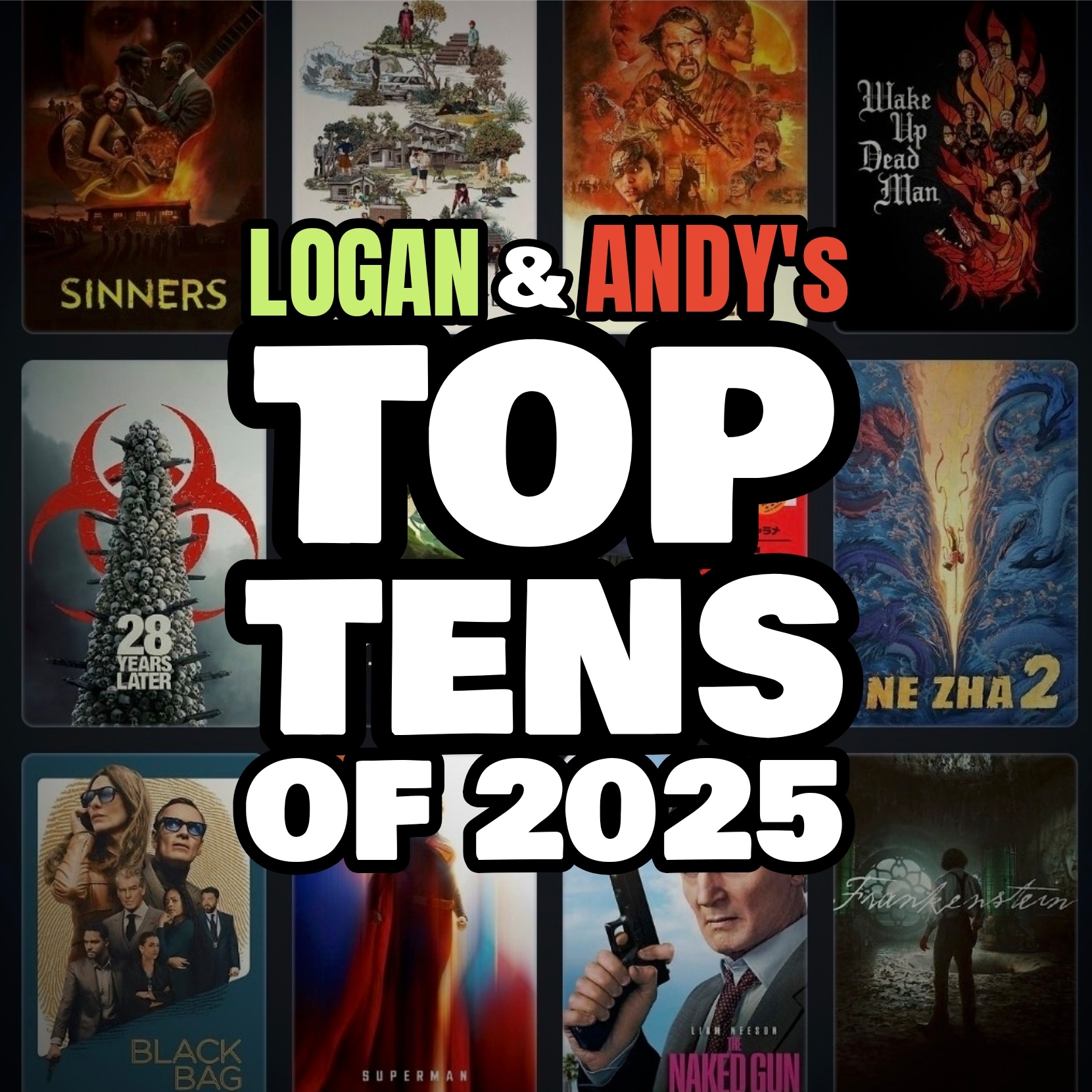
We discuss the good, the bad, and the weird of each one. But instead, usually at the end of each year, we do a end of the year special.
This is technically our end of the year special. It is, but it is a retube recording because to be completely transparent, if you don't follow us on social media, which if you don't, it's hurtful. But if you want to, we're pretty much anywhere, so you can find us.
Not telegram. So settle down.
But yeah, we did the recording a few days back and, you know, we. Everything was good to go. No issues when we were recording. And then the process of us finishing the recording and then me prepping to edit it, our micro SD card got corrupted and all that footage, all that recording went away.
[00:01:38] Speaker B: Yeah.
[00:01:39] Speaker A: Thankfully, we could have lost a lot more. We had a lot of podcasts on there, but I already had most of those backed up. It literally was the one episode we just recorded. It also was just.
This never happened to us before. I think we.
[00:01:52] Speaker B: Yeah.
[00:01:52] Speaker A: The only other issue we have ever had with a podcast was when we did a free quel with our friend Austin.
And just our mic setup was just a little weird. And for some reason there was a constant clicking in the background.
[00:02:04] Speaker B: Right.
[00:02:05] Speaker A: That we could. I couldn't get rid of.
I'm not a wizard, audio wise, but I will say it was just enough of a pain in the ass with that episode that I just couldn't salvage it. So. So, yeah, so we hadn't really had this happen before.
I mean, good news is now we have a micro SD card that is entirely empty and has plenty of space for podcasts. But because of that, we're redoing it. We are talking about each other's respective top tens, but since when we usually do our recordings, we kind of keep our top tens a secret to one another.
[00:02:38] Speaker B: Yeah. And reveal it as we go. Yeah.
[00:02:41] Speaker A: It is not a secret to us.
[00:02:43] Speaker B: Yeah. Because we already talked for two and a half hours about what our Top Tens were, and you guys didn't get to hear it.
[00:02:48] Speaker A: I know, but you will still hear us talk about them. We'll just probably do more of a.
[00:02:53] Speaker B: Rapid fire, a little more abridged.
[00:02:55] Speaker A: Abridged. Mainly because we found out in the process of doing our list and revealing it to each other, we actually had, I think, the most of any of our specials.
Six out of our ten films were on each other.
[00:03:07] Speaker B: Mutual. Yeah, mutual lists.
[00:03:09] Speaker A: There were four unique to each one of us, which we'll probably talk about. Those four out the gate, or at least most of those out the gate.
[00:03:17] Speaker B: Yeah, yeah, yeah. I mean, because if you've listened to our special before, normally we do kind of this dueling Top Tens format where it's, you know, one of us says our 10, then the other, and we kind of work our way up. And it's a. It's a reveal for both of us because we don't talk about it beforehand.
Since we've already done that and since we spent two and a half hours doing it this time, we're gonna. We're going to do it in a little bit more of a condensed format. So we'll still go in kind of the relative numerical order that we ranked it, but for the. For the films that we both had on our lists, we're going to do those kind of in the order that whoever ranked it highest put it. So, like, some of these are on my list, but not on Logan's, and vice versa.
But we'll kind of go. And we'll explain as we go on each film, like, where was this on your list? And things like that. So, um. But, yeah, I mean, I'm ready when you are.
[00:04:16] Speaker A: Yeah. And just to clarify as well, even if it seems like we are speeding through these, a lot of it is because we have already done this recording, and we just kind of don't want to overdo what we did last time when we did kind of off the Cuff. But also at the same time, these films are phenomenal. All 14 of these movies, even the ones that aren't on my list, are the ones that are not on Andy's list. They're both.
All these films are very.
Deserve the recognition that we're gonna give them, as well as the fact that there's just so many great films from last year. Literally.
[00:04:50] Speaker B: It came up a lot on our first go at this, that a lot of ours that we do not share on our top 10 were near misses. It was the Ones that were not in my 10. We're still fairly high on Logan, so we both have plenty to say about a lot of these movies.
[00:05:08] Speaker A: Yeah, for sure. And I will a bit of a spoiler alert as of Wednesday, which is be two days after this comes out. I'll have my bottom 10, basically my top, like 20 through 11. I'll put in an article recording or just in an article on our website.
A few of those films are on Andy's list. So you will probably get double duty as well in this week because again, great fucking year 2025.
[00:05:36] Speaker B: Yeah.
[00:05:37] Speaker A: We're excited to talk about some of our favorites. And to start off, andy, your number 10.
[00:05:42] Speaker B: Yeah, starting with my number 10 because did not make your list. But that's okay. Even though I take it personally.
No, my number 10 was.
[00:05:52] Speaker A: You didn't say that last time.
[00:05:53] Speaker B: No, I didn't.
My number 10 is one that was probably one of my favorite theatrical experiences, particularly that I shared with Logan and our friend Adam of last year.
It is the Naked Gun reboot. Remake. Reboot. Cool thing. Legacy movie starring Liam Neeson and directed by Akiva Schaefer, Right? Yeah, yeah.
[00:06:20] Speaker A: Of the Lonely Island.
[00:06:22] Speaker B: Yeah, yeah. I just really loved how much this movie kind of stood out in the modern comedy world.
We, of course, did the Naked Gun trilogy last year on the podcast and that was a really fun journey with our friend Nick Rogers of Midwest Film Journal.
And going through that experience through that series of seminal comedies was really great. And kind of teed up seeing the new one in that.
I don't know about you, Logan, but I wasn't really expecting it to feel as faithful to the originals in tone as it was.
And it's faithful. It's hilarious. A lot of the dialogue you can hear almost like Leslie Nielsen delivering it.
So it's true to that spirit. But it also feels distinctly different and it doesn't feel outdated.
It just stands out in modern comedies in that it's not, you know, it's joke first comedy. It's like writing first line delivery second actor personality. Way down the list. Whereas like, a lot of comedies anymore are like entirely personality driven.
[00:07:42] Speaker A: Yeah.
[00:07:43] Speaker B: So that. That was just a really fun, charming comedy.
[00:07:48] Speaker A: It was. And it was. It was genuinely gut busting at times. Yeah, it is. Yeah. It was definitely one of the biggest surprises of any kind of film we saw in theaters last year. Mainly because, I mean, one, I don't think anyone in that theater was expecting to enjoy it as much as we did. Yeah, we saw it in advanced screening. It was an Impact advanced screening. Surprising.
[00:08:12] Speaker B: Right.
[00:08:13] Speaker A: Because we kind of expected.
We talked about this film late 2024, because we were thinking about trilogies to do for 25. And we decided to Naked Gun because Andy had to tell me that he saw that the Naked Gun with Liam Neeson was supposed to come out. And I was like, there's no fucking way. There's no press.
[00:08:30] Speaker B: Yeah, right.
[00:08:30] Speaker A: And then in the last two or three months before the film came out, they just went hard on advertising. And then honestly, it paid off because that movie just hyped itself up in the best way. It is still surprising when seen in theaters. It is.
It has some hilarious jokes that are in. Hilariously dated intentionally.
[00:08:50] Speaker B: Yes. Yeah.
[00:08:51] Speaker A: And it is a film that you would think there are two avenues. You could take a movie like this and it is making fun of legacy sequels. And you can play more into that if you want, because Liam Neeson is playing Frank Drebin Jr.
Leslie Nielsen's son.
[00:09:05] Speaker B: Yeah.
[00:09:06] Speaker A: Canonically, you could do more hard in the paint stuff with that and they automatically like throw that to the side immediately. Or you could do something where you try to make it more of a. Oh, my gosh. Remember the 90s film?
[00:09:18] Speaker B: Yeah.
[00:09:19] Speaker A: Which is what it's not either. Like, there are jokes where I guess you could constitute it as something like that, but overall, like, there's just some wild ass jokes that are just committing to it in a way that the original Naked Gun just would have. Yeah, would have. But also not in that same execution.
[00:09:37] Speaker B: Right.
[00:09:37] Speaker A: Yeah, I think what shows.
[00:09:38] Speaker B: Yeah, I think that's Akiva Shaver's voice too, is just kind of bringing something different to it. But yeah, just. Just a great, great fun comedy.
Do you want to do my number nine or do you want to do yours first?
[00:09:52] Speaker A: Let's get you going.
Your number nine.
[00:09:54] Speaker B: My number nine is a. An animated film from China, I think still the biggest movie of 2025, box office wise, and the most, the highest grossing animated film of all time.
Ney Zha 2.
Yes. A Chinese mythological action epic sequel to a 2019 film called Ney Zha follows a young boy who is also a like demon demigod type figure. It plays a lot with kind of classic Chinese mythology and, you know, obviously it's kind of a modern rendition of it. Very actiony, very comedic.
But this one made my top 10 mostly because.
Well, for two reasons. One, I was not terribly taken with the first film. I heard that this sequel was coming out in spring of 2025 and it was getting rave reviews and doing Crazy box office numbers. And I was like, what the heck is this? I've never heard of it or its predecessor. So I checked out the first one.
Didn't particularly like it. It was okay. It was nicely animated, very colorful and fun and vibrant, but, you know, was not super into the extremely kind of younger kid aimed dialogue and jokes and storytelling.
So I, you know, I watched that and I was kind of like, well, should I have bought a ticket to the sequel that's coming out? But I went anyway and was kind of blown away by it, honestly.
I went to a screening or it wasn't even a screening. It was a regular showing at our local theater.
And I think I might have been the only white person there, which was kind of cool. Like the entire Indianapolis, you know, or not the entire, but a huge contingent of the local Asian community was there and they were loving it and I was loving it. And basically what the sequel does is it takes a lot of the bones and a lot of the comedic tone of the first film and expands on it in a way that feels like, you know, if you were five or six or seven years old when the first one came out six years ago, you are now aging into, you know, adolescence, where you're kind of ready for a little bit darker, more challenging story and Neja 2 meets you right there.
And it feels appropriate as a sequel to the original, but still feels like it's moving in a more mature, more kind of higher stakes direction.
So I appreciated that growth on its part and that expansion into more serious storytelling. On top of that, it's some of the most phenomenally staged action of any movie last year, animated or otherwise.
[00:13:01] Speaker A: Absolutely.
[00:13:02] Speaker B: Just crazy bombastic. So many characters doing so many things.
Lightning powers, fire powers, lava, dimensional rifts ripping open in the sky, dragons, dragon people, people with giant foreheads doing crazy kung fu and things is the type.
[00:13:21] Speaker A: Of film where they'll go into a random new space that you've never seen before.
You meet an old man you've never seen before, and then that old man will pull some of the wildest shit you've ever seen on screen.
[00:13:32] Speaker B: Yeah.
[00:13:33] Speaker A: And it's just a single fight scene and a two and a half hour film and then they just keep on going. Yeah, it just keeps pulling out insane choreography choices as well as animation. That really does put, I think, what a lot of 3D animated films, like American films, kind of came out to shame.
[00:13:55] Speaker B: Yeah, it's just like if you've, you know, Pixar and like Disney Animation and Dreamworks, Illumination, all of Them, those, you know, those 3D artists do a lot of phenomenal work in terms of, you know, creating vibrant and colorful and detailed character models and character movement and things like that.
But very rarely do we see like, action taken as seriously or spectacle taken quite. As far as where this film goes in a. In a 3D animated space.
[00:14:30] Speaker A: Like what Incredibles 2 was like, what, five years ago?
[00:14:32] Speaker B: Yeah. Right.
[00:14:34] Speaker A: That's like the last big.
[00:14:35] Speaker B: Yeah.
[00:14:36] Speaker A: Action pixel.
[00:14:38] Speaker B: And to call that film an action film in the same sentence as talking about the action in Neja 2 is just like the gap in terms of pursuing that genre is just insane. So, yeah, if you've ever felt like, you know, if that intrigues you, if a CG animated film that is first and foremost an action epic sounds interesting, I'd highly encourage you to see it because it's just.
You're not quite going to. Our words are not quite going to do its. Its bombastic action justice.
[00:15:11] Speaker A: Yeah, it is like, it's one of those great examples of just how, like the idea that a genre is just, you know, kids animated films as just a genre. It is hilarious how something like Elio and Zootopia 2 are put in the same. You know, that's the same genre as Neja 2.
[00:15:30] Speaker B: Right. And it's the fact that we even talk about animation as a genre.
[00:15:34] Speaker A: Yeah, it's like most things are just like with most films. It's like, yeah, when you put something in a genre and you're like, oh, so it's like easy to watch with kids. There's probably a lot of fart jokes. Maybe the action's pretty cool. And then you watch Nezha 2 and it's a two and a half hour. Like Andy said, epic. That is very dark, very mature at times, yet still knows how to be very funny. Actually genuinely funnier than the first film.
Less fart and pee jokes, which again.
[00:16:00] Speaker B: They still get some in there. Yeah, they still get some in there.
[00:16:02] Speaker A: But it is. It feels like the best way I've described it to people just in like work and other in life is just like.
It reminded me of the jump between Kung Fu Panda 1 and 2 of that surprising. Like, you know, the animation between Nejon 1 and 2 is genuinely not a huge jump, but like just enough of a change in the shading and the lighting aspect that it almost. It feels that much different. And then the action happens and then it's like, oh, so this is where the budget went.
And yeah, if I was 15 and I saw this movie, I'd just Be on ebay trying to get as many Chinese toys as possible.
[00:16:41] Speaker B: Phenomenal character design.
[00:16:42] Speaker A: Character designs are insane. And, yeah, we're not. We're not communist. Okay, settle down. I know. It's gonna. It's gonna. You're gonna second guess that because this is not the only.
[00:16:53] Speaker B: Won't be the last time we talk about Chinese animation on our list.
[00:16:56] Speaker A: It just. This was a very surprising year, animation wise, mainly because China pulled out two films. Talk about the other one later in this list because it's. Spoiler alert. Higher up on the list for both of them. The other film where they took two animated sequels that were six years after the first films just completely blew expectations out of the water.
[00:17:16] Speaker B: Yeah, yeah. So that was. That was my number nine, Logan. Let's hear your number nine. Your first for the list so far.
[00:17:22] Speaker A: Yes. So my number 10 is actually higher up on Andy's list, so we're gonna wait to have a bigger discussion with that later. So we'll go to my number nine, because I only have it on my list, but I still love it nonetheless. And that is Guillermo del Toro's Frankenstein.
This is probably the third film in del Toro's latest run of just passion projects post Shape of Water, where basically he wins the Oscar for Best picture, Shape of Water, and from that point forward, has made Nightmare Alley, which was a remake of a, I believe, a 30s 40s film that is iconic. It is a Criterion film, and it's black and white, and he made his own version of that with, like, Bradley Cooper and Cate Blanchett, and it was a huge cast.
Then he made a fascist World War II Italian stop motion in the era of Mussolini. Pinocchio, which also was well regarded and also is also on. That is on Criterion now as well.
That was a great film.
And we actually talked about that film. We talked about our odd Pinocchio trilogy. There were three different Pinocchio films coming out that year, and that is arguably the best one. And then now we have a film that Del Toro has basically wanted to do since he's been a director.
[00:18:41] Speaker B: Yeah.
[00:18:42] Speaker A: And has now felt in his current age, in his current point in life, that this was the perfect time to do it.
And so Netflix funded this gorgeous gothic epic that I think perfectly captures the essence of the novel without feeling like it has to follow every single word. And pacing choice in that said novel.
[00:19:08] Speaker B: Kind of takes some structural liberties, but keeps the spirit so intact.
[00:19:14] Speaker A: Like, if you are somebody out there who's very similar to Del Toro or even, like me, who really appreciates or even loves the Universal monster 30s film, the Boris Karloff Frankenstein film, but also really enjoys Mary Shelley's gothic classic from the 1800s. It is very much so the best of both worlds. I think from a fan of both. Clearly and Del Toro found a way to really, I think, capture the essence of the Shelley novel while also being like, well, I got to have a crazy huge laboratory set that has lightning go everywhere, just craziness here and there.
It also makes some choices and adds new characters that are not in the novel and makes some choices here and there that are really interesting. That has like, you know, just a phenomenal cast.
It is a film that I hope in the future they might re release in theaters. I highly doubt it, but like, if you can see this in theaters in the future, I highly recommend it. It looks great on a television. It just doesn't do it justice like the big screen.
[00:20:20] Speaker B: Yeah.
[00:20:20] Speaker A: I was lucky enough to see it twice. We saw it at a critics only screening first. And then a few weeks after when it had its limited release, I was able to sneak in a time to go see it in theaters again.
And it is just like it was one of those. The first time we saw it, I was like, I wonder if this will stay with me after we watch it. And the second time I watched it just kind of hasn't left. It is, I think, a great example of, you know, adaptation is such an interesting conversation. And we even talked about it last year with literally the film adaptation. Yeah.
About just, you know, the dilemma of like, do you just do the novel and just add nothing new to it? And it literally is just the cut, like the driest interpretation at times of what you love of that novel.
[00:21:08] Speaker B: Yeah.
[00:21:08] Speaker A: Or do you play with it? And Del Toro is a man that loves playing in sandboxes. And that motherfucker plays so well. And I think arguably, if anything from the film that if it gets nominations at the Oscars, I hope set design is one of them. Maybe costume design. I hope Jacob Elordi gets it for Best Supporting Actor because his. He is what I'm going to be thinking of as the monster from this point forward.
[00:21:32] Speaker B: Yeah, he's phenomenal in that movie. And I. I was not necessarily expecting him to be phenomenal. He was probably my biggest concern about that movie going in and.
[00:21:42] Speaker A: Because it was supposed to be Andrew Garfield and then he had to drop out.
[00:21:45] Speaker B: Yeah.
[00:21:46] Speaker A: And it's wild because it feels like a lord. He was built for that role.
The way he locks, the way he walks like a giant patchwork baby.
Is the kind of work you just don't see the love for.
[00:21:58] Speaker B: That's true.
[00:21:59] Speaker A: It's not the kind of. It's not the kind of thing that's going to be in his Oscar reel, him just walking in the woods. But the way he does it.
[00:22:05] Speaker B: Yeah, there's some.
[00:22:05] Speaker A: There's some intention and passion to it.
[00:22:08] Speaker B: Unlike Sean Penn's walking in one battle after another, which may very well be in his highlight room.
[00:22:14] Speaker A: Looks like the sharpest stick in any of the past to ever exist. But yeah, my number nine is Frankenstein.
[00:22:21] Speaker B: Great movie.
We're gonna. We're gonna skip our number eights for now because we share them. We don't share the same number eight, but we do have each other's number eights on our list.
[00:22:32] Speaker A: Don't worry, we will recap.
[00:22:34] Speaker B: Yeah, we'll go through the 10 at the end.
[00:22:37] Speaker A: Just keep in mind we're talking about great movies and then we'll put them in our little slots.
[00:22:42] Speaker B: So skipping ahead to my number seven is Charlie Polinger's the Plague, which is, if you haven't heard of it, that's understandable because I don't think it's gotten a wide theatrical release.
[00:22:58] Speaker A: I think it just.
[00:22:59] Speaker B: Or maybe it just released.
[00:23:01] Speaker A: I think Alamo has it right now.
[00:23:03] Speaker B: Okay. I don't know if it's anywhere else. No, yeah, yeah, that's right. Because our friend just went. And our friend Paige just went to see it recently.
But yeah, did not really see theaters outside of festivals throughout most of 2025, and I was lucky enough to catch it at the Heartland Film Festival, Local legend.
And it's basically a movie about male adolescents and the social games and pitfalls therein. And it's all kind of played as like a almost horror movie.
It is about a group of boys at a water polo camp.
And the main boy that we are following is kind of this mild mannered social in betweener. He's not exactly one of the popular kids, but he's not a social outcast or a nerd or anything.
But basically he finds himself at an impasse when the kind of bully social leader of the group starts this game that's kind of similar to the Diary of a Wimpy Kid's Cheese Touch if you're for the fans out there.
Wherein basically said popular kid declares that somebody of lower social status has what he calls the plague.
Once you get labeled as having the plague, you are socially outcast because if anybody touches you or gets too close to you or you cough on them or you speak into their ear or whatever, they're gonna have the plague. And nobody wants the plague.
So it. It becomes this game of deliberate kind of social exclusion.
And the main character, who's kind of caught in the middle of it is not really sure what to do. He plays the game. He tries to get in with the popular kids. He also empathizes with the more outcast kid who ends up with the plague.
And you know, he might.
He might catch a little sickness himself in the process. And Charlie Pollinger directs it. Again, almost like a horror movie, very shadowy, stark cinematography. The score, I can't remember the composer's name, but the score is utterly haunting. I mean, it's. It's kind of terrifying in moments. And it's just this beautifully rendered or this beautiful rendering of adolescent social anxiety that I thought was. It's fun, but it's also deeply upsetting at moments.
[00:25:50] Speaker A: Yeah, I mean, this was one of those films that the ifga, the Indian Film Journals association was really high on. And unfortunately this is. It happens every year. Even before I was for the fga.
There are just some films you can't get to especially for your consideration moment. And this unfortunately was one I had to cut. And then now every time anyone talks about it, I do feel a little FOMO that, you know, everyone's talking about how this plague is, you know, the best plague they've ever seen.
[00:26:21] Speaker B: Yeah.
[00:26:23] Speaker A: But it's also.
Because it's also Joel Edgerton.
[00:26:26] Speaker B: Yeah. Joel Edgerton plays like the polo coach who's like leading the camp.
[00:26:31] Speaker A: It's one of those movies that every little thing I've seen of it and trailer wise and heard of it from you guys, when you talk about it is like this idea of how there's constantly. You will hear someone be like, man, I wish I was young. Wish I was a kid again. That's one of those films kind of.
[00:26:45] Speaker B: Like, are you sure? Yeah.
[00:26:46] Speaker A: Why. Why would you want.
You have to be very specific.
[00:26:49] Speaker B: What part of childhood do you want back?
[00:26:51] Speaker A: Yeah, because that middle school, early high school, adolescence is. Could genuinely be considered a nightmare in certain areas. And this is one of those examples where it handles it, it seems very well.
[00:27:01] Speaker B: Yeah, it reminded me of Bo Burnham's eighth grade, but considerably darker.
And eighth grade already goes to some dark places.
But I love that movie and I also love this for very similar reasons.
[00:27:16] Speaker A: So definitely give it a watch and probably hate myself for giving like, oh, this is stressful.
[00:27:21] Speaker B: Yeah, yeah. Boys are fucking Stupid is the takeaway of that film.
[00:27:24] Speaker A: Who would have thought? Everyone out there Surprised to hear those.
[00:27:27] Speaker B: That's my number seven.
[00:27:28] Speaker A: That's your number seven. And my number seven, which is your number.
[00:27:32] Speaker B: My number eight. It's our first kind of our shared.
[00:27:36] Speaker A: Top 10 right next to each other basically in our top tens, which is a film we both like. Didn't really have huge high expectations for. But we were very curious because back in 2019, the Safdie brothers last film was Uncut Gems, which is a surprise for many people. I think people really gravitated and really connected with that heart attack anxiety simulator film of that year.
And then both director, both brothers decided to split off and do their own things and produce and do whatnot.
This year is the directorial debut, solo debut of both brothers.
Benny's solo debut was the Smashing Machine with Dwayne the Rock Johnson. That is not our choice. Our choice is.
[00:28:25] Speaker B: Well, that'll be later on the list. That's both of our number ones is the Smashing Machine. Sorry spoilers.
[00:28:29] Speaker A: Don't tease anybody that our choices are Joss Safdie's Josh Safdie's Marty Supreme.
[00:28:36] Speaker B: Yes.
[00:28:37] Speaker A: A film you may now know more than ever. If we had talked about this a week ago because it's gotten one of the highest openings for a 24.
It is been a Timothee Chalamet sweep marketing wise.
Just constant interviews.
It is a film that has now been hyped to ridiculous proportions compared to when I saw it. And then I think around the time when you were finally able to see it was when it was starting to get really ramping up.
[00:29:10] Speaker B: Yeah. The press tour was really taking off.
[00:29:13] Speaker A: I think you had watched it just as Timmy was on the Vegas sphere with the ping pong ball.
[00:29:19] Speaker B: Yeah.
[00:29:20] Speaker A: Like that phase of it.
But early late late November, early December, I was able to catch a critic screening that unfortunately Andy.
[00:29:29] Speaker B: Yeah.
[00:29:29] Speaker A: Unable to catch. He caught that.
He. He watched the film. You got it right before its release in theaters. Because we got a screener.
[00:29:37] Speaker B: Well, I got it. I got it. I guess it was still a couple weeks before it came out in theaters because it came out on Christmas. And I got it just before our awards deadline.
[00:29:45] Speaker A: Yeah.
[00:29:46] Speaker B: Or our awards meeting. So just in time because basically happened.
[00:29:50] Speaker A: Was a bunch of the IFJ went to go see Mari supreme as like okay, you know they're throwing this out right now. 824 at that point is already was being very nice and setting a screeners for everything else but that.
[00:30:01] Speaker B: Yeah. Yeah.
[00:30:01] Speaker A: So like I guess we have to see this is in person.
[00:30:04] Speaker B: Yeah.
And which was. It was like a Month in advance.
[00:30:08] Speaker A: Yeah, it was crazy. Right after Thanksgiving. Yeah, right before. But my God, it was, it was shocking. Just us sitting there being like, this is a two and a half hour high anxiety, hilarious, insane casting, sports drama, epic that is arguably the best sports film of 2025, at least from what I remember seeing.
[00:30:36] Speaker B: Yeah, I didn't see a lot, but.
[00:30:38] Speaker A: Yeah, no, me neither. It's either that or like, what, smashing machine in F1?
[00:30:42] Speaker B: Yeah, yeah, those are the competition.
[00:30:45] Speaker A: But Marty supreme does a phenomenal job. Josh Safdie just takes the energy that he put with his brother with Uncut Gems and finds a way to capture that again.
But just tweak it enough with Timothy Chalamet's Marty Mauser, a 50s ping pong player who wants to be the best in the world and arguably finds a way to make the most, I think, engaging safety protagonist. We've gotten so far from both brothers.
He's still pathetic. He's still hilariously, he is still way too over his head mean to people. He is very much a saffy protagonist. But Timmy brings this authenticity and determination to Marty Mouser that makes everyone in the ensemble who gets involved in his stratosphere that much more intrigued by him the more they hear him run his stupid mouth.
[00:31:44] Speaker B: Yeah, he's a magnetic personality. He is.
And that is kind of the, I feel like the most defining difference or choice that distinguishes this film from Uncut Gems or even Good Time is that like, Marty Mauser is not defined by like, the pity you feel for him or the, you know, you're not really worried about him so much as, like, compelled to see if he can actually do what he thinks he can do.
He's incredibly charismatic, incredibly confident, and actually has the skills, at least on the ping pong table, to like, you know, believably do what he's setting out to do.
And at the same time, he's also, you know, a silver tongue devil who can kind of talk his way out of anything. Even if the person leaves the conversation hating him, he still gets what he wants.
And so that's a difference from like Howard Ratner, Adam Sandler's character in Uncut Gems, who kind of just sucks at everything he does throughout that movie and constantly makes the wrong choice.
[00:32:55] Speaker A: And Rob Pattinson's character in Good Time.
[00:32:57] Speaker B: Which was flying by the seat of his pants.
[00:32:59] Speaker A: Both Uncut Gems at Good Time have a protagonist that goes, I know what their goal is, but can they do anything besides be pieces of shit? And the answer a lot of the time is just no. Not really. Just different flavors of piece of shit. And again.
[00:33:17] Speaker B: And Marty is also kind of a piece. Well, definitely a piece of shit.
[00:33:20] Speaker A: But what the movie gets is the fact that he is so fucking good at what he does.
[00:33:25] Speaker B: Yeah.
[00:33:26] Speaker A: That adds a layer of, okay, I can kind of get away. I'm kind of fine with him getting away with practically anything at times because I kind of want to see him strive for that crazy dream of being a ping pong player in the 50s.
Be a. Be a ping pong player that strives to be on the Wheaties box.
[00:33:44] Speaker B: Right, right.
[00:33:45] Speaker A: And it is ultimately a film that has just a strong central protagonist that is just insane on his own level. And then the insanity only gets amplified by its supporting cast, its ensemble, which.
[00:34:00] Speaker B: Features the most chaotic casting of the year.
[00:34:03] Speaker A: You have probably the least liked Shark Tank contestant Kevin o' Leary lead, like, one of the best monologues of any film I've seen. One of the craziest things I've heard anyone say with complete sincerity.
You have Gwyneth Paltrow, who I think brings a lot to the film and especially does a great job of being a great kind of comparison to what Marty kind of wants to see for himself in terms of, like, Gwyneth Paltrow played a movie star.
[00:34:35] Speaker B: Yeah.
[00:34:36] Speaker A: Trying to make it work while he's like, oh, my gosh, we're kind of the same thing. And it's like they're nothing alive.
[00:34:41] Speaker B: Right.
[00:34:42] Speaker A: Odessa Isaiah, who is the, like, Marty's best friend, like, childhood friend, but also lover, and also, like, the closest thing to anyone who could match his freak.
[00:34:54] Speaker B: Yeah.
[00:34:55] Speaker A: Fran Drescher is in it for a little bit, and she does really good with the little time she has. There's a guy that's in a movie that got it because he did a crazy Nick's rant a few years back, and Josh Safdie liked him, and he. He's great in the movie. And also Penn Jillette just fucking shows up.
[00:35:11] Speaker B: Yeah. Penn Jillette's in there. Almost unrecognizable.
[00:35:14] Speaker A: Oh, and Tyler the creator.
[00:35:15] Speaker B: Yep, Tyler. Tyler Konma, also known as Tyler the Creator.
[00:35:18] Speaker A: He does a great job.
It does a great job of having, for the first time, I think, in all the Safdie films, just someone young enough in the protagonist seat to have an ensemble that kind of is less so looking down, but also. But more so being like, almost.
Role models are also good. Just, like, kind of trying to give good advice of being like, listen, man, you're just in your fucking 20s.
[00:35:42] Speaker B: Yeah.
[00:35:42] Speaker A: Like basically giving him a good idea of like, oh, so this is what striving living big or striving for the best could really mean.
[00:35:51] Speaker B: Yeah.
[00:35:52] Speaker A: In this space. And I think that really is a nice thing to add. That doesn't mean I want every safety protagonist afterwards to be get younger. That would just be horrifying. But I think it just isn't.
[00:36:03] Speaker B: We have a 12 year old safdie.
[00:36:04] Speaker A: Protagonist in the next film just like Sean Baker's just vibrating like, no, you can't do this.
I need to do this before you do.
[00:36:13] Speaker B: Yeah.
[00:36:14] Speaker A: But it is just, just enough of a change for that safety formula that people have caught on with with uncut gems that I think it makes sense why so many people are saying it's one of their favorites of the year. And that's why it's one of our favorites.
[00:36:27] Speaker B: Yeah, yeah. So that was your number seven. My number eight.
Let's go ahead with your number six.
[00:36:35] Speaker A: Yes. My number six is the Palme d'Or winner of 2025 can in international film. I think in terms, especially for the international film like foreign film category for the Oscars, I think is going to be very, very heated this year.
There's sentimental value. There's another film we'll talk about later in our list. No other choice by Park Chan Wook.
But overall, I mean there's also the voice of, I think we said the.
[00:37:05] Speaker B: Voice of Hindra Job.
[00:37:07] Speaker A: Yes. Which is another film that's getting a lot of buzz because of its content.
But to me, the film that I think really just caught me off guard the most because of just how confident it is without being too flashy as well as the content that the film is talking about actually being tied to the real world, particularly to the director actually being.
It's not even funny. I just, it's just insane to think about the fact that while he was getting awards for this film, he was arrested in propaganda activity as Jafar Pandani's It Was Just an Accident.
The Iranian.
An Iranian film that is basically about a man is just working at a mechanic shop. A car shows up saying they have a flat, they're having engine troubles.
As this man is trying to do his own thing and his co worker is helping the. The driver.
The driver. He starts to realize the driver sounds like someone familiar and then decides that that driver probably has to be the man that tortured him when he was arrested for quote unquote propaganda activity.
So this man just beget with trauma and now just like not knowing what to do, stalks this man, knocks him out and decides, I'm gonna get revenge for what you did to me.
[00:38:37] Speaker B: Right.
[00:38:37] Speaker A: And then he starts to have doubts. Because the thing is, is even though he truly believes that it is the voice of the man that did these things to him, they never saw who did this to them. They were always blindfolded. They always had a bag over their heads. They basically never fully saw the physical appearance. They only knew voices as well as that. The one of the main guys that tortured a lot of activists and interrogated them had a prosthetic leg that squeaked.
[00:39:07] Speaker B: Yeah.
[00:39:08] Speaker A: So this man has a squeaky prosthetic leg and he sounds like. He sounds like the torturer. Clearly it has to be him.
Or is it? And that's the film. The film is like 100 minutes. It is constantly watching a boulder rolled. Boulder roll downhill, wondering if it's going to hit mass casualty by the end. It ultimately has just a phenomenal ensemble that I think, you know, the reason why I think this film right now isn't getting as much talk as probably sentimental value or maybe even no other choice is the fact that like, you know, those two films I think have star studded performances that I think, you know, really a lot of people are like, these people should get nominated for. Yeah, Best supporting, best lead.
[00:39:49] Speaker B: A lot more familiar faces.
[00:39:50] Speaker A: Yeah, it was just an accident. Yeah. It's mainly no name actors who I think would be perfect for a best ensemble. Yeah, these are all people that I think are on the same level character wise, that really just anytime there's any kind of little semblance of either lore or history pertaining to how they know each other as well as the activism that they did, that also leads into conversations about the trauma they had to the abuse they had to be subjected to.
It ultimately leads to a film that is like, it is very cut and dry. It had to be shot in secret at times, which is kind of crazy to also think of because of its content. And then ultimately leads to, I think, a final 30 minutes that just has some phenomenal cinematography choices, acting choices, blocking choices. And in my opinion, even though this is my number six on my list, the best ending of any film I've seen in 2025, to the degree where I was like, I had heard people talk about the ending in a general sense. And then when we got to the scene, I just like the film. It is so casual how the film just puts every hair on the back of my head and my arms and I'm like, holy, I cannot believe they just did that so casually. And so effectively. So, yeah, the movie's fantastic.
I justice for the director, and I hope, you know, if it gets. I hope it gets nominated for.
[00:41:19] Speaker B: Yeah.
[00:41:20] Speaker A: And by the time it gets to the point, I hope there's justice for him and he could actually be there.
[00:41:25] Speaker B: Absolutely. Yeah.
[00:41:27] Speaker A: But, yeah, my number six is. It was just an accident.
[00:41:30] Speaker B: Hell, yeah.
[00:41:31] Speaker A: Andy, what is your number five?
[00:41:33] Speaker B: Yeah, my number five is one of two films from Steven Soderbergh in 2025, but it's not presence. My number five is Black Bag, the kind of spy procedural that doubles as a wonderful little representation of a dutiful and communicative and trusting marriage. Yeah, it's a really fascinating, slick, sleek, polished spy thriller. But under the Hood is also doing a lot with the discussion of relationships and trust and the things you would do for and to your loved one, your most prized lover.
[00:42:23] Speaker A: If you're out there and you have a thing for the wife guy or a character that is just dutifully. Just dedicated to his family and. Or just like, what it's his relationship. My God, Michael Fassbender's character is just Michael Fass. He's so good.
[00:42:40] Speaker B: It's in a lot of ways, kind of the anti Mr. And Mrs. Smith.
[00:42:45] Speaker A: Yes.
[00:42:47] Speaker B: Not just in, like, the theming and messaging of it, but also in, like, the presentation of it. Very stripped down, smooth, polished, kind of understated, but yeah.
The type of wonderful, like, ensemble cast, a bunch of great performances as fellow spies.
But Fassbender and Cate Blanchett, of course, kind of dominate it, and they're both phenomenal.
[00:43:18] Speaker A: Yeah, it's. It's one of those films that I would think, thankfully, it's. I think people getting. Will get into the door because of Fassbender and Blanchett.
[00:43:27] Speaker B: Yeah.
[00:43:27] Speaker A: But in the ensemble itself, I mean, you have, I think, out of the ensemble that most people would know off the top of their heads. Renee Jean Page.
[00:43:34] Speaker B: Yeah. Yeah.
[00:43:35] Speaker A: Who's in the season one of Bridgerton. Got really popular Bridgerton and then did.
[00:43:39] Speaker B: Like, you know, he was in the Dungeons and Dragons.
[00:43:41] Speaker A: Dungeons and Dragons. And then everyone's favorite Renee Jean Page film, the Gray Man.
[00:43:45] Speaker B: Yes.
Both of our number ones from whatever year that was, I think.
[00:43:51] Speaker A: And it really shows because you can't remember what year that came out. I don't even remember what year they came out. I think that movie was on one of my worst.
[00:43:57] Speaker B: Okay.
[00:43:58] Speaker A: And less because it was actually, like, horrible, but more like it was just there.
[00:44:02] Speaker B: Yeah.
[00:44:03] Speaker A: But that movie. I mean, the movie just introduces this cast of characters that you know, really hit home. Like this interesting idea of like, you know, the spy life is in a lot of films, like very romanticized as being just really cool. A Globetrotty in a very James Bond way. Yeah. And this movie just makes it seem.
[00:44:23] Speaker B: Like they're all like pencil pushers.
[00:44:25] Speaker A: The coolest desk job you could ever have, but also not the most, yet not the most sustainable when it comes to friendships and relationships.
[00:44:33] Speaker B: Yeah. Makes any kind of relationship difficult, which then makes the kind of nuances of Fassbenders and Blanchett's relationship really fascinating.
And all the while it's like one of the most technically assured movies of the year. I think Soderbergh is one of those that like, you know, I don't even, I don't love all of his movies. I don't even like many. You know, there's a lot of movies of his I'm not a big fan of. But he, he's. He works so much and his technical approach to his films is so interesting every single time that like, even if I watch one of his movies and I'm not huge on it, I'm like, wow, that was a really interesting, like a really compelling way to go about that story. Even if I didn't think the story was all that interesting.
He just, you know, he's a very technically competent is not the right word, but like I guess confident and well read filmmaker. Like he's really clearly somebody who is a student of the craft of the medium. And he, you know, in this movie he really gets to show it off. I think with the cinematography and the editing. Just the very kind of quiet choices of the movie that clue you into certain things or that lead you in one direction only to kind of bring you back the other way a couple scenes later.
Just a really fascinatingly layered little mystery thing.
[00:46:09] Speaker A: Yeah, he's very much one where his output is insanely inconsistent, but in a way that is impressive when it is one of those years, like last year with it.
Black Bag is not only the second film that Soderbergh had last year, but also was the second film co written or written by David Koepp. Which is funny that both those films get about the same year. But he's, he's one of those directors that. Yeah, I agree with Andy. I don't think, I don't love everything that Soderbergh has done, but the films that I do love that he's done, those are one of those films where if it's on the television and I will, I will sit Down. Yeah, I will give it. I mean, ocean's 11, Logan. Lucky.
[00:46:47] Speaker B: Lucky. Yeah.
[00:46:48] Speaker A: I'd say even Contagion, I think even has, like, he just has, like, he. He just has these hyper fixations at different times. Whether it's like a specific actor or a specific style, or it's just iPhones making films on iPhones. And then ultimately, you know, there are times where they don't fully click, but they're still really interesting and fun. And there's sometimes, like, Black Bag where they're just like, what the fuck? This is great.
[00:47:11] Speaker B: Yeah.
[00:47:12] Speaker A: This is just like an easy. We highly recommend this movie. And, you know, if. If you've ever were like, I don't know what to watch, this is the perfect. You put this on and you're completely surprised by just how good it is.
[00:47:23] Speaker B: Yeah. That was my number five.
[00:47:25] Speaker A: Yeah. And my number five is your number six.
[00:47:27] Speaker B: That's right.
[00:47:28] Speaker A: We're going back to communism.
We're going to talk about the. The other sequel to a 2019 animated film from China. Correct.
Exceeded expectations. Which is my. I think both of our favorite animated film of the year.
[00:47:43] Speaker B: Yeah.
[00:47:44] Speaker A: The Legend of Hate 2.
[00:47:45] Speaker B: Yes.
[00:47:47] Speaker A: A film that I would not be surprised out there. If there's somebody out there who's seen both of these movies. It might even be perplexed by. We have this film above Nezha, too. Because at a glance, legend of Hey2, design wise, is very straightforward, very simple, very cutesy. I'd say even cuter than Neja 2 at times.
[00:48:08] Speaker B: Well, Neja himself is horrific to look at.
[00:48:11] Speaker A: He is in Neja 2. He's very cute because Naysha is in both.
[00:48:17] Speaker B: Naysha as a character is featured in both films because.
[00:48:19] Speaker A: God forbid.
[00:48:20] Speaker B: Yeah. Because he is a mythological figure.
[00:48:23] Speaker A: Yes. And we're dealing with spirits and mythological figures in Legend of Hay and Legend of Hey one was a film that Andy was recommending to me for a bit, and then when he saw Legend of Hey 2, that recommendation doubled.
So we watched hey together, and I lost my mind because it's one of those gorgeously animated. It's just very much. If you've ever seen. If you're out there and you've seen Avatar, the Last Airbender or even, like, Legend of Korra in terms of the animation being so fluid and so intentional in terms of its blocking and its stunts and its cinematography, the shot composition in this film should just be, you know, talked about in classrooms.
[00:49:10] Speaker B: Yeah.
[00:49:10] Speaker A: Like, it is genuinely in film classes. It's like this is a movie where there is so much Shit happening on the screen at times. And yet you never lose track of where you need to be paying attention.
[00:49:23] Speaker B: Yeah, just insane visual clarity at all times. Even during some of the wildest, most kinetic fight scenes you've ever seen.
[00:49:33] Speaker A: Like when we watched the first film together, we watched it with Adam and then Adam and I's roommate Ray. And, you know, there were times where I think all the three of us, because Andy had already seen it before, had to double take because we were like. That was the most.
That Teacup was picked up in the most fluid way possible. Why the fuck is it so well animated?
[00:49:54] Speaker B: Yeah.
[00:49:54] Speaker A: And then when we watched Legend of Hate two, I think there were genuinely moments where we watched it, same group, but also with Austin. Because I got Austin to watch the first one. Because I was like, austin, listen, he's like. I said, I'm not saying you should be communist, but I think you'd really like Legend of Hay.
[00:50:10] Speaker B: I'm saying if you watch this film, you will denounce capitalism.
[00:50:12] Speaker A: Because he also was like. He was the one that in our friend group, when we would talk about the movie, he's like, are you talking about nature from Naysha, too?
[00:50:19] Speaker B: Yeah.
[00:50:20] Speaker A: And it's like he would just constantly say, like, it was based off the book.
[00:50:24] Speaker B: Right.
[00:50:24] Speaker A: By Sapphire. He was constantly doing that.
[00:50:26] Speaker B: It's the way to talk about from the film.
[00:50:29] Speaker A: But when we watched Legend of Hay two together, I think there was multiple times, at least, our jaws were on the floor.
And then I would start cackling because it was just insane how the jaws would hit the floor and it wouldn't stop.
[00:50:43] Speaker B: Yeah.
[00:50:43] Speaker A: There's one fight in particular too that is. Hey, again, hilariously, Hay is not like the focal point. He is not really the protagonist of the film.
[00:50:51] Speaker B: He is of the second one.
[00:50:53] Speaker A: Of the second one.
But he gets a specific moment in particular, specific fight where it is hilarious. Just the amount of blocking showing how much he has evolved as a fighter since the first film and just how much fun he is to watch as a character, because just a little. He's just a little spirit boy that also could turn. Little black cat.
[00:51:14] Speaker B: Yeah, Little cat boy.
[00:51:16] Speaker A: Little cat boy with a little black spot. Like from spirit away. We don't know what that is.
[00:51:21] Speaker B: He kind of looks like a Chibi version of Steven Universe with cat ears.
[00:51:26] Speaker A: I can see that. Yeah.
But it is really just. It is taking. It is doing what a sequel should do, is taking what made the first one so much fun and expanding upon it, but also taking very interesting risks to make it more Engaging of a world.
[00:51:43] Speaker B: Yeah.
In a similar but simultaneously very different way to Nejatu. How it kind of matures and expands on its predecessor in a lot of interesting ways.
Hey2 makes a similar choice in that the first film is kind of very easygoing, very straightforward, kind of enemies to friends, sort of cute action dramedy and makes a very specific and interesting pivot into like international foreign policy and domestic terrorism and battles over resources. Basically, Wuxian, who is Hei's kind of best friend and mentor, becomes implicated as a conspirator in a plot to wipe out the spirit race, which is the race, the culture and society of superpowered beings that hey belongs to. And also involved in that apparent plot to destroy spirits is seemingly the US Military.
[00:53:00] Speaker A: Yeah.
[00:53:01] Speaker B: And so we end up with spirits versus, you know, modern machine guns and drones and all sorts. You get spirits versus drone strikes, you get spirits versus high powered sniper rifles.
And all the spirits, of course, have like wild varieties of superpowers. It's kind of like the X Men in which everybody has like a clearly defined power.
[00:53:22] Speaker A: Yeah. Andy could have really prepped us for how the Hey 2 opens, but instead he decided to just say lock in. Yeah. And this is immediately the movie opens in a way that one doesn't get to until like I think the 30 minute mark in terms of just the intensity.
[00:53:37] Speaker B: Yeah. Well, and the, I mean the film kind of tells you to lock in itself because after, if you, if you've recently watched the first film, you're expecting more kind of, you know, cutesy fantasy action adventure. And then the like first shot of the sequel is a soldier walking through a field with a machine gun and it's like, wait, oh yeah, this takes place in modern day. It does.
[00:54:02] Speaker A: It does. Yeah, it does. That thing of which you, you might have seen in other kind of properties in terms of like maybe American Gods or Percy Jackson or like the Fables franchise in terms of just being at like, like the modern society where mythological spirits live among us.
[00:54:20] Speaker B: Yeah.
[00:54:20] Speaker A: But are not as powerful or as well known as when they were first initially incepted. Because, you know, humanity, humanities change and.
[00:54:28] Speaker B: Evolved in a way that technology's advanced. They don't.
[00:54:31] Speaker A: Yeah.
[00:54:31] Speaker B: They're not as superstitious anymore. Yeah.
[00:54:34] Speaker A: Why pray to a God when you can no scope him? I guess is what. That is what they ask in the beginning.
[00:54:39] Speaker B: Yeah. And what's the king to a God? What's a God do? A 50 caliber sniper rifle.
It is.
[00:54:45] Speaker A: And it sounds like saying that out loud. It does sound stupid. But it really is. They find it's. It's awesome. It's so good, in fact, that we have been constantly pushing everybody that we know that likes animation to give the HAY films a watch.
[00:54:59] Speaker B: Yeah.
[00:55:00] Speaker A: But also, before we recorded this episode initially, we got great news that not only is Hei getting an animated series that is in the universe, we're also getting two more films.
[00:55:13] Speaker B: They're already doing two films. Two more films and an animated series, which notably the first two. Hey. Films are actually based on a web series created by the director of those films. Like in like 2011 or 2013.
They were flash animations, a web series of shorts, like three, three to five minute episodes and then somehow turned into two feature films. And now going to be four feature films and a new series.
[00:55:42] Speaker A: Yeah, it's crazy. So, yeah, it's in an era of big, big films that you're like, you know, do I really want to watch something else that may or may not get another film?
Both Neja 2 and Legend of Hay 2 are clearly going to get sequels.
There's more on the way. But yeah, Legend of Hate II I think puts a lot of. And again, there's been some really fun animation to come out this year in the States. And again, if you're out there and you loved Zootopia 2, Elio, Elio gang, rise up. Good for you.
[00:56:14] Speaker B: All seven of you.
[00:56:17] Speaker A: It seems like only seven people saw it in theaters, unfortunately, because Pixar just buried that film. But it's just one of those years where, like, since Spider Verse didn't. Beyond the Spider Verse didn't come out right. Other companies are just taking advantage of being like, well, that would have been the action animated tentpole film of the year. And now there's just a gap.
[00:56:36] Speaker B: Yeah.
[00:56:37] Speaker A: And so, like, let's just fill that hole. And China has filled that hole with two of the best animated action films in recent memory. And it's our favorite animated film of the year.
My. I'm going one number four. I'm getting my number four out of the way because I understand now that all the things I've talked about so far have either been probably Chinese animated films, you know, prestige independent movies, international films. And you probably just. You're like, this is not the Logan I know.
[00:57:06] Speaker B: Who is this?
[00:57:07] Speaker A: This man is a shill. If anything, this man, both these men have taken time out of episodes that have nothing to do with the mcu. To talk about the mcu. There's no way there's not a blockbuster film on this fucking list. And you Know what? You're fucking right. Because my Number four is the film that Hope maxed so hard that it became a hit out of.
It felt like thin air, considering how much expectation and how much, you know, you know, pressure was put upon this film to be good. Considering we haven't gotten a good film with this superhero, we haven't had a great film with the superhero.
[00:57:45] Speaker B: Many, many, many years.
[00:57:46] Speaker A: Decades.
And, yeah, that. Because my Number four is James Gunn's Superman. Now, am I saying that this is James Gunn's best film?
I would probably say no. But at the same time, I think this movie perfectly captures why, you know, James Gunn was so, you know, crucial for the MCU when he was doing the Guardians films. And also why it's, you know, very fun to see him go from a say. I was gonna say C team, really an E, an F team, like a really low level Marvel team and turn them into one of the biggest properties that Marvel had had in the film space to just come over and take the DC superhero.
[00:58:30] Speaker B: The superhero.
[00:58:31] Speaker A: Yeah, the superhero. And take him and find a way to make him earnest and schmaltzy and just the biggest, goofiest boy scout anyone has ever seen on screen and make him just the one, one thing we really needed in 2025. I think, genuinely, in a cinematic sense, like, he's David Corn Sweat.
I. I know it was. I'm not surprised that people still clown on his performance at times, because that is just Superman. And that part of Superman some people just do not like.
[00:59:04] Speaker B: Yeah, the cornball part.
[00:59:06] Speaker A: But at the same time, when that man says, golly, as like, his first, like, his first true line. Yeah, I'm sold.
[00:59:14] Speaker B: Yeah.
[00:59:14] Speaker A: And the movie does a good job of just doing that thing that James Gunn is good at, which is taking characters you've never heard of before or iterations of characters you didn't know existed. Like, you know, Nathan Fillion's Guy Gardner or his, his, his Green Lantern. His douchebag Green Lantern as well as Mr. Terrific and, you know, all these different crazy characters. And finds a way to metamorpho.
[00:59:38] Speaker B: Yeah.
[00:59:39] Speaker A: And finds a way to basically have your mom be like, I kind of really liked that guy. That can change the elements.
Like, really find a way to condense all these kooky characters in a way that is true to their essence but still is very easily palatable and also very entertaining on the big screen and isn't overbearing in a film that really, we were both, I think, worried that it was going to be too much. Not Superman's.
[01:00:05] Speaker B: Film.
[01:00:06] Speaker A: Yeah, I think initially.
[01:00:07] Speaker B: I think there was so much, so many other characters announced for it.
[01:00:11] Speaker A: Yeah. But I think that movie is phenomenal. I think the cast is incredible, and I think it says a lot that the movie did so well, so fast. And literally dc, despite the fact that, you know, Warner Brothers is in this weird spot because of the Netflix buy.
[01:00:26] Speaker B: Yeah.
[01:00:27] Speaker A: They just immediately put Superman 2 in development. Immediately. And we're going to see it in like, a year and a half.
And it's crazy, but it makes sense because it's. It's a great time. It is a great time.
[01:00:41] Speaker B: And it's. You know, it's one. I think. I think Superman came at a really.
I don't know if it was serendipitous or deliberate, but a very perfect time in kind of just the state of, like, superhero movies and where they're at. And I think it presented a really refreshingly, like, capital H, heroic superhero story. I think a lot of times, you know, between the Marvel movies and. And Zack Snyder's rather dour take on dc, you know, we kind of. We got to a point where superheroes were more just kind of like, at least on screen, kind of this. This disparate pantheon of mythological figures struggling with their own things and squabbling interpersonally between them. But we kind of got away from the whole point of like, oh, these people are. These people want to save humanity. And that, you know, at the end of the day, is what Superman's all about is he is kind of not necessarily the human ideal, but, like, he is aspirational. He is. He should be somebody that we all want to be like. He is somebody we all, you know, would benefit from if he was real. And I think in that, you know, that James Gunn gave us a superhero movie where, like, I actually walked out kind of like a little kid wishing he was real. Like, I was like, yeah, God damn, I wish Superman was real. Because then the world would be a better place and not just like, I wish he was real because his superpowers are cool. Like, he's a fucking force for good. And just positivity and optimism in a really inspiring way.
[01:02:30] Speaker A: At a time where the MCU and Marvel feels like they're at this crossroads where they're putting a lot of their chips. Spent most of their chips into doomsday and, yeah, secret wars to try to get people back in, but at the same time still have projects in the last year in upcoming that are basically more street level, very much less so the superhero savvy Classic superhero kind of premise.
It is just very nice to see dc, which we thought for the longest time we've talked about on this podcast before, you know, felt very much like they had an identity crisis during the Snyder era, where, like, they just couldn't be heroes. They couldn't be the golden age. Like, they could have been, you know, that they. They were. Tried to be back in the Reeves era, Reeve era and Chris Reeve era, and even with, like, Keaton's Batman in the 80s, where it's like, they could really just kind of be their thing.
[01:03:31] Speaker B: Yeah.
[01:03:32] Speaker A: And I think with Superman and the way that they're kind of talking about how they want to do other heroes, I think it shows that they're just, like, they have a plan in mind, but, like, ultimately, the plan is let's tell good stories. Tell good stories about these characters that are just doing their thing. Yeah, they're doing their thing. And you know what? They are going to team up at some point because they live in the same world. It's hard not to bump into one another when you have superpowers or you wear spandex and you look like a goofy character. But I'm excited to see, as much as we're both kind of in this space with Marvel where we're like, I would like to be proven wrong in terms of, like, you know, my hesitation on Doomsday, but I'm at leave glad that DC is confident in James Good and Peter Safran and the whole team behind that film to just, you know, do the damn thing and just have a fun time.
[01:04:22] Speaker B: Right?
[01:04:23] Speaker A: Yeah. That is my number four. Your number four is actually my number 10, which is why we. It's. We're finally there. If you'd just been twiddling your thumbs, being like, these are all great, but, Logan, what is your number 10?
[01:04:35] Speaker B: Well, we've been waiting so long, it's.
[01:04:37] Speaker A: Like, Andy, it's because it's your number four. What is your number four?
[01:04:41] Speaker B: My number four is the third in a trilogy and not the last time. You will hear about it on this podcast.
[01:04:49] Speaker A: Absolutely not.
[01:04:50] Speaker B: My number four is Rian Johnson's third Knives Out Mystery. Wake Up, Deadman.
[01:04:56] Speaker A: Oh, thank God. I thought you put Rise of Skywalker on that part. I was like, God damn.
[01:05:01] Speaker B: Well, yeah.
[01:05:02] Speaker A: You didn't even do that one.
[01:05:03] Speaker B: That one I had covered up. That's my number one.
[01:05:05] Speaker A: It just crossed out.
[01:05:07] Speaker B: But yes, Wake Up, Dead man, which I had an interesting relationship with this year. It came out around Thanksgiving, I believe, at least in theaters, had its Theatrical run around Thanksgiving and I went to see it with my wife Emma, and we both really enjoyed it. But it, you know, caught me off guard a little bit because it is in a lot of ways pretty different from the first two.
It is not so much, although it doesn't lose this completely. It's not so much a raucous ensemble, goofy satire, and is a little bit more of a kind of personal, somber, reflective examination of faith and the beautiful and terrible ways that it can be used to strengthen or exploit people.
And I was really impressed with the way that Rian Johnson handled that subject matter and brought a very. Brought very even hand to it.
Of course, you still get a lot of the charm of the Knives out films. You still get Daniel Craig back as Benoit Blanc, the, you know, Southern Fried Detective.
[01:06:35] Speaker A: Yeah, Kentucky Fried Detective.
[01:06:37] Speaker B: Kentucky Fried Detective, yes. And you still get kind of an all star cast. You've got Jeremy Renner, you've got Kerry Washington. Kerry Washington, Glenn Close, Thomas Hayden Church, Josh Brolin.
Quite a number of great names and talent in there. But the focus is squarely on Father Judd Duplentisi, I think is his name, played by Josh o', Connor, who is kind of tied up at the very center of this mystery. And the lengths that Johnson and crew go to to articulate the core of his calling and mission as a priest is just a beautiful thing.
And the film is not afraid to basically stop the mystery, the whodunit fun in its tracks to, you know, drive the message home and tell a very human story. Yeah. And it's a. It's a beautiful thing. So when I, when I walked out of the film originally, I was kind of like, well, I missed all the, you know, goofy, slapstick, big ensemble craziness.
But the more I thought about it, the more it sat with me, the more I have loved the distinct choices that Rian Johnson makes with it to separate it from the other two while still feeling in line enough to be worthy of that series legacy. So just a beautiful movie.
[01:08:08] Speaker A: It's a phenomenal film. It is. Again, just because it's on my number 10. I gotta say, my top 10 are all like nine out of 10 movies.
[01:08:16] Speaker B: Like.
[01:08:16] Speaker A: Like nine out of 10. Like, they are. They are films I highly recommend across the board. And even the ones that are not on my list, like Naysha 2 and Naked Gun, also highly recommend. Like, these are movies that are just in Wake Up, Dead Man's case, this is a movie that is just, you know, clearly feels like, you know, with Glass Onion. Well, I think we both really enjoyed the movie when they came out. It clearly was a film that was a product of having to deal with the pandemic and how to make. Make art in that time frame, as well as also trying to follow up a film that wasn't a huge success but was pretty much beloved by the people that saw it.
And, you know, that movie, the original Knives out very much, is a Agatha Christie homage in so many different ways.
And the beloved nature of just the whodunit authority.
[01:09:08] Speaker B: Yeah.
[01:09:09] Speaker A: And just, you know, really playing with the cheekiness of creating a whodunit narrative in general. And then Glass Onion is playing with that even more so. And I think a weirder way, I really enjoy and. But clearly Ryan was trying to. Ryan Johnson was trying to figure out kind of if we're going to keep doing this, what would be the next step? And I think Wake Up Dead man is like this. The. The most solid, you know, example of this is where we could go from here, where it's like, you know, we take something that you didn't think a Knives out narrative could really capture. Well, like Andy said, like, you know, the power of religion, how it could be corrupted, how it can corrupt others, and how, you know, at the end of the day, it could be used.
And, you know, how even if you're not considered, even when you consider yourself not religious, there is still a religious kind of undertone to that kind of feeling.
[01:10:02] Speaker B: And.
[01:10:02] Speaker A: And ultimately having this conversation about faith and trust in other people and just kindness and in a way that really shows that you could just do this Benoit Blanc adventures thing for decades if you just have a strong cast, a incredible protagonist that lets Benoit Blanc do his own thing, but also keeps the, you know, keep people engaged and ultimately just is there to still have fun. Even if it has a message, it just has fun.
And, you know, it also stands well on its own, which I think is another great thing that I think is why Agatha Christie novels and other whodunit authors have stood the test of time. Because a lot of those novels can just be read out of order and then can just be someone else's new favorite novel and then kind of dip out. And these are the same way where you can watch Wake Up Dead man without watching Knives out or Glass Onion fall in love with the movie and just be like, oh, my God, I just ate my cake and now I can go back to my dinner because now there's two other films I can watch.
Yeah, it's great.
We're really excited to talk about it more in the future. Which we will talk about at the end of the episode. But yeah, Wake Up Dead man is your number four. My number ten. Great film. My number three is not on Andy's list, which is why I'm taking over the reins to talk about the. Because this is a film that I think both of us very similarly to a lot of. There is a common theme I think a lot with our. A lot of films on this list of just.
There are films on here from directors or, you know, auteurs that are like, you know, we want great content from them. But you. It could. It just depends on in terms of the filmography they've had in the past or the ability to let loose because sometimes some studios can't won't let some auteurs let loose on certain projects, especially passion projects. This is a director who has weirdly been Oscar winning, beloved by many, doesn't seem like he's been able to make a passion project in a hot moment and then ultimately teamed up with the original writer of the first film in this franchise to come back and make a gonzo, batshit phenomenal third entry that is also going to be the first entry in a new trilogy that is I think, a lot of fun. Punk as Hell and arguably has one of my favorite, While It Was Just An Accident has my favorite ending of the year. I think one of my favorite third acts of the year comes from Danny Boyle's 28 Years Later.
[01:12:37] Speaker B: Yeah.
[01:12:38] Speaker A: Both Danny Boyle and Alex Garland are auteur creators that have been in the space for long enough that the latter has constantly said that he has been burnt out and he's not gonna direct anything anymore, even though he co directed warfare in 2025, which is actually a really good film. I enjoyed that film a lot. And Danny Boyle has been trying his damnedest to do other things. And you know, every so often they'll give him a cool idea here and there. Other times he does Yesterday, which is a fine movie. You can like that movie a lot. I just don't really love that movie. But to see this man who made, you know, Train spotting the original 28 days later, fucking slumdong. Millionaire Steve Jobs.
[01:13:20] Speaker B: Yeah.
[01:13:21] Speaker A: To see this man come back to the 28 weeks, 28 weeks later. God, 20 days later, 28 days later world and just recontextualize and change everything up lore wise in terms of whatever lore was there after the.
The follow up weeks later and really just finds a way to build a new foundation that is incredible. Engaging in its own way.
So much fun and desolate depraved, but also just fun.
And even does something technologically that is just insane, which is just take the camcorder aesthetic of the original film, the low budget nature, and find a way to make a crazy iPhone rig that builds some of the wildest shots of the movie that when Andy and Adam and I saw in theaters, I remember all three of us have occasionally different times where we reacted to it in a full body way. Yeah, just like a. What the fuck is this? But it is a film that I think, you know, is I someone who really likes days and is kind of ambivalent about Weeks?
I loved Years, surprisingly. And I think there's just been, you know, it'll happen down the line, maybe closer to when we might talk about this film again when it becomes a trilogy. And because we're gonna get. Because we already have our fast passes to the Bone Temple comes out this month.
[01:14:55] Speaker B: Yeah, everybody get your tickets to the Bone Temple.
[01:14:57] Speaker A: And then the third film, which I'm just gonna call Cillian's Big Day out because Cillian Murphy is back, is now officially in production. Yeah, there's just. I know in the future I'm gonna be talking about this specifically in a cinema Komorebi way, because the finale of this movie with, you know, Jodie Comer and Rafe Fines, Ralph Fiennes and also the. The lead, the kid, escapes me, but.
[01:15:23] Speaker B: Yeah, me too.
[01:15:24] Speaker A: But the boy is phenomenal. He's a. He's in a film with Jodie Comer, Ray Fiennes and Aaron Taylor Johnson, and he just steals the show.
[01:15:32] Speaker B: He.
[01:15:32] Speaker A: There's just a. There is a naivete, but an optimism that is so beautiful and understandable and earnest and also tragic when there is an earnestness in a world that is so devoid of it.
[01:15:46] Speaker B: Yeah, yeah. That third act is just like, kind of smacks you across the face with how poignant it is and just beautiful in its meditation on life and death in a film that very much brings back, or brings Danny Boyle and Alex Garland kind of back to their sort of punky roots in terms of the style of filmmaking. It's crazy how the film, right towards the end, kind of puts a pin in things and is like, hold on, we're gonna just ruminate on the beauty of life for a second. Yeah, it's like the perfect cap on the movie too.
[01:16:29] Speaker A: It's like the perfect encapsulation of a punk man like Danny Boyle, just being in his older age.
[01:16:35] Speaker B: Yeah, yeah.
[01:16:36] Speaker A: Being like, I still got this craziness.
[01:16:38] Speaker B: Still seeing all the virtues of that punk lifestyle, but with a more mature perspective.
[01:16:43] Speaker A: And even so, what's great is the movie ends on a beautiful note. And then there is a little coda. Stinger.
[01:16:49] Speaker B: Stinger.
[01:16:50] Speaker A: That gets you ready for Bone Temple in the craziest way possible.
Unhinged. And I just. It's a film that I've seen. I mean, understandably, a lot of people didn't really connect with it the same way as I did. That's totally fine. And we really enjoyed the movie. And. And it is a film that is very weird. And if you're not gonna match its freak, it probably might put you off. But I mean, if you, like days later and even if you like weeks later, I think years later, just takes all the good things about those two films that they had and just exemplifies them and modernizes them in a way by getting, literally, the cinematographer back from the original film. The fucking score is fantastic in years. And just bringing an energy to it that just shows that this world is worth coming back to, which I think is something that's crazy, especially for the fact that this is a horror franchise that hasn't been done to death. It is nice that is now coming back, but also has such a Vibrance to it.
[01:17:57] Speaker B: Yeah.
[01:17:57] Speaker A: And even in a gory.
In a gory, crazy world where there are alpha zombies with their cocks just hanging out.
But I cannot wait to see Samson.
[01:18:08] Speaker B: Yeah. Even though they're putting clothes on him.
[01:18:10] Speaker A: I know. But they've shown that they're gonna. We're gonna see flashbacks of him, which. I can't fucking wait.
[01:18:17] Speaker B: Yeah.
[01:18:18] Speaker A: Which, hey, like we said, we actually talked about all three of those movies last year. So if you want to hear us talk more about 28 years later, do that. Shill aside, let's get to our final three.
[01:18:30] Speaker B: Well, yeah. With 28 years later, Logan has officially moved us into our top three. And thankfully, all the rest of these films are shared on our list, even if the position differs.
So, Logan, you want to lead us into the.
[01:18:49] Speaker A: Yeah.
[01:18:49] Speaker B: Which is your number two. My number three.
[01:18:51] Speaker A: Yes. My second favorite film of the year. And your third favorite film is a film that I think in most film spaces, whether it's like in the. In a letterbox space or just like film Twitter, any kind of Kino even, shit posting space. This movie has been talked about incessantly for the last few months.
[01:19:10] Speaker B: Lit up the conversation all year, and.
[01:19:13] Speaker A: Right now it is, I think, a slow period. A little bit about that film before it brings up. It comes back up again. For Oscar season.
And that is Paul Thomas Anderson's One Battle after Another Again, another. Another choice on our list. That is an Autours passion project. That is this man's 100 million dollar version of a.
I would say a very politically inclined, politically driven, emotionally driven action film that is like a chase sequence that just keeps going and going.
[01:19:50] Speaker B: And yeah, it's.
It lives up to its name. It does. The entire film is just another struggle and another struggle and another.
[01:20:00] Speaker A: It's one of those movies that I think the. The top three of our list genuinely are films that.
Or at least these next three films are genuinely films that. I can see somebody out there. If you're listening, you probably roll.
[01:20:11] Speaker B: You.
[01:20:12] Speaker A: You will roll your eyes because you're like, of course this movie is good.
And yeah, it is. Paul Thomas Anderson, a man who has Boogie Nights, Magnolia, There Will Be Blood, the Master fucking. All these other films, that's just the ones that I think most people usually enjoy.
This man has such an eclectic filmography that is, you know, coming. Him coming back and just like everyone being like, hey, guess what? This movie fucking deserves 18 Oscars. Yeah, I know it's not that surprising because he's a great director, but genuinely, just because it's not surprising doesn't make it any less true in terms of just how good this movie is. It is a movie that really sneaks up on you. It constantly is sneaking up on you. This movie is nearly three hours and it feels less. It feels just over two. Yeah, it's one of the fastest films to come out this year. And I was shocked because, like, there's films on this list that I love that hit like 2:30. Like 2 hours and 30 minutes. And they feel. 2 hours, 30 minutes. This movie. I think when I finished it with our, like, with our friend Paige, when we saw in theaters, I was like, wow, that was a wild ride. And she was like, yeah, I cannot believe we've been here for three hours. And I was like, what? It's like, that's how long this fucking movie. It is a. It is an unbridled.
It's goofy, it's intense. It's well acted across the board. This is, again, very similar to. It was just an accident. If there was a best ensemble nomination at the Oscars, this movie would deserve it and probably win it.
[01:21:43] Speaker B: Yeah. Yeah.
[01:21:44] Speaker A: Because this is the type of film where you won't see Benicio del Toro for 30 minutes, and then he'll pop in and then he's one of the most fascinating characters to show up in the movie.
[01:21:54] Speaker B: Yeah.
[01:21:55] Speaker A: Sean Penn is, he's always been a great actor and it's, it's. He's been used to varying degrees in the last few decades, but we get.
[01:22:04] Speaker B: To see him in kind of a new and kind of a horrific light.
[01:22:10] Speaker A: Yeah, very, very red.
[01:22:13] Speaker B: Yeah, very red.
[01:22:14] Speaker A: Very, very intense light. But he's great in the movie Chase Infinity, who is a Hoosier native who basically is standing next to Regina hall and Benicio. And Benicio and Leonardo DiCaprio and standing on her own among them. Like it is just a film that if you think it's done, surprising you and then it'll find the most, it'll just, it'll just keep doing it. It just. There's such a depth to this movie and such a passion and such a, a vulnerability I think is something too that I think we've talked. Because I, we've. I mean a lot of people, most of the people in the ifga, I think we talked about like a lot of people in the FJ really enjoyed this movie and had it, I think, as our number two on our top ten list. So like.
So like it's not. But I, I do think it is, you know, an interesting conversation about the. The film definitely feels like this is a film made by a man who used to see himself like very much like socially active or very political.
[01:23:16] Speaker B: Yeah.
[01:23:16] Speaker A: And almost feels like, oh shit, I think I might have aged out a few things.
And using DiCaprio as a way to be kind of that surrogate, kind of the, the lightning rod that is constantly fighting one battle after another, that he probably didn't have to fight five of his battles if he just didn't smoke as much as he did.
[01:23:38] Speaker B: Yeah. It's a really beautifully nuanced look at, you know, the revolutionary mindset, you know, the lifestyle and actions of a revolutionary and, and how bringing life into this world and starting a family and growing older all affect and change your ability and attitude with regard to that kind of more extreme political philosophy and manages to come away without feeling like it's, you know, dismissing revolutionary action or progressive politics and also doesn't feel like it's preaching, preaching or pandering to it. You know, it is this really kind of similarly to how I felt about Wake Up Deadman is just this really impressively well thought out and even handed depiction of just, you know, like the personal life and your immediate sphere and how that interacts with and alters your, your broader perspective of the world and the things that are important to you because, you know, at the end of the day, Leo's character in this, like, he just wants to be a passable dad and protect his daughter.
[01:25:11] Speaker A: Yeah.
[01:25:11] Speaker B: And they get roped into these way bigger conflicts than the both of them. And it's fun to follow that larger arc, but the real reason you care is that the father is trying to get back to his daughter.
[01:25:29] Speaker A: I mean, again, it is.
To say Leonardo DiCaprio was good in a movie is basically saying, water is wet. But he really.
He shines in a way that kind of reminds you of just, like, some of the best. Some of the best serious actors out there, like, thrive in goofball mode.
And he is just at full goofiness at times in this movie, but never loses the history that he has as a character, as a person.
I think a sadness or a trauma that I think is attached to his character as well, as well as the fact that it's just like they're just. Again, there are characters that just show up for a little while or pop in and out that have little fun moments or ultimately are just very impactful. I mean, Teyana Taylor is another great example where her character is felt the entire film. Even when she is not on screen for a while.
[01:26:26] Speaker B: She's not on screen very much.
[01:26:27] Speaker A: Yeah, she just.
[01:26:29] Speaker B: First, like, 20, 30 minutes.
[01:26:30] Speaker A: Yeah. She sends a wave, a shockwave throughout the. The future of this movie that it really ends up culminating in, I think, a phenomenal finale that, like Andy said, is just this conversation about activism in a modern sense. And also to see how much. How much it's changed since, you know, since the 60s and the 70s and how much has changed decade to decade and with new generations and how the fight is always worth it. Genuinely, the movie very much feels like it's saying, like, yeah, the fight is worth it, but don't pretend, like, don't romanticize it. Don't demonize it. It's something that I think is necessary for the human condition, but it is something that comes with a lot of history and baggage.
And I think he just. PTA just handles it incredibly well. And I think it's no surprise that it's on our list, because it was just one of those films that made the theater experience that much more, I think, enriching this year with a lot of great theater experiences. And, yeah, that's my number two. And your number three.
Let's just get into your number one, because your number one is my number eight. But again, this movie is phenomenal.
[01:27:47] Speaker B: Yeah, this movie's a banger. And truthfully, between One battle after another. And my number one film and your number one film, all three of those films could have been just as easily my number one. My top three of the year all feel very distinct but interchangeable in terms of how I would rank them.
[01:28:11] Speaker A: Yeah.
[01:28:12] Speaker B: So what I'm describing as my number one, which is Logan's number eight, is Park John Wook's no other choice.
[01:28:21] Speaker A: Yes.
[01:28:21] Speaker B: A satire of capitalism and class struggle and a depiction of the, I would call it, moral rot that is bred in all of us as being pieces in this capitalist system and in revealing kind of the lengths that some people will go to to maintain the status that they have achieved for themselves.
[01:28:56] Speaker A: Why would I eat the rich when I could just eat the competition?
[01:28:59] Speaker B: Right.
[01:29:00] Speaker A: Yeah, it's just this.
[01:29:02] Speaker B: Yeah, the. The kind of premise of it, if you're unaware, is like, basically this man who is a top level, I think, kind of plant manager for a paper company, paper manufacturer, is axed from his job and needs to find a new one. And he's committed so much of his life and his heart to, you know, doing that job that he kind of can't see himself taking any other professional course. So he needs to find a similar or even better job in the same field.
Of course, his position being rather specific.
There are not that many positions open and those that are, are highly sought after by other people with skill sets like his. So he manages to find the competition for his next job and kind of finds ways to systematically cut down that race.
And it's a goofy, funny, violent, grim little fable about the things you'll do to maintain your status and lifestyle.
But it's also, while also being highly critical and satirical, is also, you know, never loses that sympathetic thread because at the end of the day, I think all of us could relate to the idea of like, I don't want to.
I can't imagine having to give up all that I have and having to, you know, go backwards societally, financially, socially, all of that.
And so it threads this needle really carefully. And of course, Park Jong Wook, being Park John Wook, brings an otherworldly level of panache and confidence and technical prowess to the storytelling combined together with his cinematographer and his editor who, you know, they just always manage to tell genre stories in ways that nobody else is telling them.
[01:31:36] Speaker A: Oh, God.
[01:31:37] Speaker B: A couple years ago, Park Chan Wook did decision to leave, which was this steamy, mysterious kind of love story amidst a murder mystery and managed to kind of pursue both of those facets in equally fascinating and unique fashion. And he kind of does the same here. And, you know, we've all seen plenty of capitalist satires, but this one just manages to feel uniquely grim and human at the same time.
You know, Park Chan Wook kind of has this knack for bleak black humor.
[01:32:17] Speaker A: Yeah.
[01:32:18] Speaker B: And that's on full display here.
[01:32:20] Speaker A: Again, it's. Park Chan Wook is the type of director, especially in his current run, I would say since 2019 with Handmaiden, he's basically just been the director that if you just like. If there was a store for Park Chan Wook films, it would just be like, oh, you don't like this Golden Goose? How about this Golden Pig? Like, he just has generational bangers from time to time. He just has. Even his weakest films are that much more interesting than other people's weakest films with stuff like Stoker and There. He's just a lot like Bong Joon Ho, which I think you've talked about before. I think you talked about it with Matt Hurt when we did the obsessive viewer bit that, you know, no other choice is a great comparison piece. Spiritual Sister to Parasites.
[01:33:06] Speaker B: Yeah.
[01:33:07] Speaker A: And it is just kind of the situation where this movie, like Bong Joon Ho, like Park Jin Wook, just has a confidence in the narrative that he's willing to ebb and weave and flow through different subgenres and just different types of conversations that, you know, you can have one scene that is a very intense, thrilling moment, and then other scenes that are just fucking hilarious and just completely D comedy. And, you know, there's. There's whole sections of the film that, you know, are mostly about the family dynamic and the drama and the things tied to it. And a lot of it also goes the fact that it's again, not even just Park Chin Wook, but Lee Byung Hung, who is the lead in this film, who most people would know from.
If you think of a Korean actor in an American film, it's probably usually him in your head because he has just been.
He is one of the biggest stars in Korea. And he's also in Squid Game. He is one of the main characters in that. And ultimately, anytime he shows up in the movie, it's like, I wonder why this man's here. And then he starts acting and it's like, of course that's why he's here. He's just good at what he does constantly. His wife in the film is also phenomenal, and the cast is great. The movie looks incredible.
I just.
Even though there's a lot of things that happen in Their house. I would love to. I would love to be in their house.
Their house was fucking cool.
That was a beautiful house.
[01:34:34] Speaker B: Another similarity to Parasite. The central home of the main characters is just gorgeous.
[01:34:42] Speaker A: But yeah, no, I mean, no other choice is phenomenal. I will say it's a little bit higher. It's lower on my list. Mainly because in my personal preference it was the inverse with Andy with Decision to Leave where I really gravitated and connected with Decision to Leave. And again, when you saw Decision to Leave all those years ago, you had just proposed to your wife.
[01:35:03] Speaker B: Yeah.
[01:35:05] Speaker A: In a different space.
[01:35:05] Speaker B: Headspace.
[01:35:06] Speaker A: You literally proposed to your future wife and then watched a film about like 12 hours later.
[01:35:11] Speaker B: I was the weirdest movie theater.
[01:35:13] Speaker A: Just love in such a weird way.
And. But that movie just really clicked with me. And this movie did two as well. But again, when you have made as many phenomenal films as Park Chin Wook has where like, oh, by the way, this guy also did old boy like 20 years ago. Like, this man has interesting shows under his belt. Great films under his belt. Very similar to, you know, Bong Joon Ho. It really is a pick your poison here.
And this being Andy's favorite film of the year, I love that. And I think he is not one of the only people to do that. But I'm not surprised that, you know, if a year, you know, another part, Chin Wook in the next few years comes out and it's just like, oh, actually, never mind. This is my favorite thing he's ever.
[01:35:54] Speaker B: Done because he's just.
[01:35:54] Speaker A: He's just that good. And I highly recommend we both recommend you see this in theaters if you can, if you're in the indie area. We talked about this on the original recording.
Mid June, I think maybe this.
[01:36:08] Speaker B: Yeah, mid.
[01:36:09] Speaker A: Yeah. Thank you. Mid January. By June it'll be hopefully on Blu ray.
Mid January, Cancan is doing a. A little bit of a wider release on the film. So definitely check it out there. We are not sponsored by Cancan. No, that'd be cool as hell.
[01:36:24] Speaker B: It's a great little local theater.
[01:36:25] Speaker A: It's a great local theater that we both really like and we have friends that work there and we really like how it thrives. And really they choose really interesting films. I think right now they're running a Bbgon's Resurrection. Oh yeah, really cool.
[01:36:39] Speaker B: That was an interesting movie.
[01:36:40] Speaker A: That was one that you got to see. I unfortunately had to cut, but that movie looked wild.
[01:36:45] Speaker B: Yeah, it was.
[01:36:46] Speaker A: But yeah, no other choice. It's fantastic. Your favorite film of the year My favorite film of the year is year number two.
[01:36:54] Speaker B: Yeah.
[01:36:55] Speaker A: There's some years where we do this special where, you know, last year with the. The 2024 Year Special, I had a film on my number one that wasn't even on Angie's top 10. I would argue it probably wasn't even on his top 20.
Because, you know, sometimes there are films that you just.
They connect with you in a way that maybe some other people just didn't connect with them the same way. And this, you know, really gravitate towards those films.
Other years they're just films that everyone goes, this movie is one of the best of the year. Yeah, it's a banger. It's a classic. We're going to be talking about this film for years and we'll say that for months and months on end, like a broken record. And I'm just going to add to that broken record because this movie came out in April. I haven't stopped really thinking about this movie since then. And the theater experience of seeing this movie not only the first time, but my second time when I saw it in 70 millimeter, was probably one of my favorite theater experiences ever, both in just seeing it in 70 millimeter as well as the crowd I was with.
And that is Ryan Coogler, Sinners.
It is a film that basically goes, hey, we're not really going to tell you what this movie is going to be advertising wise.
And then what we do tell you is going to be basically From Dusk till Dawn, but in the South. Yeah, that's all you're going to get. And then you go and you see the movie and you're like, holy fucking shit. We have been in this world for 45 minutes and there's not been a lick of vampires.
And then it hits.
[01:38:22] Speaker B: Yeah.
[01:38:23] Speaker A: And then it's great. And then it's again, like we've been saying for like the last. I would say our top. Both of our top fives.
The ensemble deserves an award. Some of the just phenomenal actors across the board, including a entered like a introductory performance by Miles Caton.
[01:38:43] Speaker B: Yeah.
[01:38:44] Speaker A: Who is incredible both vocally as well as just performance wise.
[01:38:50] Speaker B: Yeah. And I think it's his first time.
[01:38:52] Speaker A: Acting in a feature, which it's hard not to be jealous of him. Every time I look at him, he's just so. He's phenomenal how easy everything looks. He makes it look. Michael B. Jordan shows up, plays two different characters so distinctively.
It literally just makes you.
[01:39:09] Speaker B: Again, it's another fascinating to think that he was worried people Wouldn't be able to tell the twins apart because he plays them so distinctly.
[01:39:17] Speaker A: And on top of that, on top of the cinematography, which is phenomenal, the score by Ludwig Bronson, who is again, another guy that is just like, oops, sorry, another gold record.
[01:39:30] Speaker B: It is.
[01:39:31] Speaker A: On top of all that, the. The one who is steering the ship is the one. I think I love that we. He's been in a huge conversation from the beginning because this is his passion project, his pride and joy. Spending all of his. All of his chips from Fruitvale Station, Creed, both Black Panther films. Ryan Coogler comes in, spends a hundred million dollars on an original, just beautiful, crazy vampire movie from the 30s. Takes place in the 30s with a great cast that is weird. Genuinely has like one of the best sequences, one shot sequences in the entire year and I would argue is one of the weirdest choices anyone could make in that scenario. And I mean that in the best way possible.
It's iconic and I think it will be even more so iconic as it ages. But the fact that Coogler did this beautiful piece about just life and regret and death, because of course you can't really have a story about vampires without talking about life and death and mortality.
And finds a way to basically mix it up and freshen it in a way that is captivating, engaging, and then basically just says like, I'm glad everyone loved this movie.
I own the rights to Sinners as a property, so I want one movie. That's it. I want this to be a classic through and through where I have no interest in making a trilogy, a series.
This is my pride and joy with these phenomenal people that I love. I'm going to spend 10 to 20 minutes talking on a video about aspect ratios because I love filmmaking and I love music and yeah, that's my movie. And no, we're not gonna. No one's going to turn this into a franchise or a cinematic universe.
[01:41:31] Speaker B: Yeah.
[01:41:31] Speaker A: And there is just such a confidence in that choice, both in the film as well as just the fact that it's just again, in a day and age where we are still just on our toes, I think as consumers, seeing how the fuck the Netflix merger with Warner Brothers is really going. In fact, they've already announced what they want the theater window to be. And it's disgusting. I despise it. I don't want to think about it anymore. So it's.
[01:42:02] Speaker B: It.
[01:42:02] Speaker A: I.
In a time where one of the actors in one of the biggest Netflix series of all time, Stranger Things, Finn Wolfhard, as outright Said, listen, I appreciate everything Netflix has done for me. I do not think this is the way to do this with your theaters. Like, to have someone from your biggest show be like, I think there's a world where these both things can coexist. Yeah, it was great to see this movie be so popular.
It basically led a 70 millimeter run longer than I think any film has really had that consistently led, I think, right into one bell after another, having a 70 millimeter run. This is great.
And then ultimately had the reveal that Christopher Nolan's Odyssey is doing 70 millimeter. And they sold tickets a year before it came out. And it's fucking sold out already.
[01:42:58] Speaker B: Like, the theater sold out last summer and it comes out next summer.
[01:43:01] Speaker A: Yeah. The theater experience is not perfect. And I understand why every time the conversation comes up about it, there are many factors as to why it is not what it used to be for so many people especially, it wasn't what it was in the 2000s.
But I think movies like Sinners in One Battle after another and even no other choice show the magic of being in a room with people you don't know, but you all are kind of connecting with it.
[01:43:29] Speaker B: Yeah.
[01:43:30] Speaker A: In a way that is like just a common.
Like in a communal space that is just like, wow, this is. This is a. This is a moment I'm never going to forget.
[01:43:39] Speaker B: Yeah. And it sure is. I mean, I.
When I saw this movie, you have.
[01:43:44] Speaker A: An interesting experience with it.
[01:43:45] Speaker B: Yeah, I saw this movie kind of on a whim opening night, because I hadn't. I mean, I'd seen the trailer around, and like you said earlier, Logan, it doesn't really tell you much about what the movie's actually about.
So I was like, okay, that's intriguing. It's Ryan Coogler, so I'm sure it'll be pretty good.
But I wasn't, like, you know, chomping at the bit to see it. I wasn't like, I hadn't heard anything crazy about it.
But then my friend and our just recently guest on Odd Trilogies, Mitch Ringenberg, reached out to me and was like, hey, man, I'm dying to get back to the local IMAX theater that we have here in town that we're lucky to have.
He was like, I haven't been there in a minute. I want an excuse to go there.
I see that Ryan Coogler's new movie is gonna be showing there, if you want to go. And I was like, okay, yeah, I love going to that theater.
So we went and we kind of, you Know, obviously we were there mostly just to like go back to this theater rather than like see a movie we were both jazzed about.
And we walk in, it's opening night, barely had barely heard anything about this movie, and the theater was sold out. And, you know, proceeded to watch this two and a half hour, half historical drama, half genre thriller with a packed house that was super into it. And everybody was so enthusiastic and, you know, we were all buzzing afterward and Mitch and I turned to each other and we were like, that was kind of fucking awesome because it's. Yeah, I mean, it's just.
It's such a well spent blank check by Coogler, you know, like you said, to come off of all of the studio work he's done, most of which has been very good. So I'm not diminishing that. But, you know, to do all of those movies and then to cash that goodwill and faith from the studio on something as ballsy as this, that spends its first hour just building characters and relationships and setting the scene historically to where it almost just kind of feels like an awards season historical drama and then drops vampires in there and be an equal parts fun, gory, exciting genre film and also still a resonant payoff to the setup of the first hour. To do that all in a film and to make it a story about the blues and about, you know, the black experience in America and all of that is just so extraordinarily ballsy and beautiful. And I was honestly a little bit surprised at how immediately the film took off with audiences. But, you know, I mean, I get it because I loved it and I'm glad so many other people have loved it and got to see it. And, you know, like you said, it was one of the reminders that from last year, along with like one battle after another, that, you know, that theatrical experience is so important and that continuing to push the, you know, the medium of film as a format is really important. You know, to see this Movie on, on 70 millimeter IMAX was breathtaking.
And I, you know, I was, I was lucky to see it twice, once in 70 millimeter, and then I went to see it kind of in a standard theater format. And it was like even just seeing it in a standard theater, still a beautiful movie, but like, visually and experientially like a noticeable, you know, I could feel what I was missing. I was like, man, I missed that tall screen.
[01:47:51] Speaker A: Oh, yeah.
[01:47:51] Speaker B: And the, you know, that bigger picture and just beautiful framing. So, you know, just a Sinners is just an awesome reminder of why we love cinema.
[01:48:01] Speaker A: Absolutely. It's again, caps off a phenomenal year that I, 2026 has a lot to live up to and I love having a year like 2025 where it's like, well, this is such great films all around. Let's see what 26 has to offer. And hopefully it's not just leaving it up to the Odyssey.
[01:48:23] Speaker B: Yeah. Right.
[01:48:24] Speaker A: We want more on that. But yeah, that's our top tens of 2025. To recap, my top tens, my top ten is wake up, Deadman, Frankenstein. No other Choice. Marty Supreme. It was Just an Accident. The Legend of Hate 2.
Superman. 28 years later, one battle after another. And then in my number one being sinners.
[01:48:46] Speaker B: Yep. And mine, starting from 10, was the naked Gun, Nejatu, The Plague.
Marty Supreme. Oh, Marty supreme. Then the Plague.
Black Bag, Legend of Hay.
Wake Up, Dead Man.
One battle after another.
Sinners. And my number one being no other choice.
[01:49:09] Speaker A: Yeah. And now we can talk about what we're looking forward to with 2026.
[01:49:14] Speaker B: Yeah.
[01:49:14] Speaker A: So as of recording this in the last. When we initially recorded this special, we had some idea of what we wanted to do for the year, but we didn't have it fully planned out. We now have the year fully planned out. We're even more excited than we were before in terms of what we have because we have a slew of guests that we're excited to join for the first time for this year, as well as returning guests.
We already have some. Literally, as we were putting trilogies together, we had people immediately be put on those trilogies as soon as we put them down. But our first two trilogies of the year, our first one being out January 17th.
[01:49:53] Speaker B: Yep.
[01:49:54] Speaker A: Will be Takeshi Koike's Lupin, the third spin offs trilogy.
In case you don't know, Lupin III is an iconic manga franchise that got turned into an anime in the 70s and has been around since then. Yes, basically kind of had ebbs and flows in terms of content, but like.
[01:50:14] Speaker B: And like, kind of been a staple of Japanese pop culture and. And yeah.
[01:50:20] Speaker A: Created by Monkey Punch, who is now. Unfortunately, he's passed away. But in the 2010s, there was a character designer, key animator, director named Takeshi Kuike who worked on a film. I mean, if you're big in the anime space, you might be aware of the film Redline, which had a very, let's say, tumultuous, rocky, tumultuous kind of production, but ultimately came out. And then after. After that came out, he worked as a key animator and character designer. For a series called Lupin the Third, the Woman Called Fujikomine, which was kind of like a. Not necessarily a reboot with like a reinterpretation.
[01:51:00] Speaker B: Yeah, I mean it's kind of a darker reinterpretation of Lupin lore, basically.
[01:51:05] Speaker A: Because the, the Lupin, you know, series takes place like kind of usually it starts at like the late 60s into the 70s.
And then that series was like the early 60s, I think was the intention. And then Koike's work on that series basically leads him to work on three other films that are all kind of talk, like following Lupin's crew, which is like the gunslinger Daisuke Jigen, who used to be a hitman and never misses a shot.
The modern day samurai.
[01:51:41] Speaker B: Yeah, like a descendant of a legendary.
[01:51:44] Speaker A: Historical figure, Goemon Ishikawa. And then Lupin, Lupin's long time flame.
[01:51:51] Speaker B: Who he never quite bags.
[01:51:53] Speaker A: Yeah, but he will, he will. Don't worry, he will. He'll keep trying. And that is Fuchio Mine herself.
And the three films are Jigen's Gravestone, Goemon's Blood Spray, and Fujiko's Lie. And the reason why we're talking about these films specifically in January is because as when that episode will come out, Koike's first ever actual Lupin III film, the Immortal Bloodline, will have had release in theaters.
[01:52:22] Speaker B: Yeah.
[01:52:24] Speaker A: And we're excited to go see that.
And we both kind of have a minimal amount of experience with Lupin.
We've liked what we've seen.
[01:52:34] Speaker B: Yeah. Most of my experience with Lupin has happened just in the last couple weeks as I was kind of laying some groundwork for this trilog. And I've really enjoyed what I've gotten to see.
[01:52:46] Speaker A: And I'd probably say the most popular thing just in terms of Lupin iii, outside of just everything else he's done, is probably the Castle of Cagliostro, which is Hayao Miyazaki's first ever directorial debut.
[01:52:59] Speaker B: And Miyazaki kind of got his start working with Lupin because he worked on the anime, the TV show, as an animator before getting to make that Castle of Cagliostro film.
[01:53:11] Speaker A: Yeah, we're going to be talking about Koike's kind of spinoff films and you know how much that's going to build into what will ultimately be his actual Lupin the third feature.
[01:53:21] Speaker B: Yeah.
[01:53:22] Speaker A: And then our second, our second trilogy of the year, our final one in January will be the 31st, will be the Knives out trilogy. We are in fact going to be talking about Wake Up Dead man again as well as the original Knives out and Glass Onion. We're going to be talking about all three films. Talk about just where we're Rian Johnson is at the time that these movies come out as well as where we are in terms of who done it in general, how much Covid kind of affects that second film as well as like we talked about with our top tens, just how much Wake Up Dead man, more in depth in this episode, how much you know, those first two films help build a confidence into that final third film for now because we'll.
[01:54:10] Speaker B: Also talk about the fact inevitably there will be more.
[01:54:13] Speaker A: There will be more possibly. So, yeah. So tune in January 17 for the Takeshi Kuike's Lupin the third spinoff trilogy and then January 31 for Our Knives out trilogy. And as always, I'm Logan so and I'm Andy Carr. Thank you so much for listening.
[01:54:27] Speaker B: Bye.