Episode Transcript
[00:00:19] Speaker A: You know, Andy, when things just seem hopeless this year, I just didn't realize I needed a totem to remind me that things could be better.
[00:00:27] Speaker B: So thank God you're talking something to ward off the cursed Mononoke's beers. Sure. Right?
[00:00:33] Speaker A: Some people have potions, some people have charms.
I have a totem which is in fact shaped like a plastic version of a boot from the hit Warner Brothers film Digger.
[00:00:46] Speaker B: Surprise, folks. This episode is a Digger review.
[00:00:49] Speaker A: And when you're wondering, it's actually a Digger trilogy. And by that, I mean we watched Digger three times.
[00:00:54] Speaker B: Right.
[00:00:54] Speaker A: And it's the same film, but we're gonna pretend like we saw three different films and talk about it for 90 minutes.
[00:01:00] Speaker B: You've seen it just the once or twice.
[00:01:02] Speaker A: So as we're recording this friend of the pod and friend in real life, Adam, basically, I think, got convinced by us being I can't Digger pilled. Feels wrong to say.
Yeah, but it's also a joke.
[00:01:17] Speaker B: Yeah. The chat, the group chat was pretty digger pilled. After Yumian from of the pod and friend in real life, Austin Webster had seen the film.
[00:01:26] Speaker A: Yes.
[00:01:27] Speaker B: So then Jake Atwood, our latest guest, felt compelled to see it.
[00:01:32] Speaker A: A man we both love very dearly and know that a certain. A certain hype meter or popularity meter has to hit in a certain level.
[00:01:39] Speaker B: Yeah. There's got to be enough conversation. We talked about that on. On his latest episode.
[00:01:44] Speaker A: Yes, we did.
[00:01:44] Speaker B: You know, he's a big, big into the discourse.
[00:01:47] Speaker A: Yes.
[00:01:47] Speaker B: And so there was lots of discourse, personally and publicly about the film. So Jake tuned in, and once Jake tuned in and had had things to say, then Adam also felt, man, I got to go see it. So. Yeah. Because at this point, we're pilling all the boys.
[00:02:02] Speaker A: Yeah. The only point. I think the only person in the chat I know who hasn't watched it is Patrick, and that's because he's in Japan.
[00:02:08] Speaker B: Yeah. I talked to him the other day about it, and he was like, I'm really curious about it. I want to watch it.
I don't think I'm going to watch it in Japan.
[00:02:16] Speaker A: I would be. I would be surprised at what kind of release that film has in Japan.
[00:02:21] Speaker B: Ye.
[00:02:21] Speaker A: Could you imagine? Like, I do want to see a Japanese Digger poster, though.
[00:02:25] Speaker B: Oh, I bet it.
[00:02:26] Speaker A: Have you seen the Japanese clay face poster? It's so fucking cool. It's so rad.
[00:02:31] Speaker B: The Japanese posters are often like, the best ones.
[00:02:33] Speaker A: It's funny, too, because they're also the ones that have the most text on them.
[00:02:37] Speaker B: Yeah. Which Is weird, but, like, their text is so stylish and our text is so fucking boring.
Except for the Digger logo. The Digger logo is a beautiful tribute to Saul Bass.
[00:02:48] Speaker A: I said it when we saw the film together. I was like, whoever decided to make the Digger logo, just Digger made out of his own logo.
I mean, that guy should have gotten a raise.
Yeah, hopefully the raise in the sum of $200 million called the inury two slip.
[00:03:06] Speaker B: Oops.
[00:03:07] Speaker A: Little bait and switch. Putting money into a film that I do love.
It's not perfect, but I do love it.
[00:03:14] Speaker B: Yeah, I really, really like that.
[00:03:16] Speaker A: It will never make more than 50 million. If it does,
[00:03:20] Speaker B: the legacy of Warner Brothers right there.
[00:03:23] Speaker A: Hopefully by the time this episode comes out, not only has it been released on 4K, because Warner Brothers just really wants to make.
[00:03:29] Speaker B: It will already be in the Criterion.
[00:03:30] Speaker A: It'll already be. Yeah, it'll be on Criterion Collection. HBO Max will have already done its release. And just ahead of time, they have the 10th anniversary edition release.
[00:03:41] Speaker B: Instant anniversary release.
[00:03:43] Speaker A: It has all the same special features, but see Sepia toned. They can see Walter.
And it has a sneak peek of Digger 2. And it just says, footage not found.
[00:03:53] Speaker B: Right, right.
It's just the footage of Tom Cruise in that weird back room saying, I love popcorn. Gotta have my popcorn.
[00:04:02] Speaker A: Gotta have my popcorn.
There's one shot I think of Tom Cruise that just, I think came out, which is him in front of the Godzilla -0.
I think it's like just him looking at this giant Godzilla and it looks incredible. It's so omin. He looks like he's about to turn into Ghidorah and start fighting.
[00:04:21] Speaker B: Yeah. Our friend Alex from Australia was just in Tokyo and Cruz was there at the same time. They didn't hang out, but they did
[00:04:31] Speaker A: stand next to the poster together and Cruz said, don't talk to me.
[00:04:34] Speaker B: Yeah. Just so that may be some indication. I mean, Digger must be killing it in Japan for Cruise to be out there.
[00:04:40] Speaker A: They say from a guy who likes Godzilla minus one comes.
[00:04:46] Speaker B: They're like, tom Cruise, who?
Oh, big Godzilla fan.
[00:04:49] Speaker A: Got it.
[00:04:49] Speaker B: Yeah.
[00:04:50] Speaker A: I will say, though, too, because Jake did put in the chat and I didn't respond because this weekend's been long as shit, but he put in the chat. I don't know if this movie's gonna get any Oscar nominations because it hasn't made enough money. There have been so many Oscars won in the last decade for films that no one's ever seen.
[00:05:05] Speaker B: Yeah, that's one of the biggest, like, Normie complaints about The Oscars is like, oh, you're giving awards to movies nobody's seen.
[00:05:13] Speaker A: But to be fair to Jake, I get it. But at the same time, I just want.
[00:05:16] Speaker B: I see where he's coming from.
[00:05:17] Speaker A: I want Goodman and Ahmed to get fucking award nominations for that.
[00:05:20] Speaker B: I see where he's coming from. I don't think it's so much the box office as it is the kind of split response to it, because a lot of people turned on this movie. A lot of critics. Yeah. And I kind of get why. But I. I really liked it, honestly.
[00:05:34] Speaker A: Yeah. Because I didn't have. We were making a joke, I think, an episode or two back about Digger. But the thing, honestly, had no real expectations for it. I just didn't want it to be dog shit. Or I at least wanted to like it. But honestly, what got me the most excited is when you told me that friends of the pod and friends in real life, Evan Dawsey, Nick Rogers, and a bunch of other. And Sam, who was the sole owner of a digger boot until today. Sam's not important anymore. We now hold that title for digger boot owner.
[00:06:02] Speaker B: You're not special, Sam.
Bang, bang. Bang, bang.
[00:06:07] Speaker A: Literally. In our, like, a group chat with Evan and Nick that we have, I sent a picture of that boot just so I could say, sam's not special anymore.
No, I mean, it was hearing that they liked the movie that piqued my interest because I know we've talked because we both love Birdman.
[00:06:24] Speaker B: Yeah.
[00:06:25] Speaker A: You didn't like Bardo? I hadn't seen Bardo.
[00:06:27] Speaker B: Bardo sucks ass.
[00:06:28] Speaker A: It was funny.
[00:06:29] Speaker B: I call it Fardo. Fardo False. Chronicle of a Handful of Shit.
[00:06:35] Speaker A: The funniest part, too, is the last time I talked to you about Bardo.
[00:06:37] Speaker B: You win.
[00:06:38] Speaker A: Oh, yeah. I did watch that.
So it's either you forget you've watched it until last minute or you despise that movie.
[00:06:44] Speaker B: Yeah.
[00:06:45] Speaker A: So to have you have, like, Evan and Nick and everyone being like, this movie is actually great. It's, like, wild.
[00:06:50] Speaker B: Yeah.
[00:06:51] Speaker A: Especially if you don't like it in your.
[00:06:52] Speaker B: Yeah, they. I don't. I mean, my understanding. I don't want to speak for him. Is that they generally just don't like his previous movies across the board. And so, yeah, I was surprised that they liked Digger, and that piqued my interest, too.
So I'm glad we saw it.
[00:07:06] Speaker A: Yeah. But today is not about Digger. That's just about the cold open. Hello, everyone.
[00:07:10] Speaker B: It was seven minutes about Digger.
[00:07:12] Speaker A: Holy shit.
[00:07:13] Speaker B: I think we're okay.
[00:07:14] Speaker A: Honestly.
[00:07:14] Speaker B: Not enough we get to keep our. The commemorative Digger passes that they gave us.
[00:07:20] Speaker A: That was actually the funniest part of seeing cardboard tickets. Yeah, we were. Because Austin didn't get that when he saw it by himself, when he saw with Eli.
And I kept giving him shit about how we had Digger passes and he didn't. And then, literally, I'm fairly certain he came to the theater near us just so he could get one and put in the chat. Fuck you, Logan.
Which is awesome. Which is so funny. But guess what? He's still not enough of a fan. Cause he didn't get the Boot. True, true.
And the Boot agrees. Hello, everyone. Logan. To Odd Trilogies with Logan and Andy. I'm Logan. So on.
[00:07:54] Speaker B: And I'm Andy Carr.
[00:07:55] Speaker A: I guess. Happy Halloween, everyone.
[00:07:57] Speaker B: Yeah, Happy Halloween.
[00:07:58] Speaker A: As of you know.
For the podcast, we take a trio of films where they're tied by cast and crew. Thematic elements are just numerical order, and we discuss the good, the bad, and the weird surrounding each film.
And today we're talking about a trilogy we actually were going to talk about earlier this year, but we were a little bit too. We jumped the gun a little bit on the release date for the third film, Hasty. And by the time this episode comes out, it'll be about a month since this film has been released in three in America.
[00:08:27] Speaker B: Yeah, yeah. Because it released in the spring in Japan and did not get a North American release at the end of September.
[00:08:34] Speaker A: Yes.
[00:08:35] Speaker B: So. Which I conveniently overlooked in planning out our schedule for the year.
[00:08:41] Speaker A: Well, yeah, to be fair, it's also one of those things where it's like Netflix having once again today. What we talk about today. If you're interested in any of these films. We're not sponsored by Netflix, but it is kind of nice that they're all in one spot.
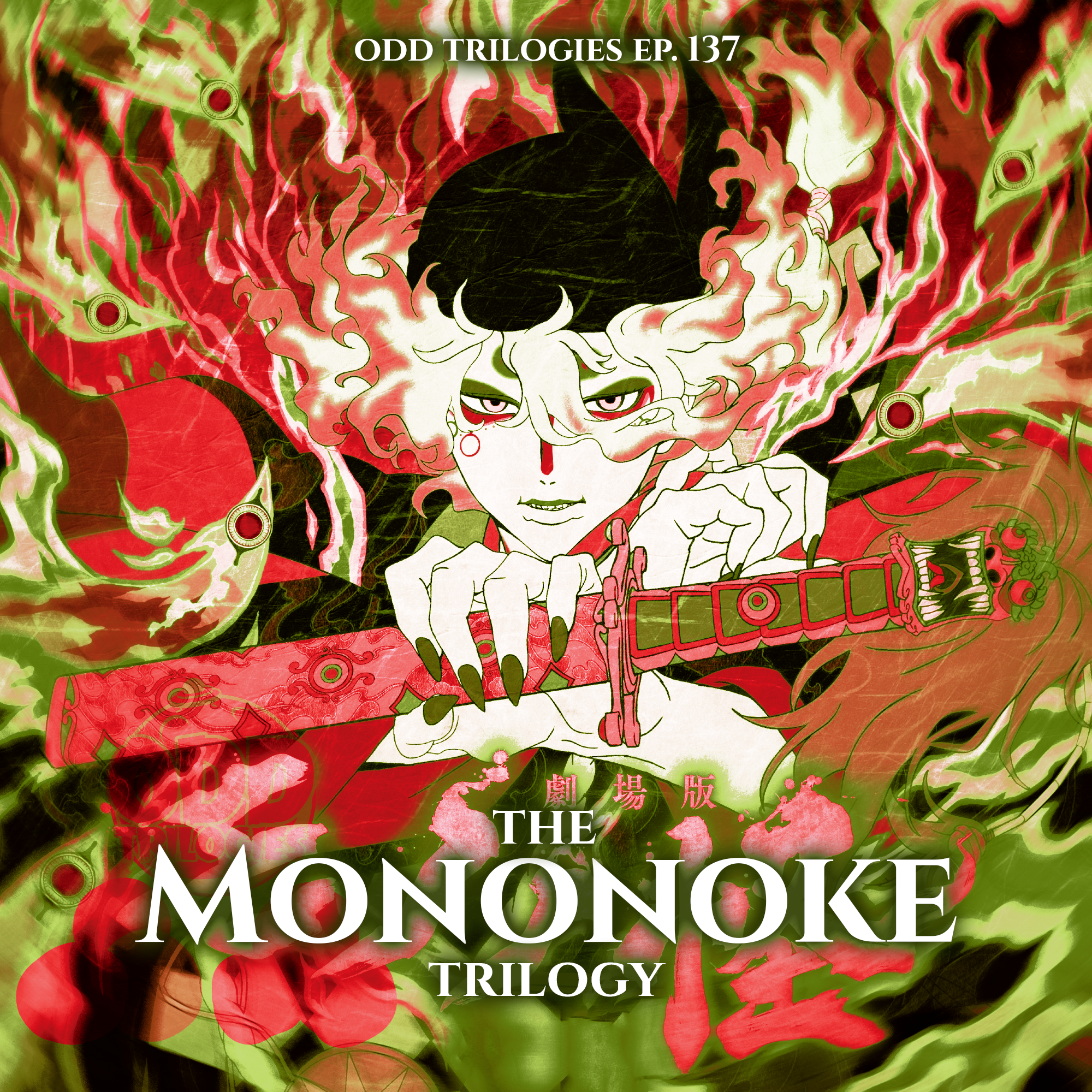
The films we're talking about today are, of course, the Mononoke trilogy.
[00:08:58] Speaker B: Yeah.
[00:08:59] Speaker A: Which includes 2024's I'm gonna say Mononoke, chapter one, the Phantom in the Rain, 2025's chapter two, the Ashes, the Ashes of Rage, and then this year's Chapter three, the Curse of the Serpent.
[00:09:12] Speaker B: Yeah.
And Princess Mononoke, of course.
[00:09:17] Speaker A: So, yeah.
So just. Yeah. The kind of, like, clear up kind of confusion of what we're talking about today.
Mononoke, just as a term in general, is basically like, un.
Spirits in, like, Japanese folklore that are tied to the human world through, like, intense negative emotions.
Which, of course, is why Princess Mononoke is called the way that it is, because it's literally about intense negative emotions surrounding the environment and war and death and all the fun little creatures in between in that film.
And the series we're talking about today actually started in 2006 as one of three stories for a series called Ayakashi Samurai. Samurai Horror stories.
[00:09:58] Speaker B: Yeah. Basically like traditional ghost stories turned into an anime.
[00:10:02] Speaker A: Yeah. Because the three stories were Yotsuya Ghost Story, which is a classic Kabuki play.
Goddess of the Dark Tower, which I believe is also called Tenshu Monogatari, which is another classical play. Very. Whether it's Kabuki or not, I think it's Kabuki inspired, at least. And then, of course, the third story in that series was just called, at the time, Bakaneko, which is Goblin Cat.
[00:10:25] Speaker B: Yeah.
[00:10:26] Speaker A: But that ultimately pilot episode to what would become 2007's television series Mononoke, which basically follows.
It's hilarious because the series itself doesn't really give a time frame.
[00:10:40] Speaker B: It's just kind of vaguely medieval Japan.
[00:10:42] Speaker A: It's literally could be. Episodes are.
[00:10:44] Speaker B: Well, Ayakashi. Yeah. Is all over the place. Yeah.
[00:10:47] Speaker A: Ayakashi is. But Mononoke mostly is in, like, the. It could be between 1600-1820s, depending, or 1920s, depending on what you look with the most. With the last story in the Mononoke series being the latest in the timeline.
[00:11:04] Speaker B: Most of them look very traditional medieval, but that one is, like, distinctly in, like, kind of what we think of as a modern Ish society. Yeah.
[00:11:13] Speaker A: And Mononoke in general, before we get into the films, is as a series about a man and a very. Not unnerving, I think, to some people. Unnerving, but also, like, extremely beautiful to some people. This is very enigmatic person called the
[00:11:30] Speaker B: medicine seller, who has this job known by his occupation.
[00:11:34] Speaker A: Yes, medicine seller, who has this giant wooden box of all of his potions and trinkets and stuff. And he just shows up where it just seems to happenstance have a disturbance in the force per se, as there is a monster and Mononoke popping up that he is, of course, tasked to relinquish.
[00:11:55] Speaker B: Yeah. And, yeah, he basically masquerades as this just wandering vendor as a ruse to get him close to places that have, you know, what he senses is cursed energy or cursed spirits or things. But he's really, truly an exorcist. And as we'll get to, maybe not even like a mortal being.
[00:12:19] Speaker A: That's the funny thing, too, is that Mononoke being around technically now for nearly two decades, as a series around that, if you count the quote unquote Pilot episode from Ayakashi.
There's not really any lore around Medicine Cellar until these films, which we will talk about, because, like, basically the series is 12 episodes.
I'll make sure 1, 2, 3 is like five stories over the course of 12 episodes, which are basically just, you know, we're in this small little village, something's going on, someone's died in a very unnatural way. And just so happens there's this twinkish pale man with elf ears that just so happens to know a little too much about what the fuck is going on. And then another show happens. Like, basically the series is vignettes. And kind of the thing about it being introduced in the Ayakashi series is that the show itself, as well as the movies are kind of set up structurally like a Kabuki play, where, like, there are times where they use sliding doors as indicative of, like, almost changing into different acts or different scenes.
And that is introduced in the pilot episode, but ultimately becomes a motif throughout the rest of the franchise.
[00:13:38] Speaker B: Yeah, they do it.
They do it a lot. They might do it almost every commercial bumper in the TV show. Yeah.
In the movies, I think it's almost exclusively reserved for, like, the beginning and the end of each film.
[00:13:53] Speaker A: So they do. So the thing that's so funny, too, is in the films, the first film has almost a traditional Act 1, Act 2, Act 3, with the Kabuki doors. 2 and 3 also have that same amount of kabuki doors, but they don't ever.
They just kind of assume, like, I think, you know, we're in Act 2 now.
They never just put.
[00:14:11] Speaker B: Yeah, they don't, like, say anything.
[00:14:13] Speaker A: They treat it mostly like the bumper in the original series, where it's just like they just shut the door for three seconds and then they open back up.
And the series isn't, like, extremely popular, but I think it does well enough.
[00:14:25] Speaker B: More of a cult series. I mean, I think from what I've read, I think people were pretty shocked that there was even going to be a second iteration of Mononoke when these films were first announced, because they all been released in the last two years, and they were. They were announced as a trilogy, conceived as a trilogy, and really it's all one story.
But, yeah, it seems the all 17 of the Mononoke fans in the world were very shocked that Mononoke was coming back in any form.
[00:14:56] Speaker A: Yeah.
[00:14:57] Speaker B: And, you know, pretty stunning form, too. I mean, it's crazy how cool. I mean, it's not creatively surprising because Kenji Nakamura, the creator, also created the original anime. And that's a beautiful series. But it is just crazy how, you know, this relatively niche anime has gotten such a kind of seemingly high production value reboot in a way.
[00:15:23] Speaker A: Because the thing too about discussing the series, especially the trilogy, is the fact that regardless of how in depth we go into any of these films, it doesn't fully do the films justice unless you know what it looks like in motion. You can look at stills of the film. The film, very similar to the series has a very kaleidoscopic color palette. It almost feels like you couldn't think of a color that wasn't on screen at certain scenes.
[00:15:51] Speaker B: Yeah, it's almost quilt like where every surface, every object, every piece of every object is a different color made out of a different material, has like a paper texture or stone texture overlay on it or a weird pattern that doesn't make sense, but looks cool.
And yeah, it's. I mean, at times, honestly a little bit hard to visually track just because there's so much on screen. But man, I mean, this is visual maximalism, like, for sure. And I could understand why it would turn people off, but I do think it is. I mean, it is really beautiful and striking. And I think like you said, talking about these movies does do them a disservice because I, you know, at the risk of taking some of the wind out of our sails on this episode, I do think, like the visual aspect of the films is maybe the strongest thing about them. I like all three of these movies and I really love the concept that, you know, the overarching premise of this franchise I have a lot of affection for. But yeah, I mean, the presentation of them is really key to all of it. And so, you know, if you're curious about these from this conversation. Absolutely. Watch them.
[00:17:08] Speaker A: Yeah, it's. The thing that's funny is that I would. I would recommend that if you want these films to be your starting point, they can be up until the most recent film, which we will talk about. Because there is a tie to the series in the last film.
[00:17:21] Speaker B: Yeah.
[00:17:22] Speaker A: That I did not expect in any
[00:17:24] Speaker B: way, shape or form. Yeah, you absolutely can jump on in this trilogy without having seen the series. That being said, I think you'll understand and appreciate the structure of how these stories are told if you watch the anime. And frankly, not. Not to, you know, no offense to these movies, which I really enjoy. I think the structure of the story works maybe a smidge better in the episodic format on the show, the shorter form stories, because these are all these Are all very much like kind of. They feel like traditional fables in a way, for sure. And so I think conditioning yourself to how this series tells its stories and, you know, just the tone of them and the way that the stories tend to play out and how it presents the conflicts and things.
It's good to watch, you know, at least watch an arc of the series.
[00:18:17] Speaker A: Yeah.
[00:18:18] Speaker B: Cause it's usually two to three episodes per storyline.
[00:18:21] Speaker A: I was gonna bring up to you because I did want to. I wrote down all five arcs from the show because I was curious. Cause we never really talked about what your favorite one was from that.
[00:18:32] Speaker B: I think we did, but ever since. But since then, I've forgotten.
[00:18:36] Speaker A: So the four. The five. The five narratives are. The first arc is Zashiki Warashi, which is the. The little children spirits.
[00:18:43] Speaker B: The baby spirits. Yeah, yeah, yeah.
[00:18:45] Speaker A: Umibozu, which is the ship one.
[00:18:48] Speaker B: Oh, yeah, I like that.
[00:18:49] Speaker A: Which. That one's gorgeous.
Nopeda Bo, which is. I believe the one is about the woman and the no mask.
[00:18:56] Speaker B: Oh, yeah.
[00:18:57] Speaker A: Really?
[00:18:57] Speaker B: I think that one. What might have been. Yeah, I remember. And then I think I told you that.
[00:19:01] Speaker A: Yeah, I think that might have been your favorite. Yeah. Because again, it's felt like forever.
[00:19:05] Speaker B: Yeah. Because we watched this series in the spring.
[00:19:08] Speaker A: We did.
I think I watched. Yeah, I watched this in the spring. And then I think a little bit later after that, I did start to try and watch.
Gosh. Monogatari.
[00:19:20] Speaker B: Oh, yeah. Yeah.
[00:19:21] Speaker A: But no, there's. Yeah. Nue and then New Way, which is basically about three men trying to win the.
The heart and the, you know, the.
The hand of a woman.
And then my personal favorite, which is. I guess I'll describe. I'll kind of call it throughout the series is this. In the episode this. But I would say Goblin Cat 2.
[00:19:42] Speaker B: Yeah. Where the original follow up to Ayakashi's.
[00:19:46] Speaker A: Because what's so funny, too, is like, while Mononoke as a series is, you know, standalone in the second arc, which is about, like, a ship mysteriously stuck, which seems like an endless sea, and there's something chasing after.
In that arc, there is a reference to the pilot episode as like, oh, my God, you're the guy that dealt with the Goblin Cat. And so throughout the series, every now and again, you might run into somebody who knows the medicine seller through the Goblin Cat incident in the pilots.
And then you get to the very end of the show where you basically have like, a new iteration of what a Goblin Cat can look like at that time, the modern era, which is like the 1910s, 1920s in the series. And that, honest to God, if you want, like, an easy. Just like an easy way I could sell you, is like, there is some air Q. Perot vibes in terms of just being, like, a weird dude in the middle of, like, a cavalcade of odd people that are all dealing with something in a very.
An unnatural kind of entity in a situation where they must, you know, be honest with themselves. If not, they might not be able to get out alive. And it's like a more intense version of a Poirot detective drama.
[00:20:58] Speaker B: Yeah. And that is something that I maybe didn't appreciate as much when I was watching the series, but came to love on. On revisiting 1 and 2 and then watching 3 for the first time.
Because I discovered these films last year and watched the first two.
[00:21:17] Speaker A: Yeah.
[00:21:18] Speaker B: And then suggested it for this year. But, yeah, I remember thinking, you know, while watching the original series, like, okay, yeah, these are ghost stories. These are mysteries. But they feel so vastly different from, you know, a Western ghost story or exorcism story or whatever. And that holds true. They do. I mean, they're very Japanese movies.
[00:21:42] Speaker A: Yes.
[00:21:43] Speaker B: And in terms of the culture and the mythology and also just the historical hierarchies that they're discussing and things like that. But I will say the.
The structural system, kind of the magic system of this series, how the medicine seller is always performing or not performing, pursuing the truth, form and reason.
It struck me just kind of with the third film in this trilogy, how much that is, like, a perfect encapsulation of, like, what the protagonist of every, like, demon possession exorcism movie is going for. Like, is trying. And, like, without saying it, that's, like, what all the. All of those. That genre is all about. You know, you're always trying to figure out, okay, what demons possessing this person or what demons haunting this place. Ghost is haunting this place.
What happened to them to cause that? And, like, what are they feeling and why are they acting like this? You know? And, like, I was like, man, this is like a. This is a perfect. This is a.
These are great paranormal mysteries that are kind of, you know, in a way, tributes to the genre.
[00:23:02] Speaker A: Oh, yeah.
[00:23:03] Speaker B: Which is really cool.
[00:23:04] Speaker A: It very much is. Why I think it's awesome that it came from an anthology series that is basically. Here are two adaptations of classical kabuki plays or classical plays in general. And then we're gonna have, like, our take, a modern take of what. This could kind of look like one of these plays written in the 2000s and ultimately leads to just, like, one of the easiest structure you can think in the most satisfying way and ultimately kind of get to a degree of wondering, you know, how many times can you do this? What exactly does it look like in a different era here and there?
What kind of spirits are you gonna tackle in there?
[00:23:46] Speaker B: Right.
[00:23:46] Speaker A: And there's, again, the series handles five different types of spirits in very fascinating ways and also just, like, very different drama in like. In terms of just like, the. The guilt, the trauma.
[00:24:01] Speaker B: Yeah. The kinds of things that these. These figures, these spirits obsess over and fixate on are not necessarily things that you would see talked about as much in a Western story because there's different cultural values and different, you know, historical norms and things.
[00:24:21] Speaker A: A bit of a spoiler, but I guess in the Monoke series, like, the first arc is about baby spirits that are the. They are the spirit of aborted children, because they are. It's about this woman who goes to this place because she needs a place to hide because she has the baby of, like, I think a noble or somebody who is, like, already married and clearly, like, this is, like, not planned.
And so the film, the series, that arc is about, you know, people trying to basically have her abort the child and then ultimately finds out that the place that she's ended up is known for being, like, a secret place where they've, like, forced women to, like.
[00:25:03] Speaker B: Right. Do that surprising amount of what a worst abortion and abortion regret in this franchise.
[00:25:10] Speaker A: Yeah.
[00:25:11] Speaker B: Which, you know, probably has historical basis just as like, a. You know, this is something that women have endured for centuries.
[00:25:18] Speaker A: The series. I mean, the series handles a lot. The movies absolutely handle this a lot. I think it's a lot of the. The bright spots of the movies in this, in the ensemble, but the discussion about just independence as well as, like, independence as being a woman, like, it's. It's a very interesting kind of conversation about. Some of the most fascinating characters in these three films are women trying to find their place in a. Basically in a place that is known for, like, not prostitution, but just concubines and. Yeah, a breeding farm at one point is what it said. Like, it's trying to make heirs.
[00:25:53] Speaker B: Systemic objectification of women and use of women as tools.
[00:25:58] Speaker A: If you're really. If you're really good as a maid, you could be fucked by the prince. Kind of like vibes.
[00:26:04] Speaker B: Yeah. And, yeah, I mean, the trilogy, that is a theme throughout the whole franchise. But, yeah, the trilogy really leans in on that, which is probably, you know, that's a good. I think if you're going to bring back the series, I think a great way to do it. Because the whole.
The premise of this trilogy is all centered on this Oku, which is this palace surrounding the emperor, basically wholly dedicated to producing an heir for the throne. Yeah.
And it's just full of all these women who are, you know, candidates for being the bearer of the emperor's child and man.
[00:26:46] Speaker A: Again, another thing, too, that I think shows why I think we'd recommend it just on a visual status alone. Like, the character designs are fascinating.
[00:26:54] Speaker B: Yeah.
[00:26:55] Speaker A: The artistic choices for, like, ensemble shots, like, you know, the way that they use their moments. I think in the series, as well as in the movies, where you will have shots of tens, if not hundreds of people, mostly tens. It's like maybe in the 30 or 40 people in a shot, and a lot of them will just not have a face. And it does a good job of artistically representing what those people feel like in this kind of commune. And also makes the people that we do see, their faces stand out more narratively.
[00:27:28] Speaker B: Yeah.
[00:27:28] Speaker A: When we get to that point, there
[00:27:30] Speaker B: is definitely a theme of, like, loss of identity, loss of individuality associated with the Oku. That's really cool that. Yeah. You visualized through the sort of blank spiral face or. Spiral face. Yeah. And you can even see, like, there are moments where you literally see somebody's face change. They say one thing or they do one thing, and their face changes because it's like, oh, that's where they made the decision to give that up again.
[00:27:57] Speaker A: The series itself is really fun. I think it's a really solid show overall. It is slow, I will say. Yeah, it is. It is one of those things where it's like. It is a slow burn. Ghost Story Show. It is a horror show. So there's. That happens in that. Where it's like. That's actually kind of terrifying. Why is that baby on the floor? Why is that baby on the ceiling? This shot there. There are times they literally will just have things pop on screen for a second and then immediately click it out.
I would say just the signs are really cool.
[00:28:26] Speaker B: Yeah. Just on, like, pure horror thrills alone. What we associate as horror in the modern era. I would say the original series is much scarier than the movies. Neither of these are like, jump scare. No shit. Your pants type horror.
It's much more atmospheric and moody. But definitely the original series has a lot more just like. That's horrifying to look at.
Why are you showing me this?
[00:28:53] Speaker A: Yeah, it's very much. You have to remind yourself, oh, that's right. This is a Japanese ghost story.
[00:28:58] Speaker B: Yeah.
[00:28:59] Speaker A: Like, it is very much the way that they handle horror is vastly different than how we do it usually. And it also leads to when things get really in, like, high gear because these three films are the highest octane.
[00:29:10] Speaker B: Yeah.
Grandiose and bombastic.
[00:29:14] Speaker A: Especially this. The second film overall, I think is like the most like, Jesus Christ. It's just going to be. And then Three has the most like, what the fuck am I looking at? Not in a derogatory way, but your eyes do strain a bit with certain things.
But yeah, the series with this kind of not really a reboot, but almost kind of treated as such. The first film, Phantom in the Rain, follows two women who have decided to be a part of the Oku as starting grade maids.
Asa and Kame, who are like, they've never met each other before, but they bump into each other while going into the Ocu, which the Oku is basically like, almost.
It's not a castle. It's like. It's like a palace.
[00:30:00] Speaker B: It's like a gated community.
It's not fortified necessarily, but it's, you know, it's a walled off kind of commune. Yeah.
[00:30:09] Speaker A: With like a city surrounding it or like a village surrounding it. And the Oku is basically meant to be almost like a palace for these women to be there as in hopes of becoming concubines for the master, who is like the. The leader of the country in honor to get like the next the emperor. Thank you. My brain kid wanted to say king, and that's not right.
And of course, the lord ruler. Yeah. As Asa and Kame are going into the palace, they bump into the medicine cellar, who is vastly redesigned from his original look in the series.
[00:30:50] Speaker B: Spiritually very similar, but like, way different direction.
[00:30:54] Speaker A: I would say objectively hotter, more feral. For sure. His design looks more like a shaggy dog than anything.
[00:31:01] Speaker B: He does look a little wilder. He's got, you know, his sharp teeth are a little bit more prominent. His hair is a little bit wilder.
[00:31:09] Speaker A: His design in the original series isn't full Treasure Island Pir, but there's some Treasure Island.
While, as in the Netflix or at least the film trilogy, there is kind of like he's much hairier, longer hair, bushier hair. And there's like a. I think there's. Now his teeth feel like they're a lot sharper. Like, you see, like fangs more.
[00:31:31] Speaker B: Well, he bears them more.
[00:31:33] Speaker A: Yeah.
[00:31:33] Speaker B: And there are, there are.
I don't want to overstate the development of the medicine seller in either iteration. Because the medicine seller is really not that deep of a character in terms of his arc or anything.
He's really there just to kind of teach everybody else something.
But there are. There are some distinguishing features in their personalities between the anime and the. And the movie, the way they represent the medicine cellar, which is surprising because it does seem like, you know, like, why.
I don't know. In the. In the original series, it felt like the medicine seller was always a little bit more mischievous and more calculating. Like you just kind of sit back and like, yeah, not really be involved, but just tell people things and then like chastise people when they're being stupid. And then in the movies, he's more.
He still has that kind of I'm removed from all of this feeling, but he's much more compassionate. He'll step in to help people in a moment. Yeah. You know, and also seems just in a better mood.
[00:32:46] Speaker A: Yeah, he. He feels a lot more. A little bit more carefree or at least feels more like he's in.
In control of the situation enough.
[00:32:56] Speaker B: Yeah.
[00:32:57] Speaker A: Where it's like, I know where I'm at now, where I'm at in my form. Truth reasoning, development. I think I'm where I think I'm supposed to be.
[00:33:04] Speaker B: Yeah. Yeah.
[00:33:05] Speaker A: Well, as in the. Yeah.
[00:33:06] Speaker B: In the series, he seems maybe more manipulative in the series.
[00:33:10] Speaker A: He can be. It's also funny, too, because hilariously, in the pilot, in the first arc of the series, he's more of a medicine seller.
[00:33:18] Speaker B: Yeah.
He actually does medicine.
[00:33:20] Speaker A: It's actually because it makes sense. In the pilot, the pilot almost seems like the medicine seller aspect.
His potions and his trinkets and his herbs are like the easy thing to get him through the gate.
And so you think like, oh, so that's basically a front. And then you watch and they're like, you know, he pretty much knows what he's talking about. It's just. It's like, I am a medicine seller, but I'm more like 20% medicine.
[00:33:44] Speaker B: More like, this is my day job, 80% exorcist. This isn't who I am.
[00:33:48] Speaker A: And what's funny though, too, is that he has that, like. He basically goes like, oh, I've got some love potions if you'd like. But he literally. It can't get in.
[00:33:56] Speaker B: I don't think he ever uses a potion in the trilogy.
[00:33:59] Speaker A: He can't get in in the first film unless he, like, breaks the rules, which he does, to get in.
[00:34:04] Speaker B: And ultimately yeah, the. The Oku notably has a very strict, like, no. No man rule. There are exceptions that you find out later on. But like, even the. The head of security, who's a major recurring character across the film, he's fantastic. Really one of the only major recurring characters.
He.
Even when he enters the palace, like you. You see the other. The higher up ladies are like, you gotta get out of here. What are you doing? Like, you shouldn't be here.
[00:34:35] Speaker A: Yeah, it basically, it's just men at the gate. And that's it.
[00:34:39] Speaker B: Yeah.
[00:34:39] Speaker A: Then ultimately there are some male characters that come in in the first film that are reoccurring in the later films who are there as, like, investigators. Because kind of the whole premise of Phantom of the Rain is that there is a.
There is. When a concubine is about to give birth, there's usually a birthing ceremony.
And apparently a few months prior, the birthing ceremony was delayed and ultimately canceled. And that never happens. And ultimately the woman who is giving
[00:35:11] Speaker B: birth,
[00:35:13] Speaker A: they can't find her. They don't know what happened. And so ultimately they're like, did something happen to the mother of the baby that led you to postpone that also?
Do you think maybe postpone it had something to do with the mother dying? It's all these kind of questions and answers where they're like, the Oku doesn't have to answer anybody in their head. They're like, so high up, they're so important to the neighboring area that they basically are like, listen, get out of my way. No men allowed here. We know exactly what we're doing. How dare you? How dare you tell us what to do? And what's so fascinating about the first film is that, I mean, I'll say it out the way. First film is my favorite of the three, I think. I think the first film is a perfect encapsulation of like, oh, so this is why you do this in a film form now? Because the thing about the film form is, like, while I understand the series, you know, it does work better, I think, at times with the sliding doors and kind of the narrative from it. There's something so fascinating about, with that first film shifting the focus less on Medicine Seller for a good chunk of it and actually putting a lot of focus on Asa and Kame and their relationship.
[00:36:24] Speaker B: Yeah.
[00:36:25] Speaker A: Going up into the Oku, giving you all the foundation you really need to know about, like, what people kind of superficially know about the Oku. And it's kind of concubine commune. And like, the higher up women, the People kind of in the middle rung, and then, like, the women who've been there for a while, but are still lower half and just getting all that information.
And then ultimately, even though I don't think any of the protagonists in 2 and 3 are as in depth as Asa and Kame, but all that information you got from their narrative plays super heavily into now, you know, when we get to two and we get to three, when the kind of the. The big narrative twist I think of the trilogy itself is the fact that all three of these films are, in fact, about the Oku. Because. Yeah, in my head, I had no idea that we were going to come back to here. I Literally, the way that the first film structures itself, it feels like you get everything you need from the. From the landscape, the setting, the characters. Like, they have some really good fun arcs. All the secondary characters. I love Austin Kame. They're such a fun group.
[00:37:32] Speaker B: Yeah.
[00:37:32] Speaker A: I mean, of course, Letterbox. Unsurprisingly, it's like, yeah, there's strong lesbian energy. Clearly, they're not together in the. But they're very, very sweet. Very dependent of one another because they're both new and they're both trying to figure out their place in the Oku.
[00:37:45] Speaker B: Yeah.
[00:37:46] Speaker A: By the time the film ends, I thought, well, I. You know, if it's gonna be like the series, the other two films are gonna have, like, nothing to do with this. So I'm glad I got to. And then I started to. And to be like, holy, we're back a month later.
[00:37:58] Speaker B: Right.
[00:37:58] Speaker A: Oh, I'm so down. Like, it's so fascinating.
[00:38:01] Speaker B: Well, yeah, it is. It is interesting that the whole trilogy centers around essentially one broad conflict in the Oku, and yet still. Yeah. Asa and Kame, not really characters for the rest of it. Asa does show up.
[00:38:16] Speaker A: She's more prominent in three than two, but she's in the background of two.
[00:38:20] Speaker B: Yeah.
Even in three is a very small role. And Kame is just gone. She's just done after the events of one.
[00:38:29] Speaker A: But the thing about the Medicine Cellar is there's never a point in the series.
This isn't a dig on the show, but it is kind of a truth.
And I know the reasoning and form of it as well. But, like, the Medicine Cellar is never going to die.
[00:38:43] Speaker B: No.
[00:38:43] Speaker A: Like, he will. There is at a point in the third film where it almost is, like, the most dire thing you've ever seen this character go for.
[00:38:50] Speaker B: He actually says, I don't know if I can do this thing.
[00:38:54] Speaker A: But ultimately, he is usually what the show kind of gravitates you towards is you find somebody, the show is kind of, you know, a normal human that you may or may not get some information on that you think is kind of fun or you're interested. And then their fascination towards the medicine cellar brings him into play. And then ultimately, when danger becomes too hard for anyone to handle, that's when the medicine seller pops in and then does his. I have all three of what I need now I'm gonna go sicko mode.
[00:39:23] Speaker B: Yeah.
[00:39:23] Speaker A: And that's pretty much what gravitates each and every one of these stories, or there's even kind of different versions that. Where there's one story where it's almost like kind of implied that the medicine seller, like creates characters in order to help a possessed person kind of move on from something. And so it's like there's actually not as many people involved in the story as you think. Yeah, but in this, it's just like since the medicine seller is a man, he cannot be in the. In the Oku, I think for a solid. For a 90 minute film, like, I think a 30 minutes.
[00:39:55] Speaker B: Yeah. He sits outside the whole.
[00:39:58] Speaker A: And then when shit goes down, that's when he goes, okay, I'm gonna break the rule. I need to go see this thing.
[00:40:03] Speaker B: Yeah. And it's always. I don't know, it's always really badass. Like in. Because I think in all three films he does it where he's. Or no, the first two, because in the. By the time of the third film, they're all like, oh, yeah, we know this guy, he can come in.
[00:40:15] Speaker A: I got. I've got my medicine seller pass.
[00:40:17] Speaker B: Yeah, but in the first two, it's like a distinct dramatic moment when he decides, like, fuck it, I'm going in.
And that's. It's just really cool. And also his relationship with the head of security. I can't remember his name.
Is it Sashtika something? Shika or Shatah.
[00:40:37] Speaker A: Yeah, I need to look up.
[00:40:39] Speaker B: But their relationship is really sweet and really like the only relationship the medicine seller has with any character in the films.
[00:40:49] Speaker A: There is one other character that gets that, but not until the second film, which is Botan.
[00:40:55] Speaker B: Yeah, that's true.
[00:40:55] Speaker A: She shows up in the first film.
[00:40:56] Speaker B: She's like the only person who understands the value of the medicine cellar by the end.
[00:41:01] Speaker A: Yes. Oh, my gosh. I can't find his name. You'll find it for me.
[00:41:06] Speaker B: It's.
That doesn't sound right.
[00:41:11] Speaker A: Well, it looks. I mean, yeah, it is.
Because the funny thing too is that what makes the films, I think, work incredibly well because I think. I think all three of these films are great in different ways. I was really surprised at how much the third one felt so final and also made me feel kind of sad that there wasn't another one afterwards.
Because like, ultimately, at the end of the day, while the other medicine seller doesn't have a lot of lore personality wise, he's very animatic and mysterious and approachable, but he's also very mysterious and off putting to some people.
It's. I think a lot of like you gravitate towards the medicine seller because ultimately trying to find the form.
But he.
Because he needs to find the form, the truth and the reasoning. He is just inherently a very empathetic person because he needs to understand how something like this could happen in this space.
[00:42:06] Speaker B: Yeah. And that, I mean that I think is you're kind of unlocking the beauty of this whole. The whole premise of this franchise particularly. Well, really the whole. The whole thing is. Yeah, this emphasis on understanding the pain and the evil in the world as literally as a weapon to purify it, to help resolve it.
And yeah, he is seemingly very cold and standoffish, but at the end of the day is always in pursuit of understanding pain and illuminating pain and injustice and deceit.
[00:42:51] Speaker A: He's usually the one that tries to make people understand that insecurities and fears aren't inherently like sinful to have it is like if you think you're a bad person because you're not very good at what you do, that let me let you know. Let me tell you, that's not at all how that works.
And it's like there's. Because there's things about the film where it's like. Especially in the first, where Asa and Kame's whole kind of situation. The fact is that Kame is very bubbly, very personable, but is also very ditzy. Is very much like she is at the Oku because she was pretty much told that's what she should do.
[00:43:28] Speaker B: Yeah.
[00:43:28] Speaker A: So she did it.
[00:43:29] Speaker B: And she's not really coming in with any particular skills that will help her. No, she's kind of just like, oh, well, give it a shot.
[00:43:36] Speaker A: She's just like, yeah, I'm here because I've been told this is where I should be. Well, Asa, on the other hand, is a scribe.
[00:43:43] Speaker B: Yeah. Very skilled calligrapher, very intelligent.
[00:43:46] Speaker A: Like kind of a big defining moment early on in the film is that when they introduce new people into the Oku in like the Staff, they have to give up something that is precious to them in their well as an offering to the Water goddess, who's a big proponent of the series as well. And Kame gives up a hairbrush. It's very important to her.
And then Asa doesn't give anything up because Asa's like this, why do I have to give up something important?
[00:44:14] Speaker B: This is bullshit.
[00:44:15] Speaker A: And it's like she's like the first person in a while to really push back and leads to a bit of some ruffling, some feathers of the older women who have been there for a while and have clearly are like, this is just how it's been. You questioning our traditions. And she's like, yes, why shouldn't we do that?
[00:44:31] Speaker B: Yeah.
[00:44:31] Speaker A: And becomes like this classic old school versus new school kind of conversation in generations and because generations are also a big part of the conversation with these three films. Because it's also like historically, the OCU in its current form has only been around for 150 years.
[00:44:47] Speaker B: Right.
[00:44:47] Speaker A: So later on in the series you can find more history about why the OCU is the way that it is, who established it, who the water goddess is. And there's also characters who show up in the first two films that ultimately don't have anything to do or like character wise until the third.
[00:45:03] Speaker B: Yeah, it's.
[00:45:05] Speaker A: There's like a groundskeeper who's like. He looks like. In classic anime fashion, looks like he's in his 20s, but he has two teenage daughter who's like basically the groundskeeper. Also like the defender of the Water Goddess shrine.
[00:45:19] Speaker B: Right.
[00:45:19] Speaker A: Who doesn't say pretty much anything for two of the films and then becomes a very prominent part of Curse of the Serpent.
[00:45:27] Speaker B: Yeah. Well, that goes both ways too. Because there are. There. There's just so many characters across this trilogy and they're. They may be present in all three films, but are only really feel like actual characters who have any influence on the story in one of those three.
[00:45:46] Speaker A: Yeah.
[00:45:46] Speaker B: And they'll jump back. And you know, I mean, Asa is a great example being the main character essentially of the first film. And then almost irrelevant except for like one scene later in the trilogy she basically is told.
[00:45:59] Speaker A: I think in the second film you're told that she's the scribe now.
[00:46:03] Speaker B: Yeah.
[00:46:03] Speaker A: Of the Oku. Because it's. Because the whole thing about the first film is that there is this doll that keeps popping up that is missing an umbrella.
[00:46:12] Speaker B: Yeah.
[00:46:12] Speaker A: And it seems like anytime this doll is popping up, the people that are seeing it mostly the women. Because, again, it's mostly a woman, a community filled with women. When they see this doll, they're actually seeing something else. You find out later they're seeing their prized possession they threw in the well when they become a maid and a concubine to the Oku. And ultimately, the toy is used as a trap to pull specific people into, like, a situation where they ultimately get all the water pulled out of them.
[00:46:45] Speaker B: Yeah.
[00:46:45] Speaker A: And they become, like, this mummified version of themselves. And then that's when, of course, the medicine seller pops up and goes, oh, my God, guys, you have a healthy case of Mononoke.
[00:46:56] Speaker B: Yeah.
[00:46:57] Speaker A: And I got to take care of this because there's clearly a spirit here that has been hurt by something here or just burned by somebody in this establishment. We gotta find the form, the truth, and the reasoning of the Mononoke because our medicine seller has this beautiful, ornate, divine sword, which I believe is called the Sword of Cone in this.
[00:47:23] Speaker B: It was called the Sword of Re in the original series.
[00:47:26] Speaker A: Yeah. And ultimately is like, the only way I can use this badass will kill anything sword. I have to make sure I have all my information correct.
And then I can have a fight sequence. And so it becomes, like, initially, like a horror kind of detective mystery, where it's basically the medicine seller being like, all right, stop bullshitting me. Tell me what the truth is. I know there's a secret tied to this place. And in the series, it basically was. The secret is in. There are five different secrets and five different spirits in five different places.
[00:48:00] Speaker B: Yeah.
[00:48:01] Speaker A: In the trilogy, surprisingly enough, which is one of the most unique parts about it. Most fun I had going through as well, is that there are three separate spirits in the same place.
[00:48:10] Speaker B: Yeah.
[00:48:11] Speaker A: And from vastly different time periods in terms of when it happened. And I think it. I basically. I think what happened is, is the first film has the most recent incident that leads to the spirit being called a carcassa, which is basically a car. Casa, if I remember correctly, is a umbrella spirit that has, like, a giant eyeball.
[00:48:34] Speaker B: Yeah. It's the most around of the spirits
[00:48:37] Speaker A: I've seen it before.
[00:48:38] Speaker B: The others take a more material or, like, recognizable, like, animal form because it's like an umbrella.
[00:48:46] Speaker A: It's like an umbrella ghost yokai in the first film. It's a hinazumi, a fire rat in the second film. And then it's a hibigami snake God or serpent God in the third one.
And it's just interesting to watch with the three separate spirits. It is funny, though, how even Though the medicine seller has been in this place by the time the third film, three separate times. And most people, by the time the third film happens, most people are like, oh, everyone, you know, pack your things up and move out of the way. The medicine seller's taking up the stage. We're gonna let him do his thing. He still has to explain to everybody that he needs the form.
[00:49:29] Speaker B: Yeah.
[00:49:30] Speaker A: The truth. And the recent.
[00:49:32] Speaker B: Every time.
[00:49:32] Speaker A: Every time. Which is classic because that's. It's like the serial serialized show.
[00:49:35] Speaker B: And. Yeah.
[00:49:37] Speaker A: Another thing I want to give credit to is the dub of the movies because I had not. I had not watched.
I had this the first time I've seen all three of these movies. And I watched the series as a mix of sub and dub because I wanted to hear the original medicine seller voice as well as the cast and how they're performing and then also hear like how the dub was doing it. And it was very fascinating to go back and forth, I think. Victor Lee is the VA for medicine seller in the series.
Crispin Freeman is the voice of the medicine seller in the films.
He's an iconic voice actor in hundreds of roles.
When I was telling Andy who he was, I'd like to see. He's Winston from Overwatch, which is funny because he doesn't sound like that in this, but like, he's just like. He's so good at giving the medicine sailor. Almost like this whispery, just approachable, yet also just like, you know, luring, alluring voice. Yeah, just a smoothness to him that is so interesting.
[00:50:39] Speaker B: It is this very like smooth, calm, maybe just slightly effeminate voice when he's just talking. Which is true to the original series. But where his voice distinguishes itself in this trilogy is like in all the more intense moments when he starts yelling, you realize, oh, this guy's got like a deep barky voice. Like he can fucking, you know, snap people to it. And it's cool because, yeah, he does. It almost is a multi layered voice where it's deceptively petite or minute and then kind of becomes bigger, non threatening. Yeah.
[00:51:20] Speaker A: It's funny thing too is like, even when he becomes, I guess, more aggressive in his protections of the humans around him because ultimately all three of these films kind of have the same beat for beat. Like we're introduced to these specific characters as the mains for this spirit tale.
We get revealed the first death and the way the cause of death as well as what the kind of the spirit will look like. The medicine seller comes in, he tells everybody what he Needs to get. And then it becomes him practically trying to push the spirit away as much as he can just so he has more time to figure out what the fuck is going on. Then he figures out what the fuck's going on. And then he gets this badass banging finale fight. And all three of these. Like, again, the thing about the original series is that if the original series was a low budget show, it didn't really tell. I think a lot of the time, mainly because of the artistic style and the kaleidoscopic, you know, like, let's throw the rainbow at the wall and then let's do it again in the next shot.
There's such. The original show is so colorful and so spellbinding at times and also so unique. Like, I genuinely believe if you went through each arc and found a separate still, you could tell the difference because there's just little tweaks in each arc.
But since they don't have to do that in the films, because we're going through the same space, some of the same kind of storylines, because it's basically about the secrets of this women led concubine kind of community.
What we have is like a very consistent, but just a very. Just gorgeous set design, gorgeous color palettes.
Character designs are so much fun. Like the, the head guard is such a blast. He looks exactly like any kind of what, meathead samurai you would think of. But he's such a fun character, especially later on.
[00:53:14] Speaker B: Kind of looks like a young pops from Lupin.
[00:53:20] Speaker A: Yes, he does. He very much at the very beginning of the series of the films, absolutely hates the Medicine cellar because there's a confidence and alluring kind of. He's like, oh, would you like a love potion?
[00:53:32] Speaker B: Yeah. Well, he's got this bravado and he's kind of like, kind of trying to, you know, woo the women that walk by or like, you know, hit on him or whatever.
[00:53:41] Speaker A: Not be tough.
[00:53:42] Speaker B: Yeah, just be a cool guy. Be seen as a cool guy by all these women. And yeah, the medicine seller just undercuts him like, hey, you need a love potion, my guy.
[00:53:50] Speaker A: He's like, you like that young woman that just came by, you need help.
[00:53:53] Speaker B: Yeah.
[00:53:54] Speaker A: He's like, I'm gonna fucking kill you.
And he just sits there in his little box. Yeah.
But ultimately, yeah, their, their relationship is very sweet. Cause there's not a lot of like they don't grow, they don't have a lot of deep conversations with one another. But there's just clearly like, there's a familiarity and a comfort when they're next to each other, which becomes a thing that I really like. There's like multiple characters. I think by the.
You can tell, like they're Boton. Who is like one of the only women in the space that has red hair or like blonde hair. Kind of like strawberry blonde, I think.
[00:54:28] Speaker B: Yeah. I would call it red because Asa
[00:54:29] Speaker A: is blonde and could. And Coban is. Or Kotan is bread.
[00:54:35] Speaker B: Oh, yeah, yeah.
[00:54:37] Speaker A: Because. Comment.
[00:54:37] Speaker B: Because, like most common is dark.
[00:54:38] Speaker A: Dark hair. It's mostly dark hair. Or green or purple hair. It's like. And redheads and blondes are not very common except for like three or four characters in this like commune of like 50 women.
So it's like when they pop up, it's like, okay, they very much stick out. I wonder if there's gonna be more of them. And Botan, by the third film, she hates the medicine seller in the second film. Despises. She's like, everything I see about you is just trouble and I want nothing to do with it. But by the third film, there are some longing moments of just like. She clearly feels safety around him just because. Probably just because he's done this shit so many times.
He like, keeps everyone safe the amount of times. Because, like he does keep people safe in the original series. But it's like the only people that die in this show in the movies up until the third film. Because the third film, it's like the spirit becomes such a oppressive force. It's kind of hard to hold it back at times. Unless. Yeah, unless you do have like other things. But he ultimately is able to keep everyone safe except for like, you know, when the mononoke is like sneakily going around the grounds and he can't fully tell yet where.
Which is why. Which is a prominent thing in the series and comes back in this is that he has these like, I would say cute butterfly esque scales that have bells on them that basically these scales bend towards the mononoke.
[00:56:05] Speaker B: Yeah.
[00:56:06] Speaker A: Almost as like a compass to help him kind of figure out where they're going.
[00:56:09] Speaker B: He plants them all over the place.
[00:56:11] Speaker A: Yeah.
[00:56:12] Speaker B: In the right direction.
[00:56:13] Speaker A: And then the second film, Botan just like fucking takes them all and throws them away. And the medicine seller just sweet talks his way to like these three like lower level maids to put them all back. Yeah. It's so funny.
Yeah. But Botan at a certain point is just like.
[00:56:27] Speaker B: Yeah.
[00:56:27] Speaker A: He's like, literally he is fighting giant ass monsters at times and is still finding ways to like use his charms to get people out safely. And then like, at one point, I think in the third film, she's worried about his safety and just, like, wants him to be safe. And she's like. He's like, I'll be fine.
[00:56:43] Speaker B: Yeah. He's like, yeah, don't worry about me.
[00:56:45] Speaker A: Which is great. I mean, I think it's a great thing to show from, like, the beginning, where it's like, Botan is not really. She's there to be addressed as, like, a higher up in the Oku, but she's not really much of a character until the second one because her father becomes a bigger part.
Played by Sungwon Cho Prozd.
[00:57:02] Speaker B: You know him.
[00:57:04] Speaker A: He plays her father.
[00:57:06] Speaker B: Yeah.
[00:57:07] Speaker A: Flack from the hit series Borderlands.
But it's. Yeah. I mean. Yeah, it just. Like the first one, I think, really gives a lot of enough character development with Asa and Kame that when things start to go bad, my brain immediately went, I think Asa's fine, but I really don't want Kame to die.
She's, like, getting so much abuse from the older women because she's too. She's too bubbly and sweet and just not perfect at what she does. As if she could pick it up in three days.
[00:57:36] Speaker B: Yeah. The first film definitely has the best journey for its main characters to go through, and they work well as a lens for you, the viewer, to kind of take in the OCU and understand its social hierarchies.
It gets a little bit more nebulous and maybe less emotionally compelling in the latter two films because it becomes more. A little more of an ensemble piece.
[00:58:01] Speaker A: Yeah.
[00:58:02] Speaker B: And a more especially way more mechanical in the sense that, like, just exposition upon exposition of, like, this is what we do in the Oku, and this is why this happened historically and blah, blah, blah. And it's kind of. I don't know. By the third film, it's a lot of medicine seller kind of, you know, regurgitating the history of the Oku to you.
[00:58:24] Speaker A: Yeah. Because the first film is talking about the preparation of doing the birthing ceremony.
[00:58:30] Speaker B: Yeah.
[00:58:31] Speaker A: The second film is, like, the aftermath of the first film, trying to make things properly work well in terms of discussing the ideas of, like, what nurses.
[00:58:42] Speaker B: Yeah.
[00:58:42] Speaker A: And which families. Because, again, there's, like, a hierarchy of families that, of course, if certain families are like, the nurses of certain heirs, that basically means they're higher up in the hierarchy.
The second film, I think, feels the most, like, scratches the itch of, like, if you're in that Game of Thrones kind of like. I like the political underbelly of, like, all this stuff, you get the most of that out of two.
[00:59:07] Speaker B: Yeah.
[00:59:09] Speaker A: Which is funny too, because two is also like a 60 minute film with like 10 minutes of credits.
[00:59:13] Speaker B: So these movies all have long credits which like, I'm sure took a fucking huge team of people to make.
[00:59:19] Speaker A: Yeah, because I think they like. Because I think they worked together with I think Carbon Engine or Helix Engine. I think it's Carbon Engine to like, I think, because again, there's a lot of CG in these movies. Not a bad, not a bad thing, in my opinion. But also like, compared to the original series, like it's noticeable. Again, not in a bad way. But like there are certain moments where it's like, oh, that's right. The original series didn't really have that much CG budget wise.
[00:59:44] Speaker B: It did in like environments. Like anytime the camera would move and you see the, like the room shift perspective, it would be cgi. Oh, for sure.
But yeah, there's not as much like the Mononoke themselves in this trilogy.
[01:00:00] Speaker A: All cgi, all these giant bulging eyes that kind of envelop their prey.
[01:00:07] Speaker B: Whereas in the original series they were more just grotesque drawings of things that didn't move much.
[01:00:12] Speaker A: Usually there were shots in this, in the three films where the medicine seller would jump and he would become a 3D model, but it wouldn't be, it would be so well animated in terms of giving him a 2D kind of dimension that it's like, see, this is not what. The original series definitely did not have this kind of budget.
They were able to animate a 3D jumpy medicine seller that kind of looked like the 2D version.
[01:00:37] Speaker B: And I'll be honest, I like almost never noticed in these films when the Medicine cellar was a 3D model. No, you can tell when the environments are and that the Mononoke are, but it all, it all works really well in a contiguous style.
[01:00:53] Speaker A: I also like if this was the intention, I think it was a very smart thing to do. Which was basically, if you want to make these three well produced, higher budget films that are gorgeous and are consistent in their quality, probably the easiest way to do that is to build environments they're going to be using in all three films consistently. Like in a classic television series where it's like doing it all in the Oku.
[01:01:17] Speaker B: My God, it's like in the same seven rooms.
[01:01:20] Speaker A: And then like the little, the smaller rooms, it's like, okay, so that makes sense. Like we're doing, we're seeing things we didn't get to see in the last film. And Then the third film goes full balls to the wall with like. The third film is so funny because the third film just feels like a third act from top to bottom. It feels like it's immediately going into, oh, so this is like a third act of a normal film. And then it's 90 minutes of like straight up. We get to the fighting the mononoke in the third film faster than I think anything in any of the series.
In both of the other two films, there's just kind of this interesting. It's interesting to see the kind of the rise in terms of how do you make these three films compared to the original series where it's like, you tell a story, the medicine seller takes out the ghost and then he goes to a different place. But since he's going to the same place all three films, how do you ramp up the action? Or how do you ramp up stakes?
And ultimately they find out they ramp up stakes by basically going from a demon umbrella that's pretty solid size when they fight in monster form to a big, bigger, scarier fire rat that also is constantly combusting. Phenomenal design there.
[01:02:33] Speaker B: And actually also makes people spontaneously combust in the real world.
[01:02:38] Speaker A: And then that goes to basically a serpent God who is literally entrenched in the entirety of the ocean, Goku, from the very moment he jumps in, like steps into the place.
[01:02:50] Speaker B: Yeah.
[01:02:50] Speaker A: And then when you see the design, it's like the most CG of the three, but it's still a phenomenal design.
[01:02:57] Speaker B: Yeah, I'll say. The serpent was probably my least favorite design of the three. Just because he's a bunch of polygons rotating in space.
[01:03:06] Speaker A: Again, I would probably give the first one my favorite monster design because I have seen, and I bet you've seen too, like the classical, like, it's like the umbrella with a giant eye and like a tongue out like a. Because like, those demons are, I think, in most folklore, not usually known as violent or malicious. But of course, in this, in the first film, it really has like, it's doing with the kind of like the pure. The purification of the water, or at least kind of like the corruption of the well they're drinking out of.
[01:03:35] Speaker B: Yeah.
[01:03:35] Speaker A: Because it tastes stagnant and gross. But everyone is like kind of of falling in line and being subordinates to it and just pretending like it's fine as well as like the discussion. Hilariously, the first film is like, even though it is not in modern day, it's basically the whole thing of like, please have more than your job.
Yeah, kind of story where it's like
[01:03:55] Speaker B: very cautionary tale about the whole, like giving up the individual identity.
[01:04:02] Speaker A: Because it's ultimately about a. The spirit is. Or the mononoke is the perverted sadness and guilt surrounding basically a working class woman in the Oku that let her friend, I think, get pushed out and felt guilty about it. And ultimately that guilt led her to lose her job and then ultimately couldn't handle it anymore. And then she kills herself. Yeah, I think she throws herself in the well they've been drinking out of.
[01:04:30] Speaker B: Yeah. Which is probably why the water tastes like shit. Yeah.
[01:04:35] Speaker A: And then you find out later, no, it's not that dead body that's making this water taste like shit. It's this other dead body. Yeah, it's. I mean, again, it's this interesting thing where it's almost like if this trilogy, which I think it's already been kind of announced that there is more mononoke planned.
[01:04:52] Speaker B: Oh, there is.
[01:04:53] Speaker A: Because at the very end of three, or at least people have been talking, like, I think because you said it earlier, Kenji Nakamura created the series and is the directs all three of these. He co directs two and three, but he is the director on all three of these.
I believe he said, like he worked with studios to build an engine or build kind of something that could make these films.
[01:05:14] Speaker B: Ultimately they have a pipeline now.
[01:05:16] Speaker A: Yeah. But also in the first film we get the most lore we've ever gotten for the. For the medicine seller, which is basically his whole sword with the form truth and reasoning is one of eight.
[01:05:31] Speaker B: Oh, he does mention that in the first film.
[01:05:33] Speaker A: Yeah. He also basically says that I think there is a total, because I think it's based off of the Book of Changes. There are technically, I think 64 medicine sellers.
[01:05:42] Speaker B: I don't think that comes up till the third.
[01:05:44] Speaker A: Is that the third? Okay, it's comes up somewhere in these films where it's like he says, like there are eight sorts, which already implies
[01:05:52] Speaker B: eight is referenced like very, very early on. And then. Yeah. Later he explains that 60. There's 64 medicine sellers.
[01:06:00] Speaker A: 64 medicine sellers, which is wild.
[01:06:02] Speaker B: And it's not clear. It's not clear.
Are these medicine sellers all existing at the same time? Are they all on earth? Are they all like of this plane? Yeah. Or are they like of different dimensions? And there are 64 dimensions.
[01:06:18] Speaker A: It does imply though, if there's 64 medicine sellers but only eight swords, I kind of want to see how a medicine seller without a sore handles.
[01:06:27] Speaker B: Well, I almost wonder if they share the sword like this, the sword is like almost like a divine power they're siphoning.
[01:06:33] Speaker A: They could.
[01:06:34] Speaker B: So it's like every, like every sword is used by eight different medicine sellers maybe. But yeah, the, the whole eight swords, 64 medicine sellers is yeah. Reference to like a Chinese folklore of I Chang or something is called that basically establishes it's kind of this yeah triadic or trigram vision of the supernatural order.
[01:07:04] Speaker A: And it's not naysha or legend of hey related. So neither one of us really know
[01:07:09] Speaker B: not the journey to the west.
[01:07:12] Speaker A: So it isn't our blind spot there. But that's like the most lore we get of the medicine cellar is the fact it's like yeah there's more than just me. But there's no because again. But it's like how he says he's human. There's no elaboration as to are there specific zones if there's 64 total at all given times. Do you just never leave this area?
What the fuck does that mean?
[01:07:36] Speaker B: The vibe I get of the motions or not. Motion seller, potion seller, medicine seller.
[01:07:42] Speaker A: I'm surprised I haven't even said that yet.
[01:07:45] Speaker B: Yeah, we've discussed off air that the medicine seller makes us both think of this. This YouTube video from Challengers writer Justin Karitskis.
[01:07:55] Speaker A: Also queer screenwriter. Yeah, queer screenwriter and Celine Song's husband. I'm pretty sure
[01:08:03] Speaker B: he back in the day on YouTube was doing acting exercises and uploading them to YouTube and he created one called Potion Seller in which he plays two characters, a potion seller and a knight going into battle who needs a potion.
And anyway it's worth watching. It's part of our vernacular. And now whenever I hear medicine seller I think potion seller.
[01:08:26] Speaker A: Yeah. It was never in my vernacular until I met Andy.
[01:08:29] Speaker B: Oh, I never knew.
[01:08:31] Speaker A: And I love that video now. It's, it's hard not to think of that video.
[01:08:35] Speaker B: And there are various edits of the video. There's. There's an auto tuned version that's very dramatic.
[01:08:40] Speaker A: There's a, there's like a still almost storyboarded like JoJo version of it which is so funny. And they keep like the giant Megamind version because like he's doing the potion seller night conversation with like a filter on his laptop camera. So he's got like this giant ass head. He's the potion seller.
But yeah, I mean it's.
Considering how short I think this trilogy is, it's around four and a half hours total.
And that's not including the credits. If you take out the credits, it's probably closer to four hours. Because I think each one of the films has about like 10ish minutes of credits.
[01:09:20] Speaker B: Well, yeah, if you. If you take out the credits, it might be closer to three hours than four. I mean, these are all an hour. Between an hour and ten and an hour and a half.
[01:09:30] Speaker A: Yeah.
[01:09:31] Speaker B: And you take 10 minutes of credits out. Yeah.
[01:09:34] Speaker A: But it's just such a fascinating kind of discussion of each three of these kind of like stories always come back to the tragedy of.
Tragedy of women, which, again, I would say it doesn't feel like anything that's very manipulative. It feels very classical in the idea about these women who are constantly suffering and no one really takes. Everyone takes for granted because they're women in the society where they are, at least in these films of force. Concubines, maids.
No really position of power. Unless you're in the ocoo, which is another fascinating conversation where it's like with Kotan or Votan, where it's like she is in a higher point of power and she's listened to by men in
[01:10:17] Speaker B: a way that is like she has achieved some. That sense of authority and credibility.
[01:10:23] Speaker A: Even the mom of the Lord, who is like the one that is like, basically, like, we have to keep our traditions.
[01:10:30] Speaker B: Right.
[01:10:30] Speaker A: She basically is the one that speaks for him more than anything. He doesn't have a line.
[01:10:34] Speaker B: The emperor has like one scene in this whole trilogy.
[01:10:37] Speaker A: And honestly, I love him in three. I think he's great in three.
[01:10:41] Speaker B: I didn't think we were gonna see him at all. No, I would have been fine. Like, that's a cool. I like that they, you know, obscure him so much in this trilogy. But yeah, when he does finally show up in a scene, it's pretty great
[01:10:54] Speaker A: because in the first film he shows up. You find out there's basically a fuck chamber in the first film where like all, like, basically it's. He is. He describes it himself in the third film. And I love this description, the dub. He describes himself as a breeding horse.
[01:11:09] Speaker B: Yeah.
[01:11:09] Speaker A: Because basically what happens is he has like. His whole schedule is set up for. He has sex with this woman from this family at this night. This woman from this family.
[01:11:18] Speaker B: Every day he has night service.
[01:11:19] Speaker A: He has night service.
[01:11:21] Speaker B: A different.
[01:11:22] Speaker A: And mates can never go in. They can never go into the night room.
But, like, he can favor one more than the other. And that becomes a bit of a political kind of controversy in the film.
[01:11:32] Speaker B: You try and establish rules that you can't have consecutive nights at the same woman.
[01:11:36] Speaker A: Apparently it was always built in. But they just haven't followed it in a while. And then that leads to, like, kind of an uproar. But, like, in the first film, you see him naked walk towards the night bed, and I think that's it.
I think in the second film, they, like, for. For three films that are, I guess, technically TV14, you basically see him right before insertion in the second film, like, when they're in the night bed.
[01:12:00] Speaker B: Missed that. Yeah.
[01:12:01] Speaker A: Well, it's. It was again, what I. Because I was, like. When I watched the second film, I was like, what are these, like, rated at?
It's like, TV14. Then when you look at TV14, it goes, oh, yeah, TV14.
Suicide, fear, assault. And I'm like, TV14. Netflix. Does that mean.
[01:12:17] Speaker B: Yeah.
[01:12:18] Speaker A: And then the third film is where he becomes more of a prominent character, where, like, it is revealed in the third film.
Okay, yeah, we've. We've spoiled so much at this point. We're like an hour plus in. But, like, from this point forward, like, if you. If you sound down for it, I highly recommend watching the series as well as all three of these movies, because, like, now we're talking all over the place, of course, but three has, like, some of the biggest bombs in terms of, like, the narrative where it basically is revealed to, like, basically, the Oku existing is completely bullshit. The whole reason the Oku exists is to basically produce an heir for the emperor and continue doing that for its lineage, to keep its noble bloodline, only to find out that Lady Ame, who created the oku in the 150 years prior in its current.
Basically lied. There is no royal bloodline. They could not produce a male heir. So they basically kidnapped a child from the neighboring city and, like, an orphan and just said, oh, my God, she gave birth to a boy.
[01:13:26] Speaker B: Yeah.
[01:13:26] Speaker A: And then the serpent God, Mononoke is basically the perverted guilt and sadness and fear and anger tied to the consort, who is like, the emperor at the time's favorite woman. Until Lady Ame goes, sorry, you're a breeding horse now.
[01:13:45] Speaker B: Yeah.
[01:13:46] Speaker A: And then he dies.
And then she basically is like, I couldn't give you what I wanted, what we both wanted, and I failed you.
And also, I'm useless now without you. And so she kills him, kills herself, and then that ultimately perverts practically everything in the Oku because of just all the different.
[01:14:05] Speaker B: Just her remorse over kind of creating that lie that then becomes the foundation of the Oku. Also the fucking lie about the Imperial bloodline.
[01:14:15] Speaker A: Yep. And then basically leads to the. The biggest Mononoke Being her perversion and rage and energy. And then the second films is literally called the Ashes of Rage because it's about yet another woman who is scorned
[01:14:31] Speaker B: and was basically forced to kill her child or her baby.
[01:14:34] Speaker A: Yeah, forced to kill her baby because it just didn't work. The metrics weren't right basically.
And ultimately does goes through with it and then just feels guilty about doing it and feels like she deserves to die. I will say that even though the first film is my favorite and I do love the Caracasa design because it's cool to see at least what I'm aware of. Like a monster I've seen before in other folklore and other kind of interpretations. See what that design is in the Mononoke franchise. I will say turning the Hinazumi into like the. What is traditionally the fire rat and what it stands for and stuff. But turning that mononoke into a combustible, practically suicidal version of that character because the Mononoke itself is based off of of suicidal self destructive emotions is so fucking cool. It's so well done. And it's such a fun little flourish where it's like, God, I don't know how you really top this in terms of going into the third film. How is the serpent gonna really do? And then the third film gets around that by basically being like, well, the serpent has like the most groundbreaking of the narrative because basically it completely denotes all. It basically makes all the sadness, trauma, anger that's happened at the Oku null and void in terms of the fact that there's no importance to this. It's all a facade.
And then you're like, oh, that's got to be all that the curse of the serpent does. And it's not because the serpent itself, the Hibigami, is not even the main. It becomes ultimately the second villain.
[01:16:07] Speaker B: Yeah, it's like in a video game where you, the predecessor, yeah. You fight what you think is the final boss and then it out turns turns out, oh, there's actually a second stage or another boss beyond that a
[01:16:19] Speaker A: hayakumi or hyakumi kume, which is, which is like you said off mic was like a hundred eyes.
[01:16:27] Speaker B: It's actually, I think it's the only one of the four that is a direct reference to a real traditional, real like you know, traditional folklore yokai from Japanese mythology. Which is. Yeah, the Hundred eyed creature in this
[01:16:46] Speaker A: case, instead of it being just this one human sized hundred eye creature or anything like that, it is literally the entirety of Oku has now been perverted to Become the hyakume. And leads to the medicine seller being like, well, fucking shit. I don't think I've ever fought a whole city before.
Looks like I can't do this by myself. And leads to, I would say, the biggest surprise, at least for me in this film, which is the. The introduction of. I'm gonna need some help here. Let's call the medicine seller from the series in.
[01:17:18] Speaker B: Yeah.
[01:17:18] Speaker A: And it was very wild to see the original design 2007 Mononoke. And also I'm pretty sure hear the original dub voice for that.
[01:17:31] Speaker B: Sure sounded like it. Yeah.
[01:17:32] Speaker A: And it's like, that's fucking crazy.
[01:17:34] Speaker B: Yeah.
[01:17:34] Speaker A: I was not expecting to see.
It's hard not to think of Phantom Menace where it's like, now there are two of them.
[01:17:40] Speaker B: Yeah.
[01:17:40] Speaker A: Right.
[01:17:41] Speaker B: Well. And it is. That is.
[01:17:43] Speaker A: Their designs are so good.
[01:17:44] Speaker B: We've kind of been talking around it this whole time. And we even talked earlier about, you know, this concept of the multiple medicine sellers and multiple swords. But that the multiple medicine sellers is literally revealed in the moment where he summons this guy. He says. He's basically says, I don't know, I can't do this.
I call on my 64 brothers to help me. And they send one and it's the one from the anime.
[01:18:12] Speaker A: It's our boy who has the sword of Re.
[01:18:14] Speaker B: The sword of Re. Yes. Which I believe kon means earth in the mythology and Re is fire, which are concepts from actual Japanese folklore. Even though most of this stuff is made up for the series, I'm pretty
[01:18:30] Speaker A: sure at one point even the meta are the. The Netflix medicine seller at one point says that that sword is like. It's a ying to a yang almost.
[01:18:39] Speaker B: Yeah. He says he has one of. One of the eight swords of yang or of yin and yang.
Yeah.
Which is interesting. I don't. I couldn't tell you why, but it is interesting.
But that is something I love before. Before we go on with the two medicine sellers. That is something I love about this franchise overall is how it imbues its own mythology with traditional mythology.
It's really. It in kind of a way you don't see a lot in modern media or anime or things like it is almost kind of creating new mythology.
[01:19:21] Speaker A: Yeah.
[01:19:21] Speaker B: To expand upon the mythology and not just taking, you know, it's not just like Percy Jackson where it's like all these familiar mythological concepts redesigned and recharacterized. It's inventing new layers to the mythology and. And kind of treating it as free flowing with traditional concepts, which is really Cool.
But anyway, yes, back to the, the. The anime, the original series medicine seller showing up.
I kind of loved it. Yeah, I did too. Is it essentially fan service? Yeah, probably.
I tried kind of reading up on like, you know, is there any thematic or mythological significance to these two pairing up? Not really. I mean, they're Earth and Fire, which are classic concepts, but no, it's. I think it's really just like. Yeah, well, let's go big on the third one.
[01:20:17] Speaker A: Yeah, I think it's because again, if they really want. If the plan is for more, which I believe at the end of three, if you watch it till the very, very end, it basically just says like, ah, we'll see you sometime soon. Like, it's like this is like this. Not ominous, but it's like, oh no. Like it's. This is not the end all. Be all of this. We have. Because again, if there is almost like a Doctor who esque quality of like if the medicine seller's like reincarnating in different era or if it's just because he also. Yeah, he says when he brings in. Because three also has like, I guess the most gadgets and tools we've ever seen him use. Because third film.
[01:20:54] Speaker B: Yeah, yeah.
[01:20:56] Speaker A: He has the bugs that he uses to survey drones. His ladybug drones.
[01:21:00] Speaker B: Yeah, his spider drones.
[01:21:01] Speaker A: He has like a mirror, which is the mirror he uses to call upon the 2007, like Mononoke series.
[01:21:07] Speaker B: Yeah. He kind of gets to do the Doctor Strange thing in this movie where he's like, oh, let me pull out all my toys. And also gets really creative with his cards. I forget what those are called.
[01:21:20] Speaker A: Like the seals.
[01:21:21] Speaker B: Yeah, his little paper rectangles, his dollar bills, which we haven't really talked about. But like throughout the whole series, he uses them. They're basically wards. Charms, I think is the word he uses. But he can use them in combination or in various patterns, spread them around a room to create a barrier that prevents, you know, that protects people from the mononoke's attack.
[01:21:47] Speaker A: Because he doesn't have.
[01:21:49] Speaker B: In the third film, he like, he's creating like crates and cages and various walls and shields.
[01:21:57] Speaker A: He basically, in the original series, comes over to the Netflix movies. But yeah, since he doesn't have his sword, he doesn't have any kind of traditional weapons.
[01:22:07] Speaker B: Yeah.
[01:22:07] Speaker A: So like the only weapon he technically has is those seals and those char. And like Andy says they kind of are like enough to be like, I can hold them off at bay for us to get out of here.
[01:22:17] Speaker B: But like, like I could Seal off a room for a while, but yeah.
[01:22:21] Speaker A: And even then, depends on how strong.
Usually again, it's might be considered a cliche, but usually to show how strong the mononoke is, at some point they do break through the seals.
[01:22:31] Speaker B: Yeah.
[01:22:31] Speaker A: They're like, oh, it's too powerful now.
[01:22:33] Speaker B: Right.
[01:22:33] Speaker A: What the hell? And it ultimately becomes like, yeah, well, I've got to get this truth going because I need the sword out as soon as possible.
And it leads to some really. It makes it a lot of fun because basically what he does, it's just like he'll just flip into a room and have like 18 pieces of paper come out of his palms and then he'll just cover up the stuff and you start to see the different patterns like Andy said. And the third one's kind of the most. The third one has. Yeah. The most fun because of the kind of the configurations he does. But also like leads to one of my favorite parts in the whole series, which is like early on in three, when it's kind of when they finally see the serpent attack somebody, you see like this whole like whirlwind, like tornado of the charms. And then ultimate point, he throws more charms on the wall and the ground. And the ground doesn't make any sense until you realize he pushes the charms to the side to basically make a little sidewalk.
[01:23:28] Speaker B: Yeah.
[01:23:28] Speaker A: So people can leave the room. Because he's like, if you. Even if you leave this tornado, you're so fucked.
[01:23:33] Speaker B: Yeah.
[01:23:34] Speaker A: You're going to turn into this like triangular Hellraiser box that I can't help you with. This flesh box.
[01:23:41] Speaker B: It looks kind of like the triangular bowls that they drink the well water out of, which maybe that's deliberate.
[01:23:47] Speaker A: Which triangles again. Yeah. Three points. A three point. Like, it's very fascinating to have like, you know, the three, like the triangular kind of design and the Oku as well as the. Well, as well as the fact that.
[01:23:59] Speaker B: Yeah. The kind of Torii gate thing at the front of the Oku is a triangle. Yeah.
[01:24:04] Speaker A: And the fact that it's three films about three different spirits and it's three ropes that are keeping the Water goddess at bay.
Ultimately, relieve, reveal.
[01:24:12] Speaker B: Three movies.
[01:24:13] Speaker A: Three movies. Well, also the fact that like, you know, the three things that the medicine cellar needs, you know, form, truth and reasoning. Like a lot of rule of threes in the series, in the films. And it's just honestly going from the, like having a decent amount of gap between. Cause I watched the series first, then we had that gap because we realized we didn't know if we're gonna watch this, get the series in this year, depending. And then I watched the Icasa Samurai horror stories pilots right. Basically of the series, which is very funny because watching that, he's so much more potion seller, medicine seller in there.
Yeah. Because he's basically. He's like, he's like swooning like the maids to kind of get him in.
[01:24:58] Speaker B: Yeah.
[01:24:59] Speaker A: And be like, this will help with libido and stuff like that. Like, oh my God, yeah. How, how, how controversial. But I must take it like that kind of shit. And then to go from that to these and just immediately be like, this feels like the right kind of evolution from the series as well as kind of being its own thing. Confidently. And then when you get to the third film and they're trying to harkening back to the original series and it's like, it's just.
Yeah, you know what? It is probably a bit nostalgic.
[01:25:29] Speaker B: Sure.
[01:25:30] Speaker A: For like the 30 people that are probably hooting and hollering, but like ultimately at the same time to be the creator of the series and, and to be 20 years from it and to still kind of, you know, have enough popularity and have enough kind of success with it that you can keep making.
[01:25:44] Speaker B: Yeah.
[01:25:44] Speaker A: Because by the time the first film had come out, there's this franchise, there's the series, there were basically two mangas. There was also a stage play of Mononoke, which is cool because of its
[01:25:57] Speaker B: roots in kabuki theater.
[01:25:58] Speaker A: And now by the time the third film has come out, there have been like two more mangas. There's a like six volumes among us total. And you know, the possibility of more coming and I think honestly, what the coolest thing they could do if they come back with more is full 3D CGI.
[01:26:13] Speaker B: Yes.
[01:26:14] Speaker A: Basically a new medicine seller do like maybe just like. Honestly, it's kind of this interesting thing of like I never have watched the series. Ever thought of the medicine seller as like a Bond esque character. But it is kind of fun to think like. Yeah, you could probably just do. If you would, if you want to do this for another several decades, you could probably find a way. There's the amount of folklore and the amount of conversation with that as well as the period you do it in. Because again, The Goblin Cat 2, that story in the original series is so much fun because it's in the 1910s. It's like the very end of the Edo period until I think Meiji.
Apologies for butchering all these words as I try to remember these off the top of my head. But it is kind of this thing of. Yeah, you literally. Literally everything that we have seen in the 20 years of this franchise has been in like the last. Like, it's been at most 400 years old in terms of the eras.
[01:27:13] Speaker B: Yeah.
[01:27:13] Speaker A: So it's kind of fascinating to see what they would want to do next. Does that mean I want it to be modern day? No. I don't really know. Unless they could really. They could sell it.
[01:27:20] Speaker B: Well, but I love the classic drool over a cunty medicine seller in, like, a pinstripe suit.
[01:27:30] Speaker A: Yes. Oh, absolutely.
[01:27:31] Speaker B: With like a styled parted haircut.
[01:27:34] Speaker A: Another thing. Yeah, but the medicine, there's such an iconic look, but it's also like, he is very effeminate, but he's not. No one ever says. He's like. No one ever calls him a woman because he just has that look to him. He also swoons women consistently.
And he just like, also is just. He is just as a character, he is fun enough. It is also just such a scoundrel and so silly. Again, it's like the funniest stuff early on in all three of these movies, particularly I think in the second and third one is where he's just sitting in the front room with the old guard and he'll just turn and say, and go, oh, yeah, what's going on today?
[01:28:15] Speaker B: Yeah. I love that he builds.
He builds this rapport with the head guard, Sakashta, and just basically gets Sakash to monologuing on his own ego and stuff. And then he's like, huh, I'm gonna do something with that information. And Sakashita's like, fuck.
[01:28:33] Speaker A: To go from him just despising his exist to, like, crying when he leaves.
[01:28:39] Speaker B: Yeah.
[01:28:39] Speaker A: To see. To see, like, the other medicine seller drop off his lifetime fast pass to the Oku and be like, you guys don't need me anymore.
Showing, like, how. Again, it's one of the things. I really like how the series ends too, where, like, there's conversation where it's like, mononoke will always exist. Spirits will always exist.
[01:28:57] Speaker B: Yeah.
[01:28:58] Speaker A: But if things get bad, maybe you'll see me again. And it's like he just goes off into the distance. He disappears into the fog and leads to.
Honestly, just for an animated trilogy, like, just a satisfying, fun trilogy that, like, really ties it up very well and also just goes like, we could do more. We might do more, but at the same time we don't really need to. Which I like as well. Like, I.
It's one of those nether moments where it's like, anytime I watch anything good on Netflix that's technically a Netflix original or a Netflix exclusive, I just go, fuck me. I. I want to own it.
[01:29:36] Speaker B: Yeah. They won't let me.
[01:29:37] Speaker A: They'll never let me own it.
[01:29:39] Speaker B: Yeah.
[01:29:39] Speaker A: Unless Criterion picks it up. God.
[01:29:41] Speaker B: Right?
[01:29:42] Speaker A: Listen, the craziest thing is, I don't. I wasn't like 5 out of 5 of K pop Demon Hunters, but when Criterion releases the K Pop Demon Hunters, have you seen the box art for it? Gorgeous, I'm sure. But also, I'm like, fuck. What is. Definitely. Again, same with Frankenstein and Pinocchio. Like, Del Toro being able to be,
[01:30:00] Speaker B: like, very selective with.
[01:30:03] Speaker A: God.
[01:30:03] Speaker B: It is.
[01:30:04] Speaker A: But, yeah.
[01:30:04] Speaker B: Yeah. Mononoke. I.
I wouldn't even say that. I. I don't love any of these individual movies. I don't even know if I love the original series. But, like, after going through all of this, I have this affinity, this love for the whole property, the whole story, the whole concept, the premise. I love the. Basically, the wandering Gandalf guy whose weapon is understanding. Like, you know, he's just great.
[01:30:35] Speaker A: Talking social.
Social standards.
[01:30:38] Speaker B: Yeah. Yeah. And just the. You know that the whole. Almost the kind of the theme of every mystery is basically, you know, how these systems and old traditional ways of thinking fail people.
[01:30:51] Speaker A: Yeah.
[01:30:51] Speaker B: And cause suffering. And, you know, that was kind of always the. It's.
It's the cerebral. The thinking man's Samurai Jack. And I love Samurai Jack. Yeah. I mean, it's so. I don't know. I'm. Whenever Mononoke, whatever its next iteration is, if we get more, I'll be there for it. Even though I'm. I'm not, like, over the moon. 5 out of 5. About any of its entries.
[01:31:15] Speaker A: Yeah.
[01:31:15] Speaker B: Like, I like all of this. I'll do more.
[01:31:18] Speaker A: Yeah. The original series, I probably gave. Because it's on letterboxd. I think I gave a, like, a three and a half.
[01:31:23] Speaker B: Yeah. And I'm about the same because I really.
[01:31:25] Speaker A: I think as it starts, it's a little clunky, or at least it's like you can kind of see what it's doing, but it hasn't fully grabbed me yet. And by the time they do the Goblin cat story in the series, I'm like, God, they clearly have found it. Like, they've. They've gotten to it at that point. But, like, each story, to me, in that series gets better and better and better than the last one, ultimately leading now to these Netflix films where it's like, I guess you don't Even need a series. I think like one film, like hilariously one film that is like enough like equivalent of like four episodes of the anime.
[01:31:58] Speaker B: Yeah.
[01:31:58] Speaker A: Is enough to make a satisfying film that is like.
[01:32:01] Speaker B: Right.
[01:32:01] Speaker A: If you want to do another back to back to back, like a new film every two years, like, that's. I'm down.
[01:32:08] Speaker B: I think that's really the way to go. Because, like, I. I enjoyed this, this trilogy. But I agree with you that the first one's probably the strongest one in the trilogy. And had there not been two others, I think it's still a pretty satisfying self contained mystery.
[01:32:22] Speaker A: And also.
[01:32:23] Speaker B: And so, yeah, I would totally be down for just like individual films.
[01:32:26] Speaker A: And also the first film is like. Once you see how the first film is handling, whether you're a fan or not, handling the narrative, handling the mysterious mystery actions of it. Also how the film handles revealing the motonoke's reasoning.
It's one of my favorite things in all three of these films. It's in the series as well. But it feels like in the series it's much faster because it kind of has to be. It's a fucking TV show.
[01:32:48] Speaker B: Right?
[01:32:48] Speaker A: That has to be 20 minutes.
[01:32:50] Speaker B: Yeah.
[01:32:50] Speaker A: But to watch in every single one of these films be able to see our main characters live through the turmoil and the sadness and ultimately the negative emotions that lead to the perversion into the evil spirit. Evil quote, unquote.
Those are just. Even in the third film. The third film does the whole thing where it's like in the first two films you get like maybe one or two people that are like normal people that are sucked in with the medicine seller to the flashback. But the fucking end, the third film on like literally every single character that we kind of know their name to seeing it at the same time. So fucking good. And yeah, it's just a really great time that I really had a blast with. And also that first film just really is.
All the other films are gorgeous too. But there's something about.
Sorry, my neighbor I think is doing laundry and I think I can definitely hear it.
But God, when it gets to like his ultimate transformation and the fight with the Caracasa, it's like such a step up from the original series in a way that I was not expecting.
[01:33:54] Speaker B: Yeah.
[01:33:54] Speaker A: And also the music is bombast.
[01:33:56] Speaker B: Yeah, we didn't talk about the music.
[01:33:58] Speaker A: The music, it's like so wild too, because Ayakasa Samurai horror stories has like a samurai champloo esque, almost like hip hop inspired opening.
[01:34:06] Speaker B: Yeah.
[01:34:07] Speaker A: And then the Mononoke series opening. Trying to find the best. It's like very swing esque.
[01:34:12] Speaker B: Yeah. It's almost like kind of big bandy, like old Japanese. Like there was city pop in the 80s and it's like whatever was two decades before City pop. Yeah. Almost like Japanese jazz.
[01:34:25] Speaker A: Yeah. And like then these films are like. There's just such a bombastic kind of almost electric like technological vibe.
[01:34:32] Speaker B: It is very electronic.
[01:34:34] Speaker A: Especially the openings, like when they opening
[01:34:36] Speaker B: is very like weird and warbly and kind of creepy sounding, but in a really cool way. And then. Yeah. The transformation theme or the exorcism theme I guess you'd call it, when he slays them on or goes to battle with them is so cool. It's like this fusion of electro and like tribal chants and rap. Every single rap in there. Every time.
[01:35:03] Speaker A: It starts with the whole it's like spiel are starting to chant and it's like the fucking Halo theme. And it's like it is. It just is such for a series that I would say is very sleepy. The original 2007 series, Very Sleepy, but very well, well done, very intelligent, very engaging. These three films are like just kicked up entertainment wise in a way where I was like, I didn't know you could be this fast. Yeah, I know you could do this with the Motonoke series. And I'm glad they did. And yeah, curious to see what they do next. Whatever. It probably will take a while, but honestly, all I can ask until they've renounced more is translate the manga and let me. I wanted. I want more Mononoke.
But I'm willing to let them be like, hey, just take your time if it looks as pretty as these films do, but can I at least read the. I know I should learn fucking Japanese enough that I could read it, but damn it, I just want to see. I want more Mononoke. And I'm glad that it honestly lived up to kind of, you know what you were kind of selling me on last year for this. And yeah, that's the Monoke trilogy. It's a great time, definitely. If you. I know we're kind of in the age where like it feels like there's either too much to watch or nothing to watch watch at all. Especially if you have Netflix. You kind of go either way depending on what you like, but choice paralysis. Yeah. But I think with Mononoke, I mean literally it has the 2007 series and it has all three of these films and all of that. I would highly recommend. It's a great time and I know I said Happy Halloween. At the very beginning of this episode. But there were monsters in this.
[01:36:35] Speaker B: Yeah.
[01:36:36] Speaker A: There's some horror. There's literally curses. I will say, I think the second film probably has some of the most horrifying moments where it's. Because, like, most of the people, people get spontaneously combust.
[01:36:45] Speaker B: Yeah. They just catch fire and burn to the crisp.
[01:36:48] Speaker A: There's a. There's a physician that is very.
I say, very gay. Yeah. Who has eyeball earrings. Wild, wild design. Love it, though.
Who gets basically shoved onto a wall and 180 upside down and then it combusts on the wall.
And I was like, that's rad. That's fucked up.
But, yeah, I mean, it's, it's. It does. The monster does have some horrifying moments, but it's not. Yeah. It's not like angel said, spooky scary or like jump scare scary.
[01:37:19] Speaker B: It's like just kind of dark, grim.
[01:37:21] Speaker A: It's closer to like a gothic horror kind of vibe in terms of the sadness pertaining to the. The apparitions and the situation surrounding it. But, yeah, that's the end of October. Happy Halloween, everyone. And now it's time to talk about what we're doing next. Because to start off November, which I believe is the seventh, is our next episode, we're bringing back a guest from this year as well, who joined us for the Monogatari, the Kizu Monogatari series trilogy and now is coming back because there is a video game adaptation that now marks as the third ever live action film to be a part of what. What is, I would arguably say the most popular fighting game franchise or most iconic fighting game franchise at this point.
So in honor of that, we are going to be discussing with our friend Grant, the live action Street Fighter trilogy, which the. The years, I'm kind of forgetting, but I do know it's basically the Jean Claude Van Damme, Raul Julia, I think 94. Street Fighter, I believe 2007, 2008, there is street Fighter, the Legend of Chun Li.
[01:38:35] Speaker B: Yeah.
[01:38:37] Speaker A: And then of course, this year's new release of just Street Fighter, which I believe is doing the. Basically trying to do the Street Fighter 2 narrative.
[01:38:47] Speaker B: Okay.
[01:38:48] Speaker A: But hopefully right. Again, not really high hopes. I'm excited for how cheesy it looks
[01:38:54] Speaker B: like it's going for least. Yeah. When you have fallen out on the
[01:38:58] Speaker A: spot, when you have Cody Rhodes as Guile, Orville Peck as Vega, Jason Momoa as Blanca, and also just making Eric Andre the announcer from, I think, Street Fighter 1.
[01:39:10] Speaker B: Okay.
[01:39:10] Speaker A: It's very safe to say that they're having fun.
[01:39:13] Speaker B: Yeah.
[01:39:13] Speaker A: And after Resident Evil this year, too, and we talked about with Jake, it's just going to be nice to have another video game adaptation that is, you know, maybe. Hopefully just. Just a fun time.
[01:39:23] Speaker B: Yeah.
[01:39:23] Speaker A: So, yeah, I'm excited to go through these with you guys. I'm excited especially to watch because we're after this podcast. After the recording, we're going to plan on watching the 94 Street Fighter together, which I have seen, and I will say I have so much I'd love to talk about that film because there's one performance in that film in particular that I would say is unironically fantastic.
Is it is. In that film, there is a man who is doing everything he needs, needs to be doing. And honestly, I don't think he got caged enough for what he's doing.
[01:39:53] Speaker B: And I've not seen any of these, so I'm excited.
[01:39:56] Speaker A: And unfortunately, Legend of Chun Li is absolute cheeks. And I feel like we're not gonna be able to watch that together.
[01:40:01] Speaker B: We'll have to endure it on our own.
[01:40:03] Speaker A: I have seen that film, and it is not good.
[01:40:06] Speaker B: Yeah.
[01:40:07] Speaker A: But, yeah, tune in on November 7th when we talk about the live action Street Fighter trilogy. And as always, I'm Logan Sowash.
[01:40:13] Speaker B: And I'm Andy Carr.
[01:40:14] Speaker A: Thank you so much for listening.
[01:40:15] Speaker B: Bye.